
Lost Ring: What to Do Right Now
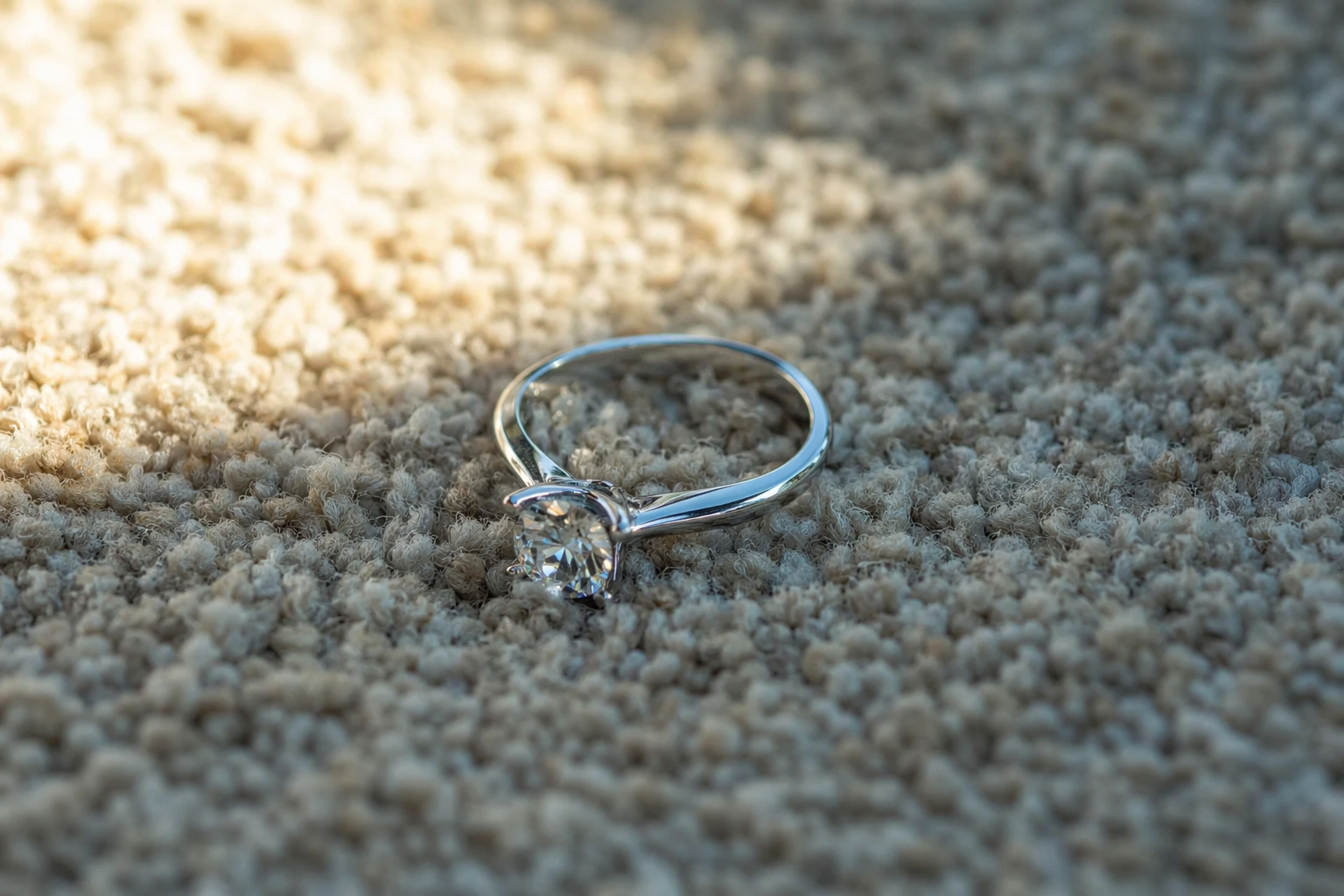
Losing a ring — especially an engagement ring or wedding band — is one of the most sickening feelings there is. The panic sets in fast. But here is the most important thing to know before you do anything else: most lost rings are found. The people who find them are the ones who stop, think, and search systematically rather than frantically. This guide gives you that system.
Stop and Think First — Where Did You Last Feel It?
Before you search anywhere, sit down and think. The question is not "where am I now?" — it is "where was I when I last consciously felt it on my finger?" That moment is your last point of certainty. The ring is somewhere between there and here.
Work backwards through your day. Did you take it off to wash your hands? Apply lotion? Go to the gym? Put on gloves? Many people take a ring off as a reflex and set it down without registering the action. Think about surfaces — countertops, gym bags, the edge of a sink. Write down the timeline if it helps. Your memory is your first and most important search tool.
Search the Drain First
If you have used a sink, shower, or bath since you last felt the ring, stop running water immediately and check the drain trap before doing anything else. A ring that has gone down a household drain is almost always sitting in the U-bend trap beneath the sink — it is heavy enough to settle there rather than washing further into the pipe.
Retrieving it is straightforward: place a bucket under the curved pipe beneath the sink, unscrew the slip-joint nuts on either side of the U-bend by hand or with pliers, and lower the trap into the bucket. In most cases, the ring will be right there. If you are not comfortable doing this yourself, a plumber can do it in minutes and it is far cheaper than you might expect. Do not pour anything down the drain, and do not run the dishwasher or washing machine until you have ruled out the laundry room sink.
Search Your Home in Order
If drains are ruled out, work through the most statistically likely locations in your home in this order:
- Bed and bedding. Rings slip off during sleep more often than people expect. Strip the bed completely, shake out every pillow and duvet, and run your hand along the mattress seams.
- Gym bag and sports kit. If you removed it before exercise and tucked it somewhere "safe", check every pocket, including the small ones you never use.
- Coat and jacket pockets. Every coat you have worn recently — including ones hanging in the hallway. Check the lining for holes.
- Car footwell and seat gap. The gap between the seat and the centre console is a notorious ring trap. Use a torch and feel along the rail.
- Bathroom counter and windowsill. Check behind taps, soap dispensers, and anything else on the surface. Look inside cups or containers.
- Kitchen sink area. Even if you checked the drain, look around the drain plug, on the windowsill above the sink, and inside rubber gloves if you wear them for washing up.
Ring Finders and Metal Detectors
If the loss happened outdoors — in a garden, at a beach, in a park, or anywhere with grass or sand — a metal detector is by far your most effective tool. You do not need to own one.
TheRingFinders.com is a directory of professional ring-finding specialists who operate across the UK, US, Canada, and Australia. Many work for a percentage of the item's value; others charge a flat fee. The success rate for professionals searching a known location is remarkably high — rings found in sand, grass, and soil are regularly recovered within an hour of search. List your loss as soon as possible. The sooner a finder arrives, the less the ground has been disturbed.
If you prefer to search yourself, hobbyist metal detector owners often help for free. Local Facebook groups and metal-detecting clubs are worth posting in. Always mark the search area before anyone walks through it.
Where to Report a Lost Ring
Reporting is not just bureaucracy — it creates the paper trail that reunites rings with owners and supports insurance claims.
- Local jewellers. People who find rings sometimes bring them to a jeweller to ask about the stone or metal. A quick visit and a photo left with the staff costs nothing.
- Police. In most jurisdictions, reporting a lost item of significant value is required before an insurance claim can proceed. Get the incident number.
- Local Facebook groups and Nextdoor. Post a photo (of a replacement or similar ring if you don't have one), the date, and the general area. These communities are surprisingly effective.
- Lost and found apps and websites. Platforms like Found.ly, iLost, and local council lost property portals aggregate reports from finders.
If Lost at a Venue
Restaurants, hotels, gyms, changing rooms, and event venues present a specific challenge — other people have access, and the clock moves fast.
Call immediately. Every hour matters. Ask to speak to the manager and describe the ring precisely — metal colour, stone, any distinctive features. Follow up the call with an email so there is a written record. Then, if at all possible, visit in person. Face-to-face conversations are harder to deprioritise than phone messages.
Specifically ask to speak to cleaning staff. Cleaners find rings routinely — in bins, behind toilets, beneath sofa cushions — but they may not always be included in the manager's lost-and-found loop. A direct conversation with the person who cleaned the area is often the most productive step you can take at a venue.
Making an Insurance Claim
If the ring is not recovered, your home contents insurance or renter's insurance may cover the loss — but the details matter.
Scheduled items vs. general contents limits. Most home contents policies have a single-item limit of £1,000–£2,000 (or local equivalent). If your ring is worth more than that, it should have been listed separately as a "scheduled" or "specified" item when you took out the policy. Check your policy document now. If it was not scheduled, you may still claim up to the single-item limit.
Documentation you will need: the original purchase receipt or valuation certificate, photographs of the ring, the police report reference number, and a written account of the circumstances of the loss. If you had a professional valuation done — even years ago — dig it out. Most insurers will request a like-for-like replacement quote from a jeweller rather than paying cash.
Typical timelines from claim submission to settlement run two to six weeks for straightforward cases. An excess will apply. Note that claiming may affect your premium at renewal.
Prevention: How to Make Sure This Never Happens Again
Once the immediate crisis is resolved, it is worth building a few simple habits that make recovery far more likely next time.
- Ring dish by the sink. A dedicated spot removes the "I'll just set it here for a moment" problem. One consistent location means one consistent place to look.
- A removal routine. Always take it off in the same order, in the same place, at the same time — before washing up, before the gym, before bed. Routine removes the need to remember.
- Ring engraving. A jeweller can engrave your initials and a phone number inside the band for around £20–£30. If someone finds it and hands it in, this dramatically increases the chance it reaches you.
- A QR tag on the jewellery box or pouch. The ring itself is too small for a tag — but the box or travel pouch it lives in is not. A Tagback QR sticker on the case means that if someone finds the box, they can contact you instantly, without your personal details being visible.
Tagback works because it lowers the barrier for the finder. There is no app to download and no account to create — they scan the QR code, leave a message, and you are notified immediately. It takes about thirty seconds to set up, and it means your jewellery case becomes a recoverable item, not just packaging.
FAQ
How do I find a lost ring in my house?+
Start with the drain trap if you have used a sink or shower since you last saw it — rings frequently settle in the U-bend. Then search in order: bed and bedding, gym bag, coat pockets, the car seat gap, bathroom counter, and the kitchen sink area. Use a torch to check under furniture and along skirting boards. Think back to the last moment you consciously felt the ring on your finger — that location is your starting point, not where you are now.
What is TheRingFinders?+
TheRingFinders (theringfinders.com) is an international directory of professional ring-finding specialists who use metal detectors to locate lost rings outdoors — in gardens, beaches, parks, and sports fields. Members typically charge a flat fee or a percentage of the ring's value. Success rates are high when the general location of the loss is known, and many finders can respond within hours of being contacted.
Does insurance cover a lost engagement ring?+
It depends on your policy. Home contents and renter's insurance often cover jewellery, but most policies impose a single-item limit of £1,000–£2,000. If your ring is worth more, it should have been listed as a scheduled or specified item. To make a claim you will typically need a valuation or receipt, photographs, and a police report reference number. Check your policy document for the single-item limit and excess before proceeding.
Can a ring be found with a metal detector?+
Yes — metal detectors are highly effective at locating rings lost in grass, sand, soil, and snow. Gold, silver, platinum, and titanium are all detectable. For outdoor losses, contacting a local ring-finder through TheRingFinders or a metal-detecting club as quickly as possible gives the best chance of recovery, particularly if the search area can be narrowed down to a specific location.
Start protecting what matters
Tagback is free, forever. No subscription. No app needed for finders.
Create your free tag