
Cartel de Perro Perdido: Qué Incluir, Qué Evitar y Cómo Publicarlo Rápido
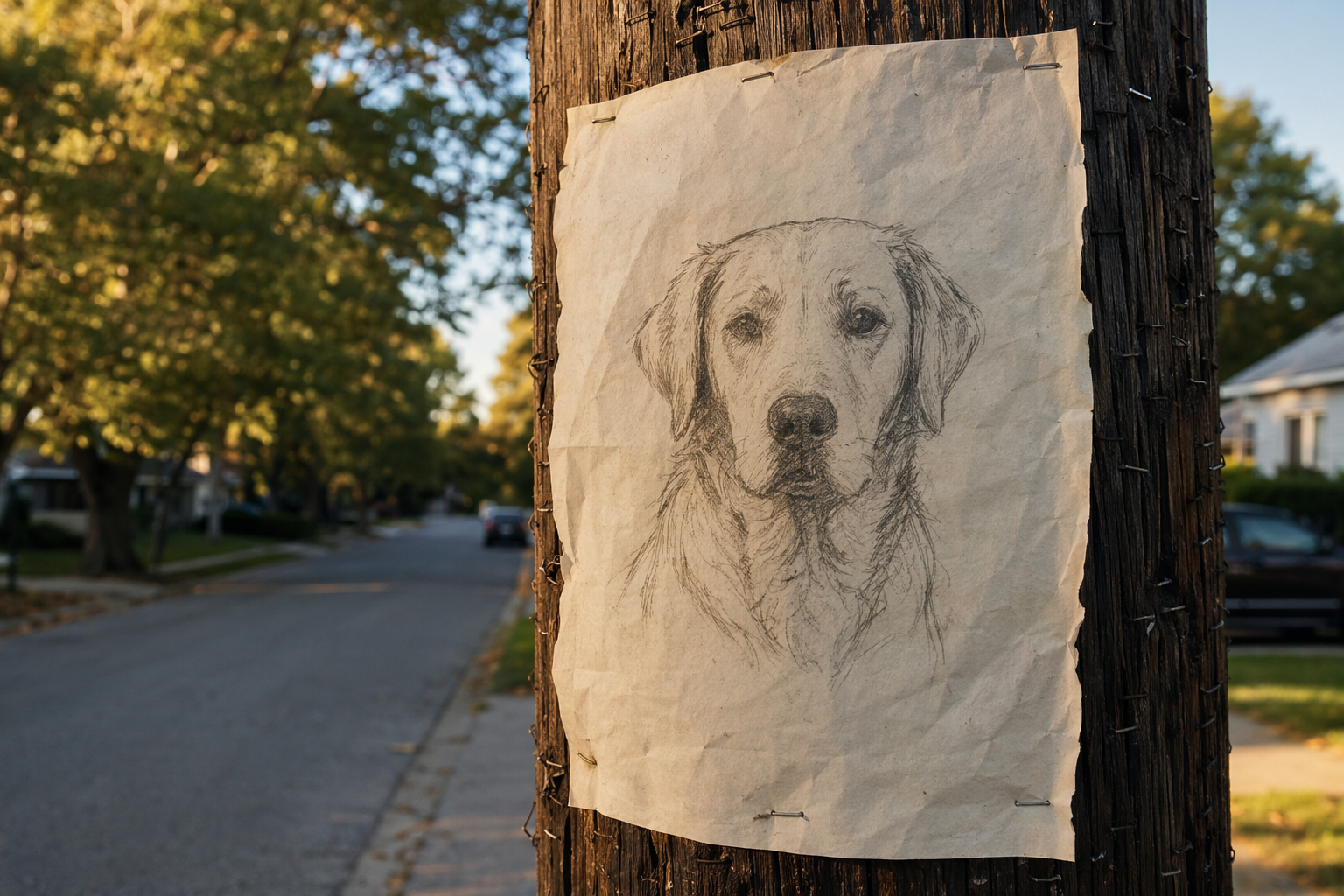
Un cartel de perro perdido con la información correcta y el formato adecuado puede duplicar tus posibilidades de recuperación. La mayoría de las personas los hacen demasiado saturados, demasiado pequeños o sin ese detalle crucial que genera llamadas. Aquí te mostramos exactamente qué poner en tu póster de perro perdido — y qué errores cometen la mayoría — para que puedas imprimir y publicar en los próximos 30 minutos.
Las 5 Cosas que Todo Cartel de Perro Perdido Debe Tener
Una plantilla de cartel de mascota perdida solo es útil si contiene la información que un extraño necesita en los primeros tres segundos de verla. Estos son los cinco elementos imprescindibles:
- "LOST DOG" in huge text at the top. This is not a design choice — it's a survival decision. People glance at flyers from a moving car or while walking fast. If they can't read those two words from 5 metres away, the flyer has already failed. Use the largest font size your page can hold.
- A clear, recent photo — face visible, no filters, no sunglasses. The photo is the most important element. If someone sees your dog, they need to recognise them instantly. Use a close-up of the face, taken in good natural light. Avoid group shots, action blurs, or novelty photos with hats or costumes. Print in colour if at all possible.
- Your dog's name. Strangers can use the name to call your dog and calm them down. It also helps people who've seen a dog remember: "Oh, that was Biscuit — I saw a flyer for Biscuit." Keep it large and prominent.
- Your phone number — readable from 3 metres. This is the single most common failure point on lost dog flyers. The phone number should be in bold, 72pt minimum, and placed near the bottom where eyes land last. Don't bury it in a paragraph of text. Some people add tear-off tabs with just the number and a photo thumbnail along the bottom edge.
- Neighbourhood and last seen location with a date. "Last seen: Maple Street near the park, Tuesday 29 April" tells finders where to look, helps people recall sightings, and gives you credibility. Include both the general area (suburb/neighbourhood) and the specific street if you know it.
Los Errores Más Comunes en un Cartel de Perro Perdido
Saber qué no hacer es tan importante como saber qué incluir. Estos son los errores que hacen que los carteles sean ignorados:
- Too much text. A paragraph describing your dog's personality, favourite toys, and full medical history is unreadable at any useful distance. Cut it to breed, colour, size, and one or two distinguishing features (e.g. "blue left eye", "docked tail").
- Phone number not visible from 3 metres. Print your flyer, pin it to a wall, and walk back 3 metres. Can you read the number without squinting? If not, make it bigger.
- Photo too small or low resolution. Printing a tiny thumbnail or a blurry screenshot produces a muddy grey blob. Use the highest resolution image you have and make it fill at least one third of the flyer.
- Portrait orientation wastes space on poles and fences. Landscape format typically works better for flyers posted at eye level on lampposts, fences, and boards. It also puts the photo and key details side by side rather than stacked, which reads faster at a glance.
La Pregunta de la RECOMPENSA: ¿Deberías Ofrecer Una?
Sí — agregar "RECOMPENSA" a un cartel de perro perdido aumenta significativamente el número de llamadas que recibes. Los estudios de organizaciones de recuperación de mascotas perdidas muestran consistentemente tasas de respuesta más altas cuando se menciona una recompensa. La palabra genera acción en personas que de otro modo pensarían "alguien más llamará". Aquí te explicamos cómo manejarlo:
- How much to offer. A common range is £50–£200 (or $50–$200). The amount matters less than the word itself appearing prominently. Don't lowball to the point of seeming insincere, but you don't need to offer a life-changing sum.
- Wording that works. "REWARD OFFERED" or simply "REWARD" in large text near the top is enough. You don't need to state the amount on the flyer — this also avoids people negotiating before they've even called.
- Position it prominently. Put REWARD near the top, close to "LOST DOG". People scan top-to-bottom; if they see a reward is on offer in the first glance, they keep reading.
- Don't let it dominate. The photo and phone number still take priority. REWARD is a motivator, not the main message.
Recomendaciones de Formato y Tamaño
- Paper size: A4 (UK/EU) or Letter (US). Both are standard printer sizes and easy to laminate. For high-traffic areas, consider A3 — it's dramatically more visible.
- Orientation: landscape for most situations. Allows a larger photo on one side and text on the other, both readable at a glance.
- Phone number font size: 72pt minimum, bold. Go larger if you can. This is not the place for restraint.
- High contrast throughout. Black text on white or yellow background. Avoid dark backgrounds with dark text, or pale text on any background. The flyer needs to be readable in dim light, rain, and at speed.
- Laminate if possible. A laminated flyer survives rain, which is likely the same weather that slows your search. Even a cheap home laminator pays off when flyers stay readable for days.
Plantillas Gratuitas de Cartel de Perro Perdido
No necesitas diseñar desde cero. Estas herramientas tienen plantillas de cartel de mascota perdida listas para usar:
- Canva — search "lost dog flyer" in templates. Free to use, easy to customise, downloads as a print-ready PDF in minutes.
- PawBoost — automatically generates a flyer from your lost pet listing. Creates both a printable version and a digital one for sharing.
- Lost My Doggie — US-focused service that creates flyers and sends alerts to shelters and vets in your area.
- Pet FBI — free lost and found pet database that includes a printable flyer generator once you post a listing.
Dónde Publicar tus Carteles de Perro Perdido
Imprimir carteles sin una estrategia de publicación es el error más común. Tanto la ubicación como la densidad importan. Aquí está en qué enfocarte:
- Your exact street and the four corner streets around it. This is ground zero. Post on every lamppost, fence, and utility box within two blocks of where your dog was last seen.
- Vet clinics and animal hospitals. People bring found dogs to vets first. Reception staff see every flyer that comes in — they'll remember yours.
- Dog parks and pet supply shops. Dog owners are your best network. They walk the same routes, know the area, and notice stray dogs.
- School gates, bus stops, and corner shops. High foot traffic, people who stand still and look around. Bus stops especially, as people wait and read.
- Minimum 50 flyers within a 1km radius. This sounds like a lot. It isn't. Flyers get removed, covered, or damaged. Saturation is the goal — a passer-by should see your flyer at least twice on any single route through the area.
- Ask local businesses to display one inside. A flyer in a cafe window or a newsagent counter stays up longer than one on a lamppost.
La Versión Digital: Misma Información, Mayor Alcance
Publica la misma información en línea inmediatamente — no esperes hasta que tus carteles físicos estén colocados. Las publicaciones digitales llegan a personas que nunca pasan por tu calle.
- Nextdoor — hyperlocal, meaning neighbours in your exact area see it. Mark it as urgent and include the last seen location pin.
- Facebook lost pets groups — search for your town or suburb + "lost pets" or "found dogs". These groups move fast and have active members who photograph stray dogs.
- PawBoost and Pet FBI listings — these aggregate sightings and have existing audiences of people looking for lost pets.
- Include your Tagback link if you have one. Your Tagback lost pet page lets finders contact you anonymously without needing to call. This removes a significant barrier — many people won't call a stranger but will send a quick message. Safer for you too, as your direct number stays private.
Añade un Código QR a tu Cartel
Un código QR en un cartel de perro perdido no es solo un extra agradable — aumenta activamente la posibilidad de recuperación. Por eso funciona:
- Instant access to full details. Your Tagback lost pet page can show your dog's full description, multiple photos, and a map of the last seen location — far more than any printed flyer can hold.
- Works for people who don't want to call. Some finders are willing to help but won't phone a stranger. A QR code → message option removes that friction entirely.
- Looks more credible. A flyer with a QR code signals that the owner is organised and serious. Finders take it more seriously.
- Easy to create. Generate a free QR code at QR Code Generator or similar tools, paste in your Tagback lost pet page URL, and drop the image into your flyer template. Takes under two minutes.
Actualiza tu Cartel si tu Perro Aún Está Perdido
Si tu perro ha estado perdido durante tres o más días, las personas pueden empezar a asumir que la situación está resuelta. Mantén la búsqueda visible y creíble:
- Add "STILL MISSING" to existing flyers with a marker or printed sticker. This catches the eye of people who've already seen the original.
- Print a fresh batch and replace damaged ones. Rain, wind, and time degrade flyers quickly. Fresh flyers signal an active search.
- Post an update on your digital listings with the current date. Groups and neighbourhood apps push updated posts back to the top of feeds.
- Expand your radius. Dogs can travel further than owners expect, especially if frightened. After 3 days, extend your posting area to 3–5km.
Preguntas frecuentes
¿Debería poner una recompensa en un cartel de perro perdido?+
Sí. La palabra "RECOMPENSA" en un cartel de perro perdido aumenta significativamente el número de llamadas que recibes. Motiva a personas que de otro modo asumirían que alguien más actuará. No necesitas indicar el monto en el cartel — "RECOMPENSA OFRECIDA" en texto grande cerca de la parte superior es suficiente. Una oferta típica es de €50–€200 dependiendo de tus circunstancias.
¿Cuántos carteles debería imprimir para una búsqueda de perro perdido?+
Imprime al menos 50 carteles y procura publicarlos todos dentro de un radio de 1km desde donde fue visto tu perro por última vez. Los carteles se quitan, se mojan con la lluvia y se cubren, así que la saturación importa más que la precisión. Enfócate en postes de luz, clínicas veterinarias, parques para perros, puertas de escuelas y paradas de autobús. Después de 3 días, amplía tu radio e imprime un nuevo lote.
¿Puedo usar un código QR en un cartel de mascota perdida?+
Sí, y es altamente recomendable. Un código QR que enlace a tu página de mascota perdida (como un perfil de Tagback) permite que quienes la encuentren vean detalles completos, múltiples fotos y un mapa sin necesidad de llamar. También elimina una barrera para personas que no llamarán a un extraño pero sí enviarán un mensaje. Genera un código QR gratuito en menos de dos minutos usando cualquier generador de códigos QR en línea.
¿Qué foto funciona mejor para un cartel de perro perdido?+
Usa un primer plano de la cara de tu perro, tomada con luz natural clara, sin filtros, gafas de sol o disfraces. La foto debe ser de alta resolución — evita capturas de pantalla o fotos borrosas del teléfono. Si tienes múltiples fotos, usa la que mejor muestre características distintivas como el color de ojos, marcas o patrón del pelaje. Imprime en color siempre que sea posible.
Start protecting what matters
Tagback is free, forever. No subscription. No app needed for finders.
Create your free tag