
Wandering and Dementia — Free Safety Tools That Actually Help
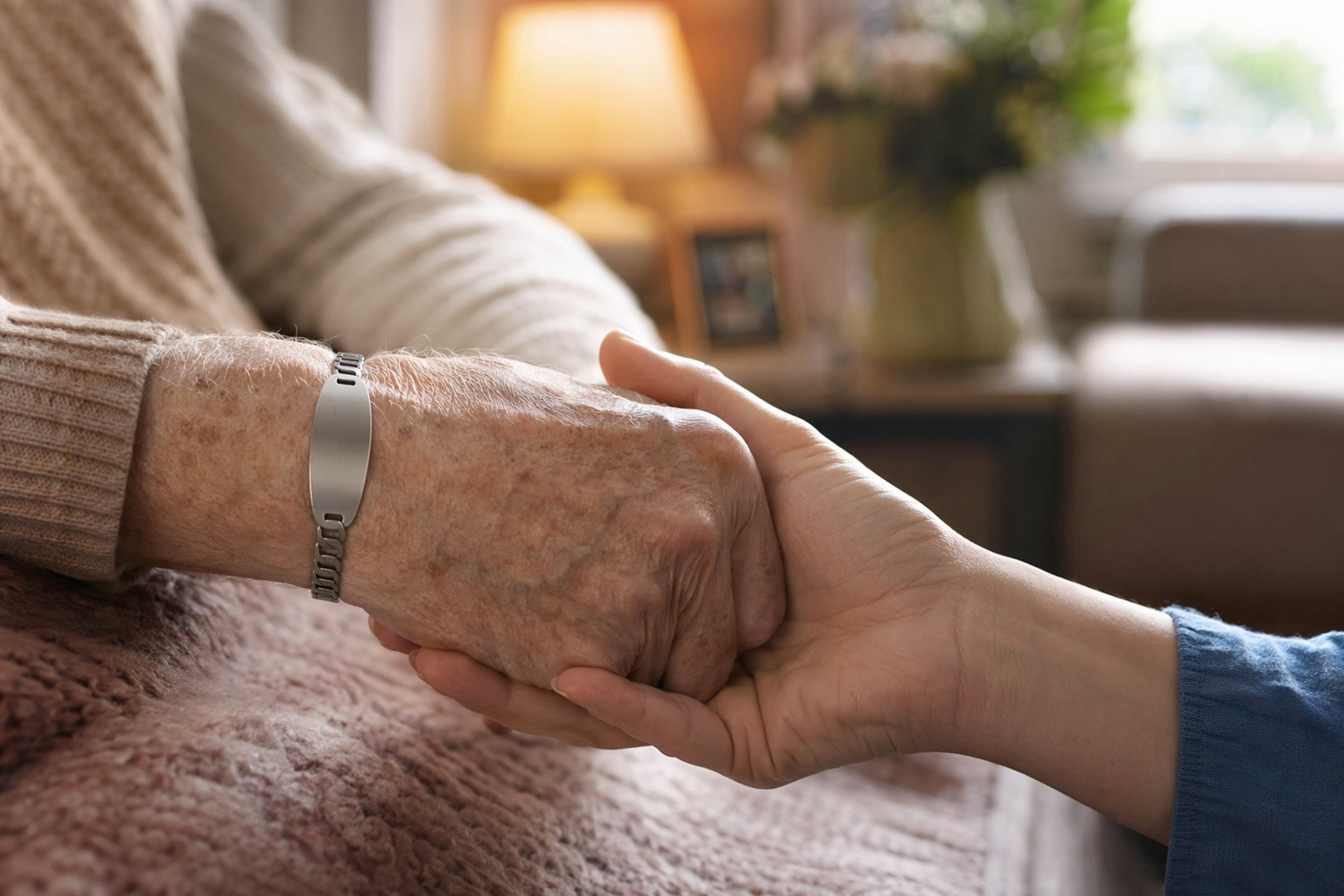
About 60% of people with dementia will wander at least once. Of those who aren’t found within 24 hours, nearly half are seriously hurt. Caregivers don’t need a marketing pitch about this — they need a list of tools that actually work, ranked by what the dementia-care community uses in real life.
The four-layer defence
Wandering prevention isn’t one tool — it’s layers. Each addresses a different failure mode.
Layer 1: Environmental modifications (free, immediate)
- Door alarms — battery-powered, attach to front and back doors. ~$15.
- Chair-pressure pads for nighttime — alerts when the person stands up.
- Camouflage doors — many people with dementia respond to a black door mat as if it were a hole; this can deter exit.
- Window locks — second-storey windows especially.
Layer 2: Identification (very low cost, high impact)
- QR safety tag (Tagback, free) — visible card shows "If found, please call family". Medical layer behind paramedic-mode unlock. Setup.
- MedicAlert with Alzheimer’s Association registry — call centre that holds full record. ~$45 enrollment + annual fee.
- Iron-on labels in jackets — survives wash, hidden until needed.
Layer 3: GPS tracking (moderate cost)
- AngelSense — purpose-built for dementia. Two-way audio. Tamper-proof. ~$30/mo + device.
- Apple Watch with Family Setup + SOS — discreet, but removable. iCloud-only.
- Tractive / Whistle dementia models — generic GPS, repurposed.
Layer 4: Community alert systems
- Project Lifesaver / Take Me Home — local police-run programs. Pre-register the person; if found, police can identify quickly. Free in many counties.
- Silver Alert — state-level alert systems for missing seniors. Equivalent to Amber Alert. Activated by police, not family directly.
The QR tag specifically — why caregivers we know prefer it
Among caregivers we’ve talked to, the QR tag has three properties they keep mentioning:
- Dignity. The visible card doesn’t scream "I have dementia." Just "if found, call my daughter."
- Updateable. When you change phones, move, or update meds, the tag updates instantly. No re-engraving.
- Multilingual. If the person wanders into a non-English-speaking area, the finder card translates.
What to write on the dementia QR card
Visible side (anyone who scans):
- First name only (or preferred shortened name)
- Recent photo
- Single instruction: "If you found me, please call my daughter."
- "Call trusted contact" button (number masked, relayed)
Emergency layer (paramedic mode, owner notified when opened):
- Diagnosis (type, stage)
- Medications and doses
- Calming strategies ("She responds well to her favourite song: title")
- Home neighbourhood (city + neighbourhood, not full address)
- Three contacts in priority order
- Emergency-services preference
Practical placements that work even when they remove their own jewellery
- Iron-on QR label inside the lining of their daily-worn jacket (most-used)
- Wallet card behind the ID
- QR sticker on their walking aid (cane, walker)
- QR sticker on the back of their phone case if they carry one
What to do tonight if your loved one is in the early stages
- Set up door alarms.
- Make a free QR safety tag. Iron-on label or wallet card.
- Register with your local Project Lifesaver or "Take Me Home" if available.
- Take a current photo (every 6 months — appearance changes faster with dementia).
- Discuss with the wider family what to do if the person wanders.
For the medical-alert side of the conversation, see the Medical Alert QR guide. For practical setup, the dementia tag setup page.
FAQ
Is the Alzheimer’s Association MedicAlert program a substitute?+
No, it’s complementary. MedicAlert holds your record at their call centre and is excellent. A QR tag adds direct, instant communication for any stranger who finds them — without dialling the call centre.
GPS trackers — which one should I get?+
AngelSense, Apple Watch with SOS, dedicated dementia tracker. AngelSense is purpose-built for dementia (no removal, two-way audio). Apple Watch is more discreet but easier to remove. Pick based on your loved one’s tolerance for wearing things.
My parent doesn’t have dementia yet but is in early decline.+
Set up the QR tag now while they can be involved in the decisions about what goes on the card. Dignity matters most when they’re still aware.
Start protecting what matters
Tagback is free, forever. No subscription. No app needed for finders.
Create your free tag