
How to Label Kids' Clothes and School Gear (So It Actually Comes Back)
Every September, parents spend real money on school uniforms, jackets, and shoes. By October, the lost-and-found bin is a mountain. By December, half the mountain has been donated because nobody claimed it. The difference between a lost jumper that comes back and one that disappears forever is almost always one thing: a legible label.
Why labeling works — and why most lost items stay lost
Schools make a genuine effort to return labeled items. Teachers pick up stray jumpers and check the collar. Office staff match a name on a lunchbox to a class list. The school lost-and-found system functions reasonably well — it just requires the item to be identifiable in the first place.
The problem is most kids' clothes carry no information at all. Identical navy jumpers, identical black shoes, identical water bottles from the same supermarket — there is nothing for a finder to go on. The item ends up in the bin, waits a few weeks, then gets donated or binned. Labeling is not optional if you want things back.
- Outerwear is the most commonly lost item — jackets and jumpers get taken off during PE, lunch, and warm classrooms, then left behind.
- Legibility matters more than you think. Faded handwriting and worn stickers are nearly as bad as no label. The label needs to survive the school year, not just September.
- Lost-and-found bins are cleared regularly — usually every 4–6 weeks. Unclaimed items are donated. Act fast when something goes missing.
- Most primary schools actively try to match items when they can read a name — so a good label is a direct line to recovery.
The four main labeling methods compared: iron-on, stamp, sticker, sew-in tag
Not all labels are equal. Here's an honest comparison of the four main methods, ranked by durability.
Woven sew-in labels
Best for: school uniforms, jumpers, jackets — anything that gets washed constantly. Woven labels sewn into the collar or waistband seam are the gold standard. They survive hundreds of washes, can't peel, and don't fade. The downside: they require a needle and thread (or a quick visit to a tailor), and you need to order them in advance. Cost per label is low when ordered in bulk.
Iron-on labels
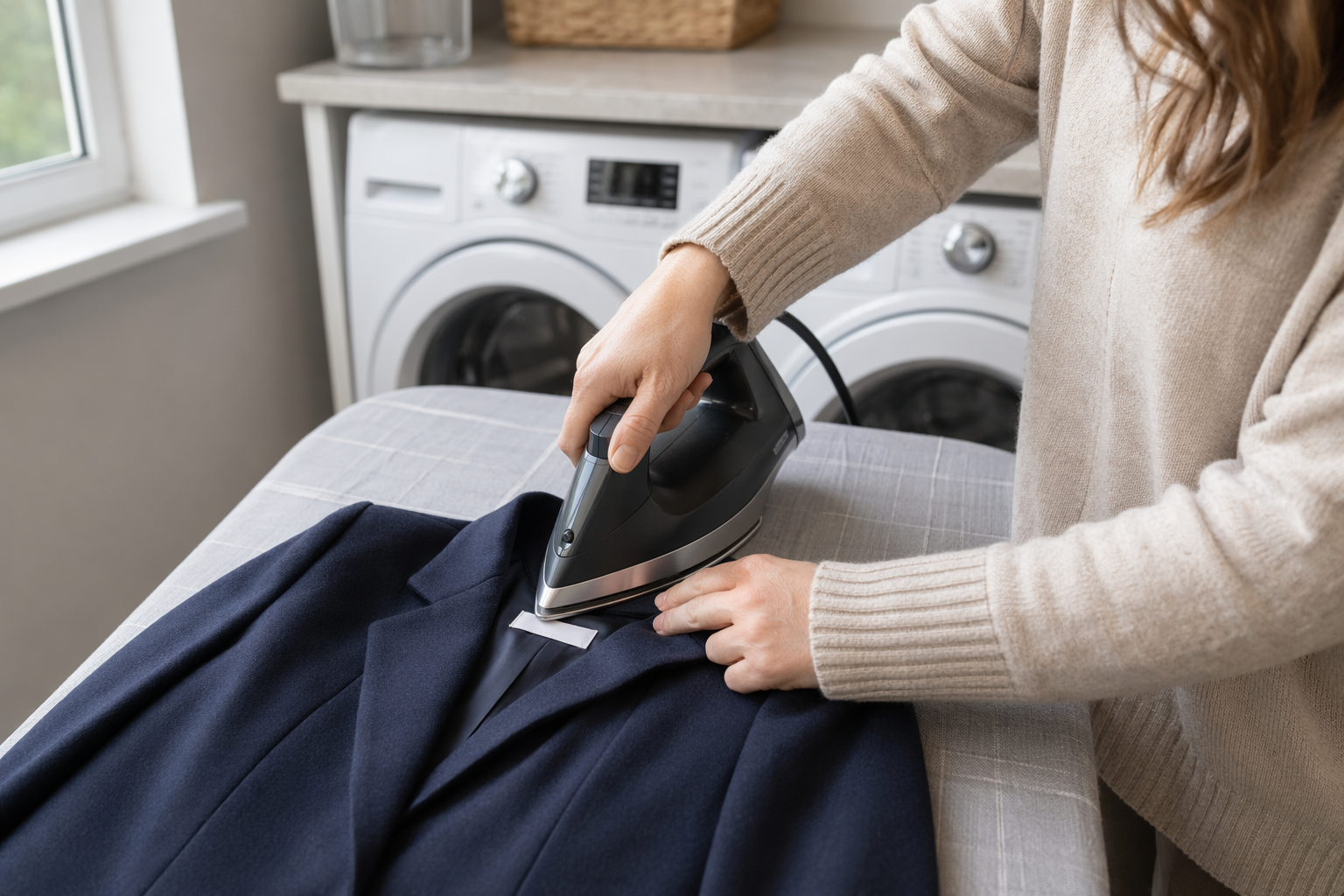
Best for: a quick start of term setup. Good iron-on labels last 30–50 washes when applied correctly at high heat (around 180°C) with a pressing cloth. The failure mode is usually incorrect application — too low a temperature, or applied directly without a cloth. Look for labels described as "no-iron permanent" or "industrial" — the supermarket own-brand ones tend to peel.
Fabric stamp
Best for: high-volume labeling quickly. A personalised name stamp with permanent fabric ink takes about 2 seconds per item and lasts surprisingly well — comparable to iron-on when used with the right ink. Works on any flat fabric surface. The stamp itself costs around £15–25 and pays for itself on the first term's worth of clothes.
Sticker labels
Best for: non-fabric items (lunchboxes, water bottles, stationery). Fabric stickers are the weakest option for clothing — they peel in the wash within a few weeks. On hard surfaces, a quality laminated label lasts well. Use stickers where they belong (hard gear) and a more permanent method for fabric.
What to label: the full school kit checklist
Everything that leaves the house should carry a label. This is the full list.
- School jumper / cardigan — inside collar or waistband
- PE kit (shirt, shorts, socks) — inside collar or waistband; socks are fiddly but worth it
- Jacket / coat — inside collar label plus a loop label if there's a hanging loop
- Shoes — insole or inside the tongue (see special cases section below)
- Water bottle — base or side with a laminated sticker label
- Lunchbox — inside lid and outside base
- Backpack — inside main compartment and a QR tag externally (see last section)
- Lunchbag — inside flap label
- PE bag — inside collar label mirroring the jumper
- Stationery case — stick label inside the lid
- Named reading folder / book bag — label on the inside cover
What to write on the label (and the safety considerations)
What goes on the label is not a simple question. The practical need (get the item back) and the safety concern (don't help strangers identify or approach your child) pull in different directions.
Internal labels (inside collar, waistband, insole)
First name only, or first name + initial of surname. This is enough for a teacher or office staff to match to a class list. Do not write your home address on clothing. A phone number inside the collar is fine — finders are usually staff, not strangers.
External labels (jacket, backpack, outside of lunchbox)
Use your surname only, not your child's first name, on anything visible from the outside. A stranger using your child's first name to approach them creates a false sense of familiarity — "Hi [name], your mum sent me" is a common approach tactic. "The Smith family's bag" tells a finder enough to return it, without helping a stranger address your child directly.
The safest setup
- Inside clothing: first name only (or first + last initial)
- Inside bag: full name + parent phone number on a card in the front pocket
- Outside bag: surname label or QR tag (which shows only what you choose, and hides your phone number behind a contact form)
Special cases: shoes, water bottles, lunchboxes — materials matter
Some items resist standard labeling. Here's how to handle them.
Shoes
The insole is the go-to spot — write with a permanent marker or use a dedicated insole label. For very young children, put one letter in each shoe (R and L, or their initials split left/right) as a labeling and left/right reminder in one. Labels designed to adhere to insoles are available online and hold well. Avoid the outside sole — it wears off within weeks.
Water bottles
The base is the most durable labeling spot on a water bottle — it's protected from knocks and the label is less likely to be picked at. A dishwasher-safe laminated label is worth the small extra cost. Write on the side with a permanent marker as a quick backup, but expect it to fade within a month of dishwasher cycles.
Lunchboxes
Label inside the lid and outside the base. The inside lid label lasts longer (protected from rubbing). Plastic surfaces take standard sticker labels well, but go for laminated labels rather than paper ones — condensation inside a lunchbox destroys paper labels fast.
PE socks and small items
A fabric stamp with permanent ink is the only practical solution for socks and small fabric items. Stick-on labels don't survive the wash, and sewing in individual labels takes too long. A stamp takes 2 seconds per item and lasts the term.
QR tags for bags and backpacks — the next level
A written label works for school staff who know your child — they can match "Emily" to a face. But for a stranger who finds a bag in a park, on a bus, or outside the school gates, a name alone is not enough. They have no way to reach you.
A Tagback QR tag on the backpack solves this. Anyone who finds the bag scans the code with their phone camera — no app needed. They see a contact page that lets them message you directly. Your phone number stays hidden. You get a notification, respond, and arrange the return. The whole thing takes less than a minute for the finder.
- You control what information is shown. Most parents show only a first name and a "message me" button — no phone number, no address.
- No app needed for the finder. Any smartphone camera opens the page instantly.
- Completely free. Tagback has no subscription, no paid tiers, no limit on the number of tags you create.
- Works for the whole family. One account, tags for every child's bag, school bag, sports bag — all free.
- Safer than a visible phone number. The QR tag keeps your contact details private while still giving an honest finder a clear way to reach you.
For the bag specifically — where a stranger rather than a school staffer is the likely finder — a QR tag is a smarter option than a visible name label. It tells the finder exactly what to do without exposing any personal information about your child.
FAQ
What labeling method lasts longest through washing?+
Woven sew-in labels last the longest — they survive hundreds of washes and dryer cycles. For iron-on labels, look for ones marketed as "no-iron permanent" and apply at 180°C with a pressing cloth. Stamp labels on fabric also last well if applied with permanent fabric ink.
Is it safe to put my child's full name and phone number on their school clothes?+
Use your last name only on external labels (bags, jackets), not your child's first name — a stranger calling your child by name can create a false sense of familiarity. For internal labels (inside collar, waistband), include first name only or initials. For the backpack, a QR tag with parent contact details is safer than a visible name tag.
How do I label shoes — they're hard to write on?+
The insole is the easiest spot — use a permanent marker or shoe-specific label. For young kids, put one letter in each shoe as a left/right reminder. Labels designed to stick to the insole are available at craft stores and online.
My kid loses things constantly — is labeling actually worth it?+
Yes, but the return rate depends on the school. Most primary schools make a genuine effort to match labeled items. The biggest factor is legibility — a full name is returned far more often than initials. Labels significantly improve the odds, especially for outerwear (the most commonly lost item).
Start protecting what matters
Tagback is free, forever. No subscription. No app needed for finders.
Create your free tag