
Lost Backpack at the Airport? Here's the Exact Sequence to Get It Back
Your stomach just dropped. You're at the gate, on the train, or halfway home — and your backpack isn't with you. The good news: airports recover bags every single day. The bad news: the window is short, and who you call matters a lot. Follow this sequence as fast as possible.
First 30 Minutes — The Most Critical Window
If you're still inside the airport, stop everything and go back now. The first 30 minutes are your highest-odds window by far. Bags left at security, at gates, and in terminal seating are typically picked up by airport staff within minutes — but they haven't yet entered the lost-and-found system, which means they're still traceable in real time.
- Retrace your steps exactly. Go back to the last place you remember having it — the security checkpoint, the coffee shop, the gate seating area, the restroom.
- Ask staff on the spot. Airline gate agents, terminal cleaning crews, and security officers often hold found items at their post for 15–30 minutes before turning them in. Don't just look — ask every employee you see.
- Check security immediately. TSA officers (in the US) and equivalent security staff in other countries collect items left at checkpoints constantly. Walk up to the supervisor station at the checkpoint and describe the bag.
- Visit the nearest information desk. Most large airports have roving staff who radio descriptions to a central lost-and-found. An information desk can put out a call within minutes.
- Note the exact time and location. Write it down right now. You'll need this when you file a report.
If You've Already Left the Airport — Who to Call
This is where most people waste precious time: airport lost and found and airline lost and found are completely separate departments. Calling the wrong one costs you hours.
- Airport lost and found handles items left in terminals, restrooms, food courts, parking areas, and anywhere outside the actual aircraft. This is run by the airport authority, not any airline.
- Airline lost and found handles items left on the aircraft itself, at the gate podium, or in the jet bridge. Each airline runs its own system — contacting the airport won't help if you left it on the plane.
- TSA (US airports) operates a third, separate system for items left at the security checkpoint. See the section below.
- If you're unsure where you lost it, contact all three — but do it simultaneously, not sequentially. Use separate tabs or have someone help you.
When you call, have ready: the bag description (brand, color, size, any distinctive marks), the approximate time and exact location you last had it, your flight number, and your contact information. The more specific you are, the faster they can match it.
TSA Lost and Found (US Airports)
If your backpack disappeared at or near a US security checkpoint, the Transportation Security Administration is your first call — not the airline, not the airport. TSA officers collect left-behind items and hold them at the checkpoint for a period before turning them over to the airport authority.
- Items left at TSA checkpoints are held by the local TSA office, typically for 30 days.
- You can submit a claim at tsa.gov under the "Lost and Found" section — include the airport code, checkpoint location, date, and item description.
- TSA does not ship items — you or a representative must collect in person, or arrange a prepaid courier pickup.
- Unclaimed items are eventually transferred to the airport authority or donated/auctioned. Valuables like electronics and wallets are handled separately and held longer.
- Calling the TSA contact center (1-866-289-9673) can help you reach the specific airport's TSA lost-and-found office directly.
Major Airport Lost-and-Found Contacts
Every major airport runs its own lost-and-found system with its own phone number, online form, and hours. There is no single national registry — you must contact the specific airport where you lost your bag. Here are a few examples to show how varied the systems are:
- JFK (New York): Each terminal is managed by a different operator. Contact the terminal where you were, not a central JFK number.
- LAX (Los Angeles): LAWA (Los Angeles World Airports) runs a central lost-and-found reachable via the airport's main contact page.
- O'Hare / Midway (Chicago): Chicago Department of Aviation operates the lost-and-found; items can be claimed at the airport or shipped for a fee.
- London Heathrow: Heathrow Airport Limited runs a centralized system with an online reporting form and a fee for shipping retrieved items.
- Dubai International: dnata operates a 24-hour lost-and-found at both terminals with an online inquiry option.
Search "[airport name] lost and found" to find the exact page. Always go directly to the official airport website — third-party lost-and-found services charge fees and add no value.
Left It at the Gate or on the Plane? Call the Airline Directly
If you left your backpack at the gate area, the jet bridge, or inside the aircraft cabin, the airline is your first contact — not the airport. Cabin crew check for forgotten items after every flight, and gate agents often hold items found on the jet bridge. Speed is critical here because the aircraft may turn around for another flight within an hour.
- Call the airline's baggage service line immediately — not the general customer service line. Ask specifically for the baggage office at the departure airport.
- Give them your flight number, seat number, and departure time. This lets them identify the specific aircraft and contact the ground crew before it turns.
- If you're still at the airport, go to the airline's baggage claim office in person. In-person requests are acted on faster than phone calls.
- For international flights, the airline's local office at the destination airport often has more real-time information than their head-office call center.
- Follow up every 24 hours for the first three days. Airline systems update slowly and items sometimes surface days later when the aircraft returns to base.
File a Report Online — Why a Paper Trail Matters
Even if you've already called, submit a written report through every relevant online form. This is not bureaucratic box-ticking — it's how you protect yourself financially and increase the odds of recovery.
- Insurance claims require documentation. Travel insurance, credit card purchase protection, and renters/homeowners insurance will all ask for a dated report number. Without one, claims are denied.
- Online reports stay in the system longer. A phone call is a note on a whiteboard. A submitted form with your contact details is in a database that staff check when new items arrive.
- Third-party services like Chargerback are used by many airlines and airports to manage lost-and-found inquiries — if the airline's website directs you there, that's the legitimate system.
- Keep every reference number you receive. Take a screenshot of every confirmation page.
- Report to local police if the bag contained items over your insurance deductible. A police report number is often required for insurance payouts on electronics and valuables.
A QR Tag Could Have Solved This Already
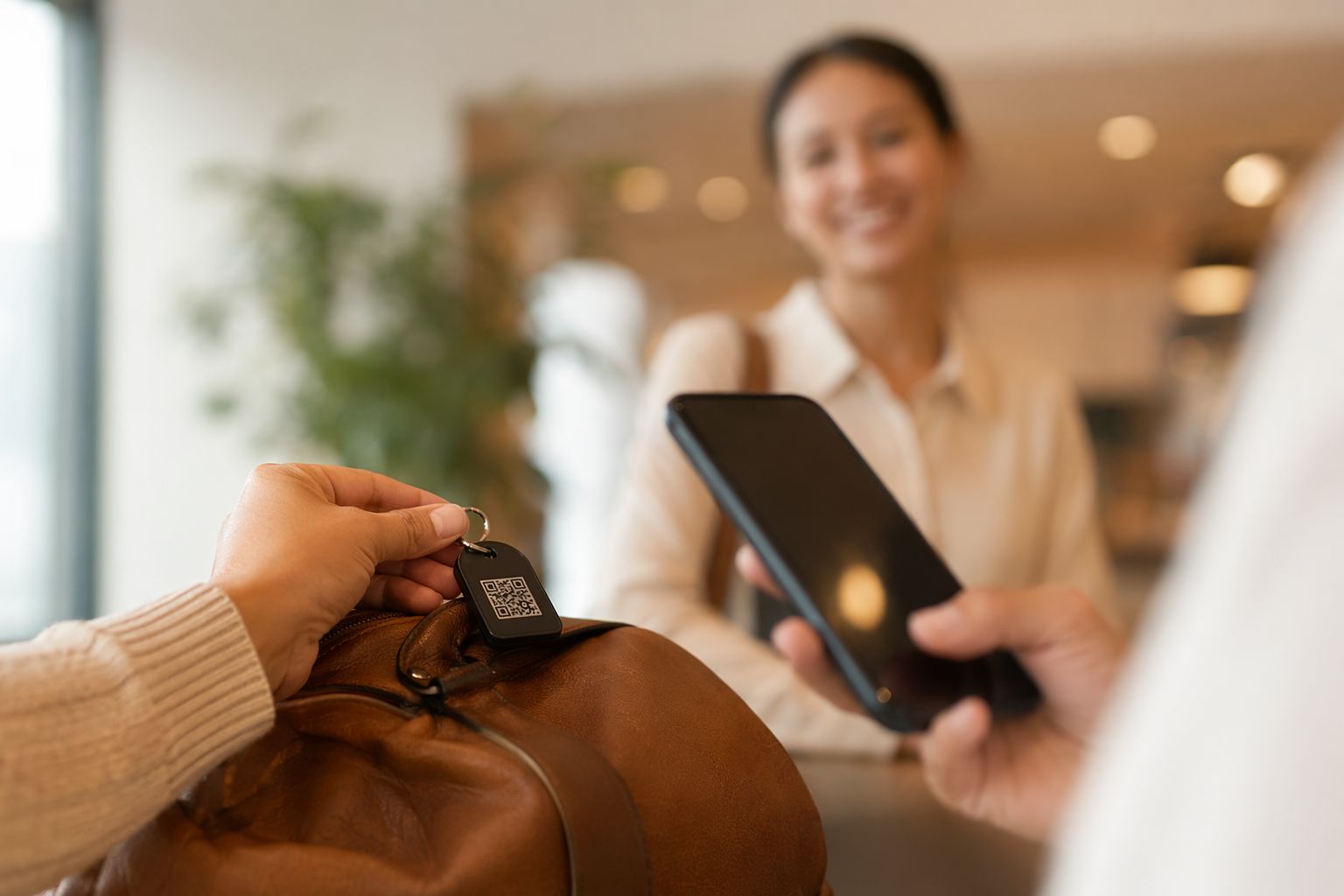
Here's the reality of airport lost and found: most bags that get returned are returned by other travelers, not staff. A fellow passenger spots your backpack, wants to do the right thing, but has no way to reach you — so they hand it to an employee, and it enters the bureaucratic queue. A Tagback QR tag short-circuits the whole process.
Anyone who finds your bag scans the QR code with their phone — no app needed — and can send you a message immediately, even tell you exactly where the bag is sitting. You get a notification and can respond. The bag never has to enter the lost-and-found system at all. No waiting. No daily phone calls. No 30-day hold.
Recovery Timeline — What to Realistically Expect
Recovery odds drop fast after the first few hours, but they don't go to zero. Here's a realistic picture of what happens over time:
- 0–2 hours: Highest odds. If staff or another traveler found it, it's likely still at the location or just been handed in. In-person retrieval is almost always possible.
- 2–24 hours: The bag has likely entered the formal lost-and-found intake. It will be logged, photographed, and tagged. This is when your phone report and online submission start paying off — staff will match descriptions against incoming items.
- 1–7 days: Active search window. Continue calling every 24–48 hours. New items surface as aircraft do layovers and ground staff catch up on backlogs.
- 7–30 days: Most airports hold unclaimed items for 30 days. Some items are transferred to a central warehouse during this period. Retrieval may require travel or a courier arrangement.
- After 30 days: Items are typically donated to charity, auctioned, or (for US airports) sold through services like GovPlanet or the Unclaimed Baggage Center in Scottsboro, Alabama. Electronics and valuables may be held longer under separate protocols.
The single biggest predictor of recovery isn't luck — it's how quickly you file and how clearly you describe the bag. Act now, document everything, and follow up consistently.
FAQ
Who do I call if I forgot my bag at the airport?+
It depends on where you left it. Contact the airport's lost-and-found department for items left in terminals, food courts, or restrooms. Contact the airline's baggage service office for items left on the aircraft or at the gate. Contact TSA (in the US) for items left at the security checkpoint. These are three separate departments — contact all three if you're unsure.
How long does airport lost and found keep items?+
Most airports hold unclaimed items for 30 days before donating, auctioning, or disposing of them. Some airports transfer items to a central storage facility after the first week. TSA in the US holds checkpoint items for approximately 30 days. Airlines have their own timelines, typically 30–90 days depending on the carrier.
Can I recover a backpack left at airport security in the US?+
Yes. TSA officers collect items left at checkpoints and hold them at the local TSA office. Submit a claim at tsa.gov with the airport code, date, checkpoint location, and a detailed description of your bag and its contents. You or a representative must collect in person, or you can arrange a prepaid courier pickup. Items are typically held for 30 days.
What's the fastest way to get a found backpack returned to me?+
The fastest recoveries happen when the finder can contact you directly — without going through lost-and-found at all. A QR luggage tag like Tagback lets anyone who finds your bag scan a code with their phone and send you an immediate message with the bag's location. No app required on their end. This bypasses the entire lost-and-found queue and can result in same-day reunification.
Start protecting what matters
Tagback is free, forever. No subscription. No app needed for finders.
Create your free tag