
Lost Passport Abroad: The Exact Steps to Follow
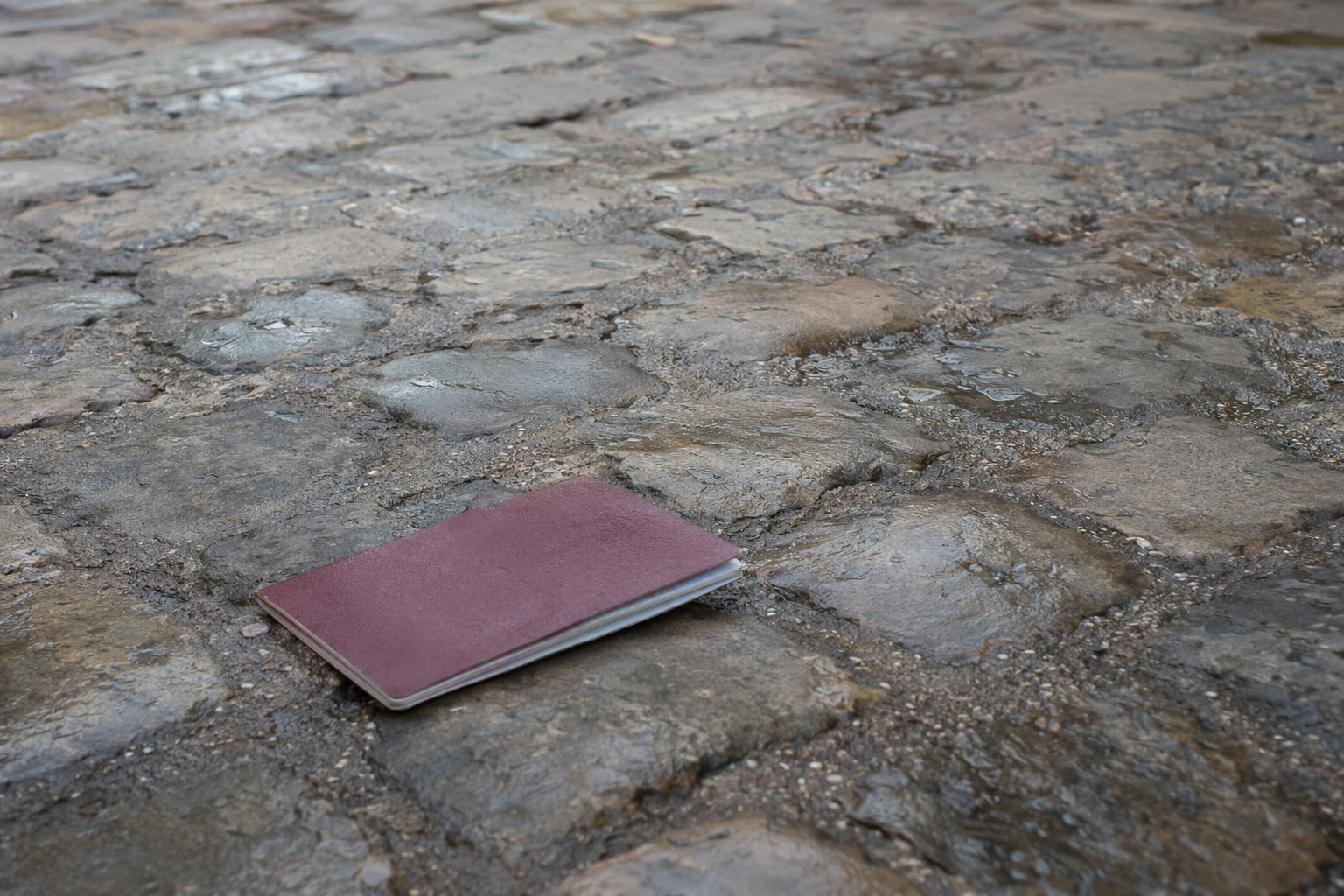
You've lost your passport in a foreign country. Stop, breathe — this is recoverable. Follow these steps in order and you will get home.
Step 1 — Report It Lost or Stolen (Get a Police Report)
Your first move is to file a police report. This is not optional — your embassy will require it before issuing any replacement document.
- Go to the nearest police station immediately. In most countries you can also report online, but a physical report is faster to process and more widely accepted.
- Ask for a written copy with an official stamp or reference number. Take a photo of it on your phone as backup.
- Report the loss in the local language if possible. Ask your hotel, hostel, or a local to help you communicate if there is a language barrier.
- If you believe it was stolen, say so explicitly in the report — theft and loss are treated differently in some embassy workflows.
- Keep multiple copies of the police report. You will need to present it at the embassy and potentially at your departure airport.
Do not leave the police station without a document in hand. A verbal acknowledgment is not sufficient for embassy purposes.
Step 2 — Contact Your Country's Nearest Embassy or Consulate
Once you have the police report (or are waiting for it), call your embassy. Do not wait until morning if it is after hours — most major countries operate 24/7 emergency lines specifically for citizens in distress abroad.
- United States: Call the nearest U.S. Embassy or dial the 24/7 U.S. Citizens Services line at +1-888-407-4747 (from outside the U.S.: +1-202-501-4444).
- United Kingdom: Call the nearest British Embassy or consulate. The 24/7 emergency travel line is +44 20 7008 5000.
- Australia: Call the nearest Australian Embassy or dial the 24/7 Consular Emergency Centre at +61 2 6261 3305.
- Canada: Contact the nearest Canadian mission or call the 24/7 Emergency Watch and Response Centre at +1-613-996-8885.
- Other countries: Search "[your country] embassy emergency [city you are in]" — most foreign ministries publish emergency contact numbers on their official websites.
When you call, tell them your name, location, nationality, your flight date if you have one, and that you have filed a police report. They will tell you exactly where to go and what to bring.
Step 3 — Emergency Travel Document vs. Full Replacement Passport
Embassies can issue two types of documents. Which one you get depends on how urgently you need to travel.
- Emergency Travel Document (ETD) / Emergency Passport: A temporary, limited-validity document issued within 24–72 hours. Valid only for the journey home (sometimes a single entry). This is what you want if your flight is in the next few days.
- Full Replacement Passport: A standard passport with full validity, issued through the normal application process. Takes 1–4 weeks even at an overseas post. Choose this only if your travel is not imminent and you plan to continue your trip.
- Transit countries matter: If you need to transit through another country to get home, check whether that country accepts ETDs before you book — some require a visa or full passport.
- Visa complications: If your original passport contained a visa you still need (e.g., a multi-entry U.S. visa), inform the embassy. They can sometimes issue a letter confirming the visa existed; otherwise you may need to apply for a new one.
What Documents You Need at the Embassy
Bring everything on this list. Missing even one item can delay issuance by a full day.
- Police report with official stamp or reference number.
- Proof of citizenship: a photocopy or photo of your lost passport (if you have one), birth certificate, or national ID card.
- Passport-size photos: Most embassies require 2 recent photos. Some can take them on-site for a fee; bring your own if possible to save time.
- Proof of travel: your flight booking confirmation, itinerary, or ticket. Even a screenshot from your email is accepted.
- Secondary ID: driver's license, national ID, credit card in your name, or any other government-issued document you have with you.
- Payment: Emergency passport fees vary by country (typically USD $100–$145 for U.S. citizens). Ask ahead — some embassies only accept local currency or specific card types.
- Contact information for next of kin or an emergency contact back home, in case the embassy needs to verify your identity.
If You Have No ID at All
If your wallet was stolen along with your passport, you have no physical ID. This is harder but not impossible. Embassies handle this regularly.
- Digital copies count: A photo of your passport stored in cloud storage (Google Drive, iCloud, email to yourself) is accepted as supporting evidence at most embassies.
- Witness statement: A U.S. citizen or national of your country who can vouch for you in person, or a notarized affidavit, can substitute for physical ID in some cases.
- Credit card or bank statement: A document from a financial institution showing your name can serve as secondary identity proof.
- Hotel records: Your hotel check-in record, which contains your name and passport number, can be used as a reference document — ask the front desk to print a copy.
- Social media and digital footprint: Some consular officers will ask you to log into accounts that confirm your identity. Have your email and key accounts accessible.
- Contact your bank: Ask them to send an emergency card to your hotel or to confirm your identity to a consular officer by phone.
How Long Does It Take — Realistic Timelines
Here is what to realistically expect, depending on how you proceed.
- Emergency passport (ETD): 24–72 hours in most cases, if you arrive at the embassy with all required documents. Some posts can issue same-day in genuine emergencies.
- Full replacement passport: 1–4 weeks at an overseas embassy post. Expedited processing may be available for an additional fee but is still typically 5–10 business days.
- Police report processing time: Can take 30 minutes to several hours depending on the country. Do this first to avoid it becoming your bottleneck.
- Embassy appointment: Some posts require an appointment; others accept walk-ins for emergency cases. Call ahead — do not assume you can walk in.
- Factor in weekends and local holidays: Embassies follow both the host country's public holidays and their own national holidays. Check before you arrive.
If your flight is within 24 hours, tell the embassy immediately when you call. Emergency issuance for imminent departures is prioritized — but only if you communicate the urgency upfront.
Prevention: What to Do Differently Next Trip
Once you are home safely, take 20 minutes to make sure this never happens again — or that if it does, recovery is much faster.
- Make digital copies before every trip. Photograph the bio-data page of your passport and email it to yourself and a trusted contact. Store it in cloud storage you can access from any device.
- Carry a photocopy separately from your passport. Keep a printed copy in your bag, separate from your passport holder — so if the holder is lost or stolen, you still have a reference.
- Note your passport number somewhere offline. Write it on a piece of paper kept in your luggage, or memorize it. This speeds up the police report and embassy intake dramatically.
- Use a passport holder with a QR luggage tag. A smart tag on your passport holder means a finder can scan it, see your contact information, and reach you — without exposing your personal details. Many passports are lost, not stolen, and honest finders do try to return them.
- Register with your government's travel notification service before you depart. The U.S. STEP program, UK FCDO travel alerts, and equivalent services give your embassy a record of your trip, making identity verification faster if you lose your passport.
A QR tag on your passport holder is one of the simplest and most underrated precautions a traveler can take. If your passport holder is found — on a train seat, in a restaurant, at the airport — the finder scans the tag and your contact info appears instantly. No app required on their end. Tagback tags work exactly this way: the finder sees what you want them to see, and can notify you in seconds.
FAQ
Can I fly with just a police report and no passport?+
No. A police report alone is not a travel document and airlines will not accept it for boarding. You must obtain at minimum an Emergency Travel Document (ETD) from your embassy before you can fly. The police report is required to get the ETD — it is a step in the process, not the end result.
What if my country has no embassy or consulate in the country I'm in?+
If your country has no diplomatic presence, check whether your country has a bilateral agreement with another nation to provide consular assistance to your citizens. EU citizens can approach any EU member state embassy. Commonwealth citizens may be able to get limited help from other Commonwealth embassies. Contact your country's foreign ministry emergency line — they will direct you to the nearest option and may be able to pre-authorize assistance from a friendly mission.
Will my travel insurance cover the costs of an emergency passport?+
Most comprehensive travel insurance policies cover emergency passport replacement fees, associated police report costs, and sometimes additional accommodation if you miss your flight due to the loss. Check your policy documents or call your insurer's emergency line as soon as you have a stable situation — some insurers need to pre-authorize costs. Keep all receipts.
Can I use an Emergency Travel Document to enter countries other than my home country?+
Generally, no. An ETD is typically issued for direct travel home only — meaning it is valid for a single journey back to your country of citizenship. If your route home requires transiting through a third country, you must confirm that country accepts ETDs and check visa requirements before booking. For ongoing travel, you need a full replacement passport.
Start protecting what matters
Tagback is free, forever. No subscription. No app needed for finders.
Create your free tag