
Road Trip With Dog: Everything You Need to Know Before You Leave
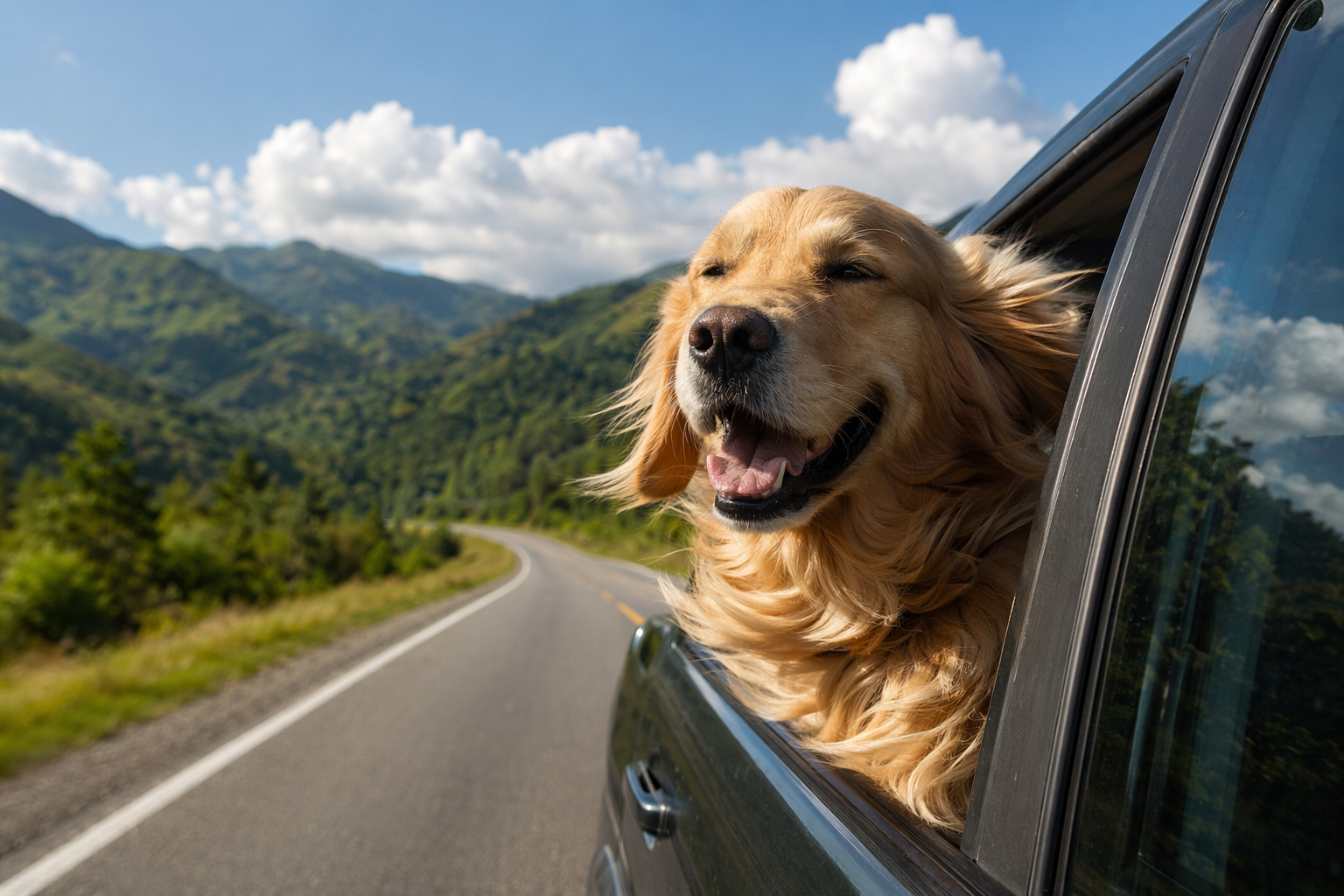
Road trips with dogs might be the best way to travel. No kennels, no separation anxiety, no guilt — just you, the open road, and your dog losing their mind with excitement at every new smell. But a dog in the car means a bit more planning than throwing a bag in the boot and going. Get the prep right and the trip is genuinely brilliant. Skip it and you're dealing with a motion-sick dog, a lost leash at a truck stop, or worse. Here's what to sort before you go.
Before You Go: Vet Check and ID
A vet visit before a long road trip isn't paranoid — it's practical. Your vet can confirm your dog is up to date on vaccines (some states and all international border crossings require proof), assess whether your dog is prone to motion sickness, and prescribe medication if needed. If you're crossing into Canada or Mexico, you'll need a health certificate issued within 10 days of travel. Book early — vets get busy.
ID is the other non-negotiable. Check that your dog's microchip registration is current with your actual phone number — not an old address or a number you no longer use. Make sure their collar tag is legible and firmly attached. And if your dog uses a Tagback QR tag, update their profile with your travel itinerary and any secondary contact who can reach you if you're in a dead zone. Then activate Lost Mode for the duration of the trip. It takes 30 seconds and means anyone who finds your dog can reach you instantly — even a stranger at a rest stop three states from home.
Car Safety: Harness, Crate, or Divider?
A loose dog in a car is a safety hazard — for the dog and for everyone in the vehicle. In a 30 mph collision, a 60-pound dog becomes a 2,700-pound projectile. Airbags can kill a dog riding in the front seat. An unsecured dog can jump out of a window or distract the driver at exactly the wrong moment.
Your three main options:
- Crash-tested harness. The Center for Pet Safety (CPS) tests dog harnesses the same way child seats are tested. Look for harnesses that have passed CPS testing — brands like Sleepypod Clickit and Ruffwear Load Up have performed well. A standard walking harness is not rated for crash forces.
- Hard-sided crate secured to the car. A properly bolted or strapped crate is excellent for dogs who travel well in a confined space. It keeps the dog contained and protects them from being thrown forward. Soft-sided crates offer minimal crash protection.
- Backseat divider / cargo barrier. Keeps the dog in the back of an SUV or wagon. Better than nothing, but doesn't stop the dog being thrown forward in a front-end collision. Best combined with a harness.
Whatever you use, never let your dog ride in the front seat, and keep windows open only enough for sniffing — not wide enough to lean out of.
Motion Sickness: Signs, Causes, and What Actually Helps
Dogs get car sick for the same reason people do: the inner ear detects movement while the eyes see a stationary interior. Puppies are especially prone because their vestibular system is still developing. Signs include drooling, yawning repeatedly, whining, lip-licking, and vomiting. Some dogs just look miserable and refuse to settle.
What helps:
- Don't feed 2–3 hours before driving. An empty stomach reduces nausea significantly. Water is fine.
- Acclimatisation drives. Short positive car trips — to the park, not the vet — help dogs build a neutral association with the car. Do these in the weeks before your road trip.
- Ginger. Natural anti-nausea remedy that's safe for dogs in small amounts. Ginger snap biscuits or ginger capsules (check dosage with your vet).
- Cerenia (maropitant). A prescription anti-nausea drug specifically licensed for dogs. Works very well. Ask your vet for a course before your trip.
- Facing forward. A dog who can see out the windscreen (safely restrained) gets less sick than one looking out a side window. Raised travel beds in the back seat help with this.
- Ventilation. Fresh air reduces nausea. Crack the windows or use air conditioning.
A note on antihistamines: Diphenhydramine (Benadryl) causes drowsiness that can reduce motion sickness in some dogs. It works better as a sedative than a proper anti-emetic. Cerenia is more reliable if motion sickness is a real problem. Don't use human antihistamines without checking the specific product with your vet — some contain xylitol or other ingredients that are toxic to dogs.
Rest Stops: Every Two Hours, Every Time
The rule of thumb for traveling with a dog in a car is a break every two hours minimum — more often for puppies, elderly dogs, or anxious dogs. Each stop should include:
- Leash before the door opens. Always. A dog who bolts from an excited leap out of the car in a busy rest stop is a nightmare scenario. Clip the leash before you open the door, every single time.
- A proper walk, not just a toilet break. Five minutes of sniffing and leg-stretching makes a real difference to how settled your dog is for the next stretch of driving.
- Fresh water. Carry a travel water bottle or collapsible bowl. Dogs dehydrate faster in a warm car than you'd expect.
- Shade check. In summer, check the ground temperature before letting your dog walk on tarmac. If it's too hot for your palm, it's too hot for paws.
- Never let your dog out in a moving car park. Even a slow-moving car in a petrol station can cause serious injury. Walk your dog in a quieter area away from traffic.
Never Leave a Dog in a Hot Car
On a 25°C (77°F) day, the interior of a parked car reaches 40°C (104°F) within 10 minutes. Within 30 minutes it can hit 60°C (140°F). Cracking the windows makes almost no difference. Dogs cool themselves by panting, which requires breathing cool air — there is no cool air in a parked car in summer. Heatstroke in dogs sets in fast and can be fatal within minutes.
The answer is simple: if you can't take your dog inside with you, one person stays in the car with the engine and air conditioning running, or you don't stop there. Plan your stops around dog-friendly businesses, drive-throughs, or places with outdoor seating where your dog can stay with you.
If you see a dog in a hot car: Note the car make, model, colour, and licence plate. Go inside the nearest building and ask staff to make an announcement. If the dog appears distressed (heavy panting, drooling, collapsed, unresponsive), call emergency services immediately. Laws on breaking windows to rescue a dog vary by location — in many US states Good Samaritan laws protect you if you call 911 first.
Dog-Friendly Accommodation: How to Find It and What to Ask
Finding somewhere to stay with a dog has got much easier, but 'pet-friendly' covers a huge range — from a $25 pet fee and full run of the room, to 'dogs under 25lbs only in smoking rooms on the ground floor.' Do your homework:
- BringFido.com is the most comprehensive database of dog-friendly hotels, cabins, and vacation rentals in North America. Filter by size and breed restrictions.
- Rover Stays offers home-away-from-home accommodation with hosts who have their own dogs. Great for anxious dogs who do better in a house than a hotel.
- Booking.com and Airbnb both have pet-friendly filters — always read the fine print for size limits, breed restrictions, and fees.
- Call ahead to confirm. Websites aren't always up to date. A quick call the week before confirms the policy and avoids arriving to find they changed it.
When you call, ask specifically: Is there a weight or breed restriction? Is there a pet fee or deposit? Are dogs allowed to be left alone in the room? Is there a grassy area nearby for toilet breaks? These questions save a lot of problems at check-in.
Crossing State and Country Lines: Paperwork and Rules
Most US interstate travel with a dog is straightforward, but there are exceptions worth knowing:
- Some US states have breed-specific legislation (BSL) that applies to visiting dogs, not just residents. Cities like Denver, CO and Miami-Dade County, FL have restrictions on pit bull type dogs. Research your specific route.
- Hawaii has a strict rabies quarantine. If your trip involves Hawaii, plan months ahead — the quarantine requirements are complex.
- Canada: Dogs require proof of rabies vaccination from a licensed vet, with the certificate listing the vaccine brand, batch number, and expiry date. No health certificate is required for dogs entering Canada, but vaccination proof is.
- Mexico: A health certificate issued by a USDA-accredited vet within 10 days of travel, plus rabies and distemper vaccination records. Endorsed by the USDA APHIS if required by the Mexican consulate.
- International travel generally: Requirements change. Check with the destination country's embassy or official government site, not third-party aggregators, for current rules.
Emergency Vet Prep: Before You Need It
Nobody plans for a veterinary emergency on a road trip. That's exactly why you should plan for it before you go.
- Map emergency vets for your route. Look up the nearest 24-hour emergency veterinary clinic for each major city or state you'll drive through. Save the numbers in your phone before you leave. Apps like Vets Now (UK) or a quick search for '24 hour emergency vet [city name]' works well.
- Carry a pet first aid kit. Gauze, bandage wrap, antiseptic wipes, tweezers, digital thermometer, a copy of your dog's vaccination records and any prescription medications. Your vet can advise on what to include for your specific dog.
- Keep your vet's number saved. If something seems wrong, a quick call to your regular vet — even after hours — can help you decide whether it's an emergency or something that can wait.
- Travel insurance for pets. Some pet insurance policies cover emergency treatment abroad or out of state. Check your policy before you go.
Lost Dog at a Rest Stop: The Highest-Risk Moment of Any Road Trip
Rest stops are where dogs get lost. Busy, unfamiliar, full of exciting smells — and a moment of inattention is all it takes. A dog who bolts from a rest stop in an unfamiliar state, far from home, is a very serious situation.
If it happens:
- Don't chase. A dog being chased runs faster and further. Stop moving, crouch down, turn sideways (non-threatening posture).
- Use a familiar sound. Car keys jingling, the treat bag rustling, their favourite squeaky toy — something that means 'good thing is happening' in your dog's world.
- Sit by your car. Dogs often circle back to the last known safe point. Stay near the car and wait.
- Ask everyone in the car park immediately. Get people looking while the dog is still close.
- Call the rest stop staff. They can make announcements and watch exits.
- Post to local Facebook groups and Nextdoor for the area you're in — local people find lost dogs faster than anyone.
This is exactly where a Tagback QR tag does its job. A local stranger who spots your dog can scan the tag with any smartphone — no app needed — and reach you directly on your phone with their location. You don't have to hope the finder knows who to call or can read a worn-out engraved tag. The scan goes straight to your contact details, updated and ready because you turned on Lost Mode before you left.
FAQ
How often should I stop on a road trip with a dog?+
Every two hours is the standard recommendation for adult dogs — more frequently for puppies, senior dogs, or dogs who are anxious or prone to motion sickness. Each stop should include a proper walk on a leash, fresh water, and a chance to relieve themselves. Never let your dog out of the car in a moving car park — walk them in a quieter area away from traffic.
Can dogs get car sick?+
Yes. Motion sickness in dogs is common, especially in puppies whose vestibular system is still developing. Signs include drooling, repeated yawning, lip-licking, whining, and vomiting. The most effective approaches are withholding food 2–3 hours before driving, doing short acclimatisation drives in the weeks before your trip, and asking your vet about Cerenia (maropitant), a prescription anti-nausea medication that works well for dogs. Fresh air and forward-facing seating also help.
What do I do if my dog gets lost at a rest stop?+
Don't chase — a dog being chased runs further. Crouch down, make a familiar positive sound (treat bag, squeaky toy, car keys), and wait near your car as dogs often circle back to the last safe point. Alert rest stop staff immediately, ask people in the car park to watch for your dog, and post to local Facebook groups and Nextdoor for the area. A Tagback QR tag is particularly valuable here — anyone who finds your dog can scan the tag with any smartphone and reach you directly without needing to know your number.
How do I keep my dog calm on a long drive?+
Preparation is everything. Acclimatise your dog to the car with short positive trips before the road trip. Bring familiar items — their bed, a worn T-shirt with your scent, their favourite toy. Use a crash-tested harness or secured crate so they have a defined comfortable space. Keep the car cool and well-ventilated. Some dogs settle better with a calming supplement (ask your vet about adaptil, zylkene, or melatonin). Avoid feeding right before driving, and make sure they've had a good walk before getting in the car.
Start protecting what matters
Tagback is free, forever. No subscription. No app needed for finders.
Create your free tag