
¿Encontraste un Perro Perdido? Esto es Exactamente lo que Debes Hacer Paso a Paso
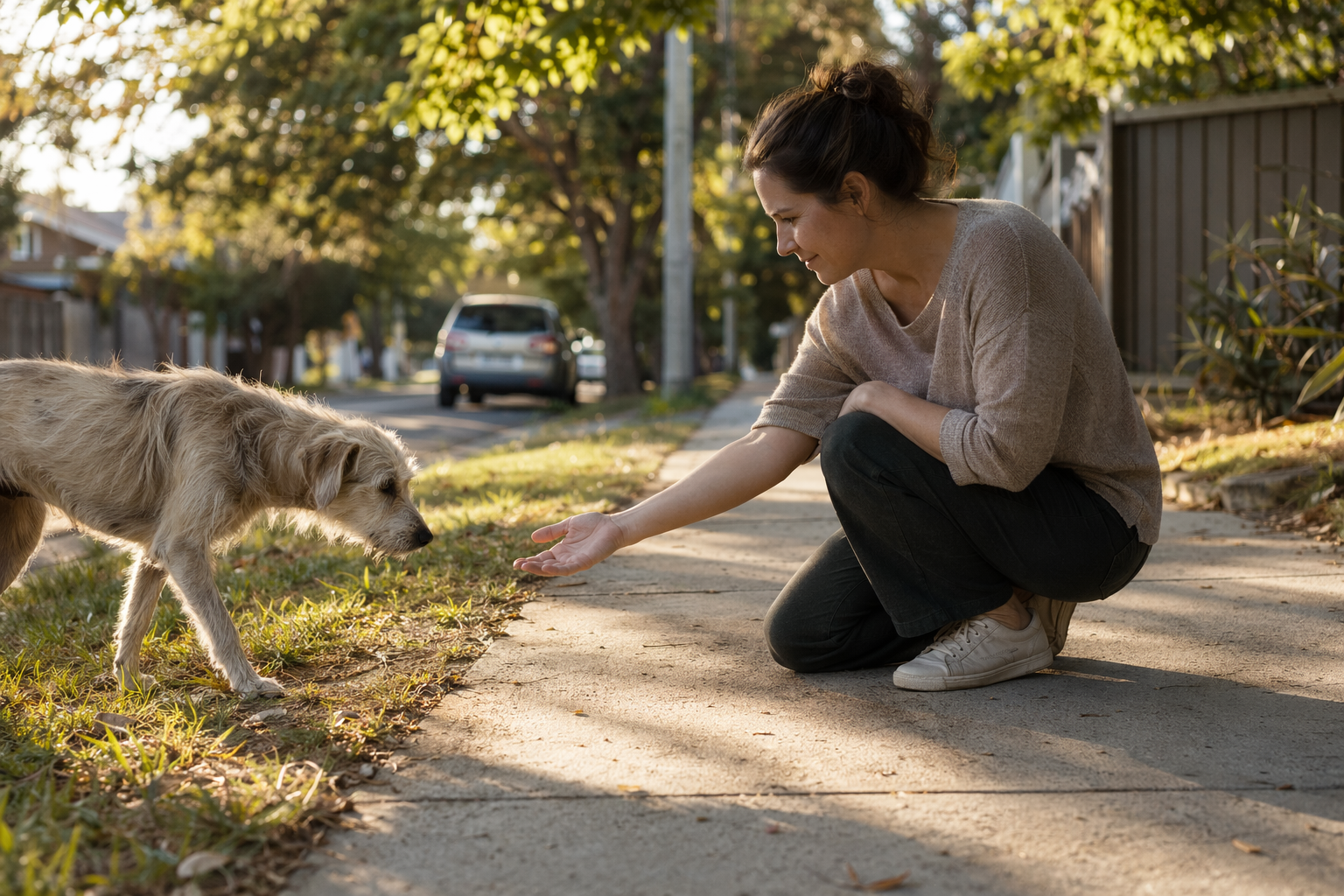
Encontraste un perro vagando solo. Quizás parecía perdido, quizás corrió hacia ti, quizás lleva una hora sentado en la misma esquina. Sea cual sea la situación, los próximos treinta minutos importan más que todo lo que venga después. Esta guía es para quien lo encuentra — la persona que sostiene la correa (o lo intenta) — no para el dueño. Aquí está la secuencia completa, desde el momento en que ves al perro hasta reunirlo con su familia.
Paso 1 — Acércate con seguridad: no todos los perros callejeros son amigables
Antes de hacer cualquier otra cosa, evalúa al perro desde la distancia. Un perro perdido también es un perro estresado, y un perro estresado puede comportarse de manera impredecible — incluso uno normalmente dócil.
- Watch the body language first. Tail low or tucked, ears back, body crouched, hackles raised — these are signs of fear. A dog showing these signals may snap if you approach too fast. A dog with a relaxed tail wag and loose body is almost certainly safe to approach.
- Crouch down, turn slightly sideways, and avoid direct eye contact. Direct eye contact is a challenge signal in dog language. Make yourself small and non-threatening, and let the dog come to you if it wants to.
- Offer the back of your hand slowly for the dog to sniff before attempting to touch it. Never reach over a dog's head on first contact.
- Don't chase a frightened dog. You will not catch it, and you'll push it further away — possibly into traffic. A stationary, non-threatening presence with food is far more effective.
- If the dog is aggressive or clearly terrified, do not attempt physical contact. Call your local animal control — they carry catch poles and snares and are trained to handle exactly this situation. Note the location precisely and call.
Si el perro te permite acercarte, ponle una correa improvisada tan pronto como puedas hacerlo de forma segura. Un cinturón, una agujeta de repuesto o un trozo de cuerda en forma de lazo funcionan. Una vez que el perro esté asegurado, puedes continuar con el resto de estos pasos con calma.
Paso 2 — Busca identificación: placa en el collar, código QR o ninguna placa
Este es el paso que puede resolver toda la situación en menos de cinco minutos — o decirte cuánto trabajo te espera.
- Standard ID tag with a phone number: Call it immediately. If there's no answer, leave a voicemail with your number, the dog's location, and a brief description. Text as well — many people don't answer unknown numbers but check texts.
- QR tag on the collar: Open your phone camera (no app needed), point it at the QR code, and tap the link that appears. A good QR tag — like a Tagback tag — takes you straight to the owner's contact page with the dog's name, photo, and a message button. Tap it, send your location, and the owner gets an instant notification. Reunion time: under ten minutes.
- No tag at all: This is the most common scenario, and it's not a dead end — it just means you move to the next step. A microchip may be the only ID this dog has.
Revisa el collar cuidadosamente — las placas se enredan en el pelaje, especialmente en razas de pelo largo. Pasa los dedos alrededor de todo el collar antes de concluir que no hay nada.
Paso 3 — Haz que escaneen al perro para buscar un microchip (es gratis)
Un microchip es un chip pequeño — del tamaño de un grano de arroz — implantado bajo la piel en la parte posterior del cuello. Se escanea en unos dos segundos con un lector portátil. Esta es la forma más confiable de identificación que puede tener un perro, y el escaneo es completamente gratis.
- Any veterinary clinic will scan a found dog at no charge, no appointment needed. Walk in, explain you found a stray, and they'll scan it immediately. If the chip is registered and the owner's contact details are up to date, the vet can reach them right then.
- Most animal shelters and animal control offices also have scanners and will scan free of charge. You don't need to surrender the dog to have it scanned — just ask.
- Some pet supply stores (PetSmart, for example) have scanners at the front desk. Call ahead to confirm.
- If the chip comes back with a name, the vet can contact the registered owner directly. If the details are outdated, ask which registry it's registered with — common ones include HomeAgain, Found Animals, and the AAHA Universal Pet Microchip Lookup at aaha.org. Registries can flag the chip record as "dog found" so the owner sees it if they search.
No te saltes el escaneo del microchip incluso si encuentras un número de teléfono en la placa. Los registros de microchips suelen tener detalles de contacto de respaldo, información del veterinario y la dirección del dueño — útil si el número va al buzón de voz.
Paso 4 — Publica y reporta: grupos de Facebook, Nextdoor, Petfinder y refugios locales
El dueño está buscando. Tu trabajo es hacerte visible — en cada canal que probablemente revise.
- Post on Nextdoor first. Nextdoor reaches neighbors within a precise local radius — this is where lost-dog reunions happen fastest because the people who see your post live near where the dog went missing. Include the exact street or intersection where you found it.
- Search local Facebook groups before you post. Look for "[your city] lost pets," "[your city] dogs," or "[your city] found pets." The owner may already have a post up — reply directly to theirs instead of creating a new one. Then post your own found-dog notice with a clear photo showing the dog's face and markings.
- Post on PawBoost (pawboost.com) — it sends automated alerts to local rescue volunteers and registered users near your location.
- File a found-dog report with your local animal shelter, even if you're keeping the dog temporarily. Owners check shelters first. You don't need to drop the dog off — just file a report with your contact details and a photo so they can match it if the owner calls.
- Leave a physical note at the exact spot where you found the dog. Laminate it or put it in a ziplock bag to protect it from weather. Owners retrace their dog's steps and walk the route repeatedly.
Una nota sobre llevar al perro directamente a un refugio: la mayoría de los reencuentros ocurren más rápido cuando el perro permanece en el vecindario donde fue encontrado. El ingreso al refugio enlentece las cosas — el dueño tiene que saber qué refugio revisar, y los perros pueden ser difíciles de localizar en el sistema. Publicar en línea y quedarte en el lugar casi siempre es más rápido.
Paso 5 — Cuidado temporal mientras encuentras al dueño
Si vas a quedarte con el perro temporalmente — que es lo mejor que puedes hacer mientras buscas — aquí te decimos cómo mantenerlo seguro y cómodo sin complicar las cosas.
- Give the dog a quiet, contained space. A laundry room, a bathroom, or a gated kitchen. The dog is already stressed — a calm, small space helps it decompress. Don't introduce it to your own pets immediately.
- Offer water right away. A dog that's been wandering may be dehydrated. Offer plain water before any food.
- Keep food simple and plain. Plain cooked chicken with no seasoning, white rice, or commercial dog food. Avoid anything with onions, garlic, grapes, raisins, or xylitol (common in peanut butter). You don't know this dog's dietary needs or allergies.
- Don't bathe or groom the dog heavily. The owner may need to identify it, and changing its smell or appearance can complicate this.
- How long should you keep it? Most reunions happen within 48–72 hours of active, visible searching. Give it at least 5–7 days of genuine effort — online posts, the microchip scan, the shelter report, and physical flyers — before drawing any conclusions. Don't assume the owner doesn't care. Dogs go missing when owners are at work, on vacation, or during a brief moment of distraction.
Paso 6 — Si no se encuentra al dueño: opciones de entrega vs adopción
Después de 7–14 días de búsqueda activa sin respuesta, enfrentas una decisión real.
- Contact breed-specific rescues if the dog is a recognizable breed. Breed rescues vet adopters carefully and often have waiting lists of qualified homes.
- Contact a general dog rescue if the breed is mixed or unknown. They can assess temperament, handle vaccinations, and manage the rehoming process properly.
- If you want to keep the dog yourself, get it examined by a vet, vaccinated, and licensed in your area. In most US states, you are not legally required to surrender a found dog — but you should document your search effort (screenshots of posts, shelter reports) in case the original owner ever comes forward.
- If you absolutely cannot keep it, contact your local animal shelter. Explain the situation and that you've done an active search. Responsible shelters track behavior and health, giving the dog the best chance of placement.
- Do not simply release the dog if you can no longer care for it. Contact a rescue or shelter first — releasing a dog that depended on you puts it in immediate danger.
Por qué una etiqueta QR lo cambia todo — para tu propio perro
Acabas de pasar horas ayudando al perro de un desconocido. Considera lo que esa experiencia te dice: el mayor obstáculo para un reencuentro rápido es la identificación. Un perro sin placa, o con una placa con un número desactualizado, puede quedarse en un veterinario o en la casa de un vecino durante días mientras su dueño busca desesperadamente a menos de un kilómetro.
Una etiqueta QR de Tagback en el collar de tu perro resuelve esto por completo. Quien lo encuentra abre la cámara de su teléfono, escanea la etiqueta y llega a una página con el nombre de tu perro, foto y un botón de mensaje. Lo toca, envía su ubicación y recibes una notificación instantánea. Sin números de teléfono desactualizados, sin necesidad de ir al veterinario, sin días de incertidumbre. Tagback es completamente gratis — sin suscripción, sin planes pagos, sin límite de cuántas mascotas puedes registrar. Nunca.
Toma unos 60 segundos configurarlo. Si tu perro alguna vez se escapa — por una puerta abierta, una cerca rota o un momento de distracción — la persona que lo encuentre sabrá exactamente qué hacer y cómo contactarte.
Preguntas frecuentes
¿Debería llevar un perro encontrado a un refugio de inmediato?+
No inmediatamente. La mayoría de los reencuentros ocurren más rápido cuando el perro permanece en el vecindario donde fue encontrado. Publica en línea y verifica si tiene microchip primero — los refugios son el último recurso, no el primer paso.
El perro tiene placa pero el número de teléfono está desactualizado — ¿ahora qué?+
Pídele a un veterinario o refugio que escanee en busca de un microchip. Publica fotos en grupos locales de Facebook y Nextdoor con los detalles de la placa visibles. Si el perro tiene una etiqueta QR (como Tagback), escanearla abre una página de contacto siempre actualizada.
¿Qué pasa si el perro encontrado es agresivo?+
No fuerces el contacto. Llama a tu control animal local — tienen el equipo y capacitación para manejar de forma segura a un callejero temeroso o agresivo. El comportamiento agresivo suele estar basado en miedo y se resuelve una vez que el perro se siente seguro.
¿Por cuánto tiempo soy legalmente responsable de un perro que encontré?+
Las leyes varían según la jurisdicción, pero en la mayoría de los estados de EE.UU. no estás legalmente obligado a quedarte con un perro encontrado. Sin embargo, contactar al control animal documenta que lo encontraste, lo cual te protege legalmente. Muchas ciudades requieren reportar un perro encontrado dentro de 48–72 horas.
Start protecting what matters
Tagback is free, forever. No subscription. No app needed for finders.
Create your free tag