
Gato de Interior Escapado: Guía Paso a Paso Para Traerlo de Vuelta a Casa
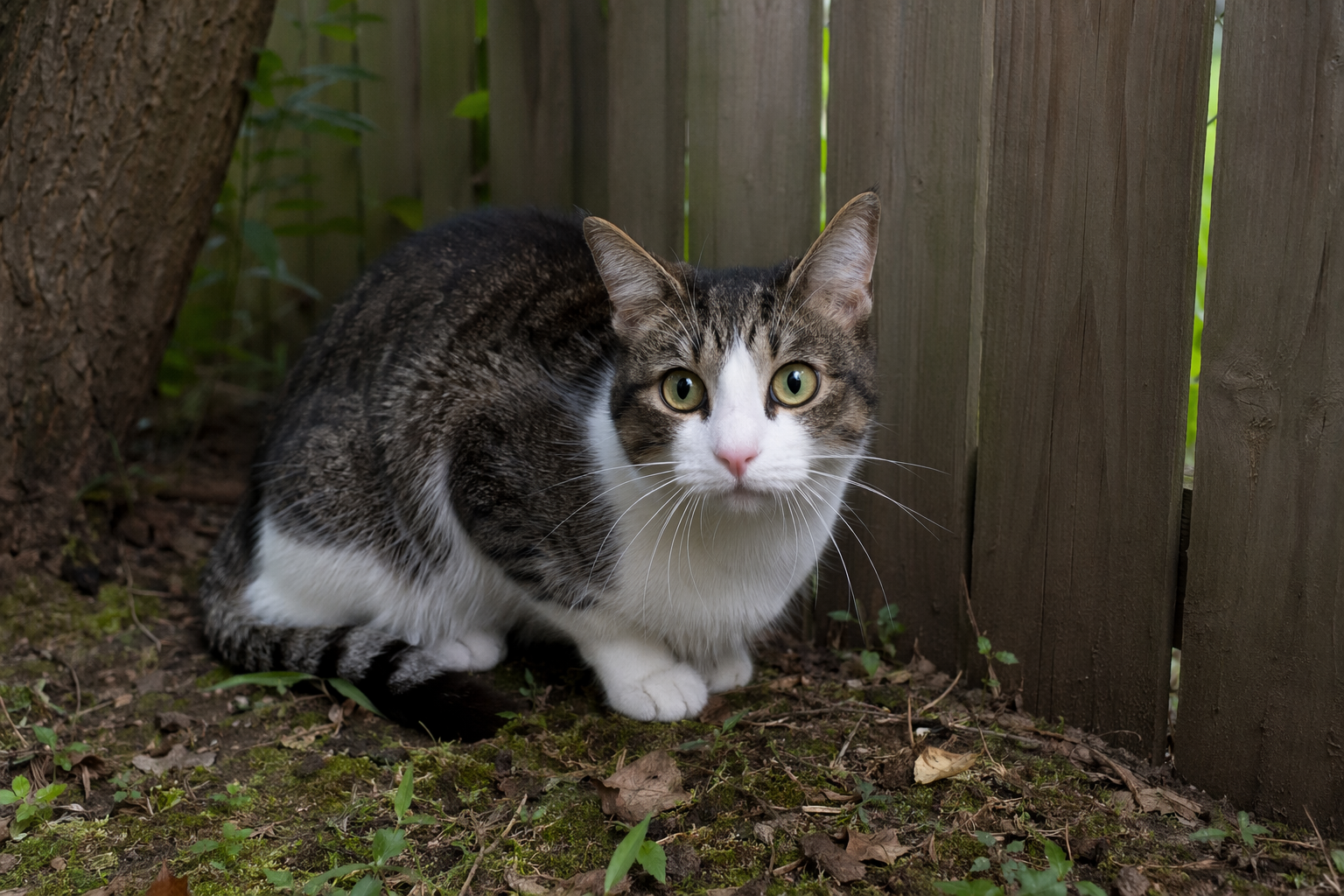
Respira hondo. Tu gato de interior casi con certeza sigue cerca. El 75% de los gatos de interior escapados se encuentran a menos de 500 metros de casa — pero solo si buscas de la forma correcta. Los instintos que los gatos de interior tienen en el exterior son completamente diferentes a los de los gatos callejeros, y los consejos habituales (llamarlo por su nombre, buscar en un área amplia, publicar en redes sociales) pueden jugar en tu contra durante las primeras horas críticas.
Esta guía te explica exactamente qué hacer, en el orden correcto — empezando ahora mismo.
No corras detrás de ellos — entiende cómo se comportan los gatos de interior en el exterior
Lo más importante que debes entender: un gato de interior en el exterior no está explorando. Está aterrorizado. Todo su mundo ha sido reemplazado por ruidos, olores, espacios abiertos y animales desconocidos. Su respuesta no es curiosidad — es lucha o huida, y casi todos los gatos de interior eligen quedarse inmóviles y esconderse.
- They don't roam — they press into the smallest, darkest space they can find. A gap behind an AC unit, under a porch, inside a neighbour's shed. If it's dark and enclosed, your cat has considered it.
- They go completely silent when frightened. Unlike outdoor cats, indoor cats do not meow when scared. Calling their name and waiting for a response will not work — any sound feels like a threat, so they suppress every instinct to answer.
- They stay hidden even when they hear your voice. A frightened cat will recognise your voice and still not come out. The sound of someone familiar does not override the fear response. This is normal and not a sign they've gone far.
- They stay extremely close to the escape point. Most indoor cats in panic mode travel less than 100 metres in the first few hours. The fact that you can't see them doesn't mean they've left the area.
Minutos 0–30: Busca primero en los escondites inmediatos
Antes de ir a cualquier sitio, busca metódicamente. El pánico lo hace difícil — pero un rastreo sistemático de los escondites cercanos tiene más probabilidades de encontrar a tu gato que una búsqueda amplia por el vecindario.
- Check inside the house again, thoroughly. Cats escaping a scare sometimes double back. Check under every bed, inside every wardrobe, behind the fridge, inside the washing machine drum, inside bags and boxes, behind any appliance that creates a warm dark gap.
- Step outside slowly — no running, no shouting. Move at a crouch. Bring a flashlight even in daylight; you're looking for eye-shine in dark gaps. Check under the porch, behind the AC unit, under cars in the driveway, inside any open shed or bin store.
- One or two searchers only — zero shouting. A crowd of people calling and moving quickly will push a frightened cat further back into hiding. Keep the search quiet and low.
- Leave the back door or window open. Many indoor cats find their own way back within a few hours when given the chance. Do not close off the escape route.
- Scan every ground-level gap with your flashlight. Look for the green or yellow flash of eye-shine. Cats blink and look away quickly — move the beam slowly and look for the reflection at the edge of dark spaces.
Horas 1–6: Prepara la zona de recuperación
Si la búsqueda inmediata no ha dado resultado, cambia de búsqueda activa a recuperación pasiva. Los gatos usan el olfato para orientarse — los olores correctos colocados en el lugar adecuado pueden atraerlos de vuelta de forma mucho más confiable que continuar buscando.
- Place their used litter box outside at the last known location. This is the single most effective scent anchor. The smell of their own litter travels and is familiar — it signals home. Do not use a fresh, clean box.
- Add worn clothing with your scent. A T-shirt you've slept in, laid flat near the litter box. Your scent reassures them without requiring them to approach a person.
- Put their food bowl outside with strong-smelling food. Tuna, sardines, or wet cat food with a strong odour carries further than dry food. Check every 2–3 hours to see whether it has been touched.
- Set a humane trap baited with strong-smelling food. Position it near the feeding station and litter box. Check every 2–3 hours — especially at dawn and dusk when cats are most likely to move.
- If your cat has a Tagback QR tag, activate Lost Mode now. The profile will show a red alert banner to anyone who scans it, instantly sending you their location. If your cat doesn't have a tag yet, this is the step that tells you why they need one.
Por qué los gatos de interior también necesitan collar y etiqueta QR — la brecha de identificación
La mayoría de dueños de gatos de interior no les ponen collar. El razonamiento tiene sentido: el gato nunca sale, ¿para qué molestarse? Pero los escenarios de escape son exactamente cuando un collar e identificación importan más — y los gatos de interior son los que menos probabilidades tienen de llevarlo.
Cuando un vecino encuentra a tu gato escondido en su cobertizo, no tiene forma de contactarte. El gato se ve saludable. No saben si está perdido o es un gato callejero que deambula. Sin ninguna identificación, el gato podría ser llevado a un refugio o simplemente dejado solo — mientras tú estás a dos calles de distancia sin saber que lo han encontrado.
- A Tagback QR tag makes any finder the hero in 10 seconds. They see the cat, scan the tag on their phone — no app needed — and they're immediately looking at your contact details, your cat's name, and a message from you. You get an instant notification with where the scan happened.
- Breakaway collar — not a regular buckle collar. Indoor cats are not used to wearing collars and can panic. A breakaway collar releases under pressure — if the cat gets it caught on something, it pops open instead of strangling. This is non-negotiable for cats.
- Tagback is completely free. No subscription, no per-tag fee, no "upgrade to contact." Create a profile, print the QR, attach it to the collar. A neighbour who finds your cat finds you immediately.
- The microchip gap. A microchip only helps if the cat reaches a vet or shelter with a scanner. A QR tag works the moment any person with a smartphone finds your cat — which is almost always what happens first.
Horas 6–24: Búsqueda digital y rastreo nocturno
- Post on Nextdoor and local Facebook lost-pet groups. Use a clear, recent photo. Include the cat's name, your street (not full address), and whether they're microchipped. Pin the post.
- Submit to PawBoost — it automatically alerts local volunteers in your area.
- Call or email every vet clinic and shelter within 10km. Describe the cat precisely: colour, markings, collar colour, microchip number. Ask them to check daily.
- Search at dusk and dawn. Frightened cats are most likely to move and peek out at low light when foot traffic drops. Bring a flashlight and crouch low — scan ground level slowly for eye-shine.
- Post physical flyers in a 100-metre radius. Simple, clear photo, your phone number, and the approximate location they escaped from. Focus on lamp posts, garden walls, and the entrances to any nearby blocks of flats or car parks.
Después del día 3 — no te rindas
Si tu gato no ha regresado ni ha sido encontrado en las primeras 72 horas, no es demasiado tarde. Los gatos de interior han sido recuperados semanas después de desaparecer, todavía a unos cientos de metros de casa — vivos, sin heridas, solo escondidos. El instinto de esconderse es fuerte. Pueden estar esperando a que el área se sienta lo suficientemente tranquila y segura para moverse.
- Keep the trap baited and check it every 2–3 hours. Do not abandon it.
- Keep the feeding station active. If food is disappearing overnight, you know your cat is nearby — or another animal is. Use a trail camera or phone camera pointed at the station to find out which.
- Keep the shelter alert standing. Call shelters every 2–3 days. Cats are brought in continuously and a match found last week may not have been logged correctly.
- QR tag scans can happen days later. If your cat has a Tagback tag in Lost Mode, you will be notified the moment any neighbour finds and scans it — even a week after the escape. This is why the tag matters even after the first 24 hours.
- Expand the flyer radius gradually. After day 3, move from 100 metres to 300 metres. After a week, 500 metres. The cat may have moved at night.
El mayor error que comete la gente es asumir que un gato de interior no puede sobrevivir afuera. La mayoría puede, y la mayoría se queda notablemente cerca. El segundo mayor error es abandonar la búsqueda antes de que el gato haya tenido la oportunidad de sentirse lo suficientemente seguro para salir. Collar, etiqueta QR, estación de alimentación, trampa humanitaria, paciencia — estas son las herramientas que traen a los gatos de interior de vuelta a casa.
Preguntas frecuentes
¿Qué tan lejos viajan los gatos de interior cuando se escapan?+
Normalmente no muy lejos. Los gatos de interior en modo pánico se esconden, no deambulan. El 75% se encuentra a menos de 500 metros del punto de escape, a menudo en el jardín de un vecino o bajo una estructura cercana. En las primeras horas, la mayoría no viaja más de 100 metros.
¿Mi gato de interior vendrá cuando lo llame?+
Probablemente no. Los gatos asustados suprimen su respuesta a voces familiares porque cualquier ruido se siente como una amenaza. Buscar en silencio con una linterna en los escondites es más efectivo que llamarlos. Si lo llamas, hazlo en voz baja y solo una vez — luego espera y escucha.
Mi gato ha estado afuera durante 3 días — ¿es demasiado tarde?+
No. Los gatos pueden sobrevivir períodos prolongados escondidos cerca. Mantén la trampa preparada, la estación de alimentación activa y sigue verificando los refugios cada 2–3 días. Los gatos de interior a menudo se encuentran vivos semanas después, todavía a unos cientos de metros de casa.
¿Debería dejar comida afuera para mi gato?+
Sí — exactamente en el lugar donde se escapó. Usa comida con olor fuerte (atún, sardinas) y revisa cada 2–3 horas. Colocar su caja de arena usada cerca es igualmente importante — el olor familiar, especialmente de su propia arena, puede guiarlos de vuelta cuando se sientan lo suficientemente seguros para moverse.
Start protecting what matters
Tagback is free, forever. No subscription. No app needed for finders.
Create your free tag