
Stolen E-Bike Recovery: A Practical Guide to What Actually Works
E-bikes are now the fastest-growing stolen item in most cities. In the UK, e-bike theft rose over 60% in a single year. In US metro areas, police departments report e-bikes topping their high-value bike theft lists. The reasons are obvious: they're expensive, light enough to lift into a van, and resold quickly online or stripped for parts. Recovery rates are low — most stolen bikes are never found. That's the honest reality. But low is not the same as zero, and there are specific steps that do move the odds in your favour. This guide covers all of them, in order of impact.
First 30 Minutes After Theft — What to Do
The first half hour is when action matters most. Here's the checklist in priority order:
- File a police report immediately. Do it online if your local force allows it — many do. You need a crime reference number for insurance and for any future recovery to be linked back to you. Without a report, a recovered bike cannot legally be returned to you.
- Locate your serial number. It's usually stamped under the bottom bracket (the bit the pedals screw into). Check your original purchase receipt, the manufacturer's app, or any photos you took when you bought the bike. Without the serial number, you cannot prove ownership.
- Post to local Facebook groups and Nextdoor. Bike theft networks operate locally. Community reports move faster than police alerts. Include a clear photo, the colour, brand, and any distinctive marks.
- Check local marketplaces immediately. Search Facebook Marketplace, Gumtree, Craigslist, and eBay for your make and model. Thieves often list stolen bikes within hours. Screenshot anything suspicious and share the URL with police.
- Alert your bike's app ecosystem. If your e-bike has a manufacturer app (Bosch, Shimano Steps, Specialized Mission Control), report the theft there. Some manufacturers can remotely disable the motor or flag the bike's ID.
- Notify your insurer. Do this early even if you're still gathering information. Delays in notification can affect claims.
GPS Trackers for E-Bikes — Pros, Cons, and Real Limitations
A GPS tracker is the most obvious answer to e-bike theft, and it's a genuinely useful tool — but only if you understand what each type can and cannot do.
- Bosch eBike Lock (built-in GPS). Available on some Bosch-equipped bikes, this integrates directly with the Bosch system and the eBike Flow app. It can track location in real time and remotely lock the motor. Pros: no separate device to hide or charge. Cons: only available on select models, requires an active subscription, and a thief who knows bikes may disable the Bosch unit.
- Apple AirTag hidden in the frame. Affordable (~$30), no monthly fee, and works on Apple's massive Find My network. Popular approach: remove the bottle cage, hollow the space behind it, or use a saddle rail mount inside the seat tube. Pros: huge network coverage, near-silent. Cons: Android-only thieves won't trigger alerts; AirTag anti-stalking alerts will ping the thief's iPhone after ~8–24 hours; battery lasts about a year.
- Tile Tracker. Works on the Tile community network (smaller than Apple's but cross-platform). Similar use case to AirTag — hide it somewhere on the frame. Pros: works for Android users. Cons: network density is lower, making it less reliable in rural areas.
- Dedicated GPS devices (Invoxia, Sherlock). These use cellular or LoRaWAN networks rather than Bluetooth crowd-detection. Invoxia hides inside the handlebar tube and pings location continuously. Sherlock is designed specifically for bike frames. Pros: real-time tracking, no dependency on bystanders. Cons: monthly subscription fee (~£3–6/month), battery life is limited (weeks to months depending on ping frequency), and if the thief strips the frame, the tracker goes with the relevant part.
The Problem With GPS Trackers — When They Fail
GPS trackers are not a guaranteed recovery tool. Here's where they commonly fall short:
- Dead battery. The most common failure. A tracker that ran out of battery weeks ago gives you nothing when you need it most. Set a calendar reminder to check or replace batteries every 6–12 months.
- Discovery and removal. Professional thieves know the common hiding spots. A quick scan with an AirTag detector app or a systematic check of the frame will find most consumer trackers. Once removed, your location data stops.
- Signal jamming. Cheap RF jammers can block both GPS signals and cellular uploads. Organised theft rings sometimes use them around target areas.
- Police reluctance to act on tracker data. In many jurisdictions, police will not conduct a "tracker recovery" operation based on a consumer device. They may note the address, but they will not knock on a door without independent evidence. Tracker data is often evidence in a prosecution — not a recovery tool.
- Cost of subscriptions adding up. A dedicated GPS tracker at £5/month is £60/year. Over three years that's £180 — approaching the cost of a second lock. Factor this into your decision.
QR Tags as a Complementary Layer — A Different Use Case
Here's the thing that often gets missed in the theft-recovery conversation: not every lost bike scenario involves an active criminal. A significant number of e-bikes end up abandoned after a joyride, left after a crash, or found propped against a wall with no obvious owner. In these cases, the finder wants to return the bike — they just have no idea who it belongs to.
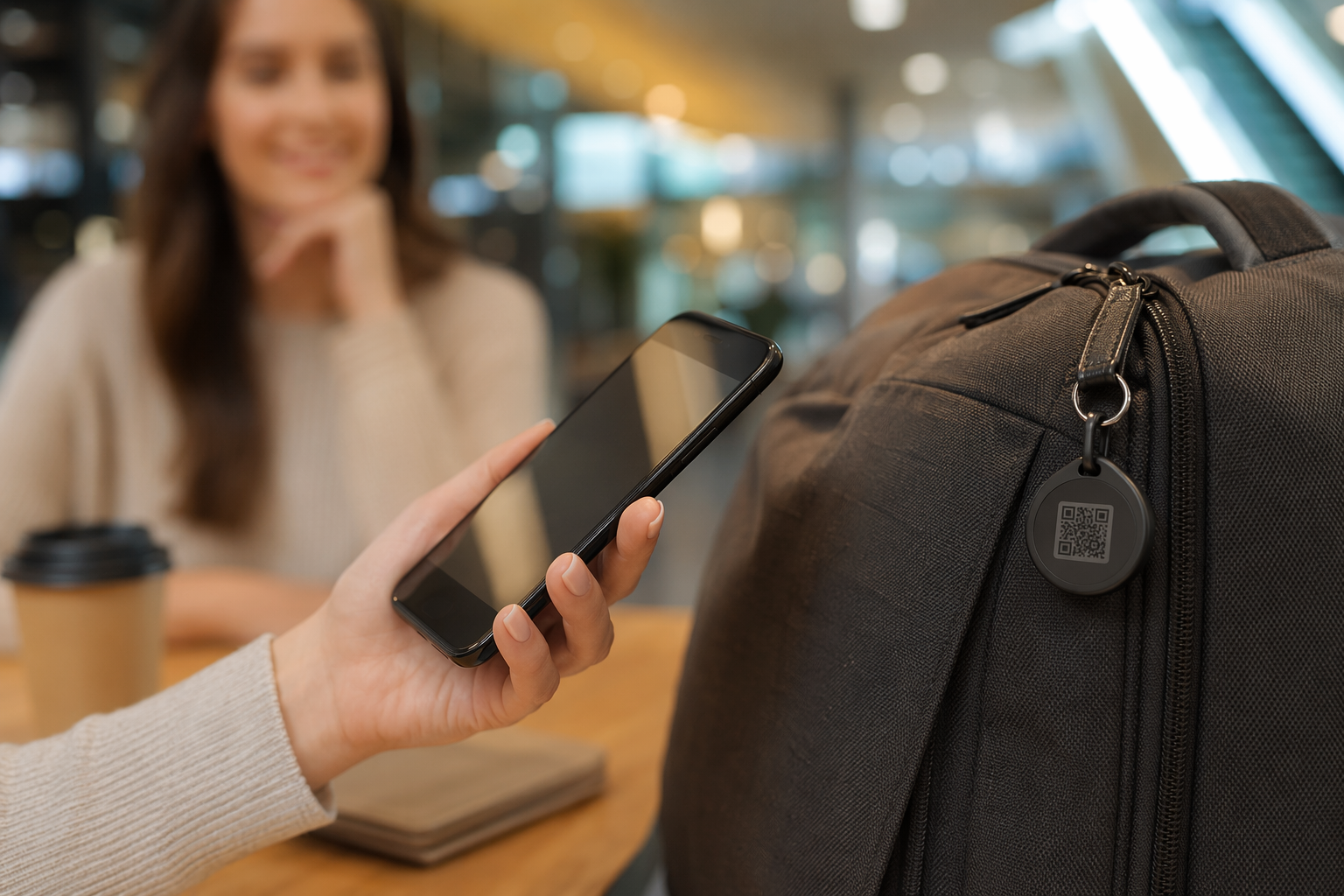
This is where a QR identification tag works differently from a GPS tracker. A QR tag doesn't track anything. Instead, it gives whoever finds your bike a simple, instant way to reach you — without revealing your personal details. They scan the code, a secure contact page opens, they leave a message, and you get notified. No app required on their end.
Place a Tagback QR sticker somewhere on the frame — ideally inside the triangle, on the seat post, or under the stem. It survives weather, it doesn't run out of battery, and it works whether the finder has an iPhone or an Android. Think of it as a return address for your bike.
Register Your E-Bike Serial Number
Bike registration is one of the most underused tools in the recovery toolkit. When police recover a bike, the first thing they do is run the serial number. If it's not in a registry, the bike sits unclaimed — even if it's yours.
- Bike Index (US, Canada, international). Free, widely used by US police departments. Register your serial number, upload photos, and mark the bike stolen immediately if it's taken. bikeindex.org
- BikeRegister (UK). The UK's national database, used by most police forces. Paid registration (around £15 for lifetime) includes a security marking kit. bikeregister.com
- 529 Garage (US/Canada). Popular in Canada and some US cities. Integrates with local police and allows community reporting.
- Manufacturer registration. Register with the manufacturer directly (Specialized, Trek, Giant, etc.). Some have their own stolen bike protocols and can flag a bike's serial number across their dealer network.
Register before any theft happens. Keep a photo of your serial number in your phone's camera roll and in your email (search for it in a hurry). Write it down somewhere offline too.
Insurance — What Actually Covers E-Bikes
Home contents insurance often excludes bikes above a certain value, especially when stolen away from the home. E-bikes, which routinely cost £2,000–£6,000+, frequently exceed these limits. Check your policy carefully.
- Specialist cycling insurance (Laka, Bikmo, Velosure in the UK; Veloguard, Markel in the US) is designed specifically for high-value bikes. It typically covers theft away from home, accidental damage, and sometimes accessories.
- Lock requirements. Most policies require you to use a specific grade of lock (usually Sold Secure Gold or equivalent) and to lock the bike to a fixed object. Failing to do so voids the claim. Read the fine print.
- Excess and payout. Claims are usually settled at current market value, not replacement cost. A two-year-old e-bike may be valued significantly below what you paid. Consider agreed-value cover if your insurer offers it.
- Keep your receipts. You'll need proof of purchase for any claim. Store your receipt digitally (email it to yourself) the day you buy the bike.
Prevention Checklist Before You Park
Recovery is hard. Prevention is much more achievable. Run through this before every parking stop:
- Use two locks of different types. A D-lock through the frame and rear wheel, plus a chain or folding lock through the front wheel to the same anchor point. Two lock types means two different tools — most thieves won't carry both.
- Lock to something immovable. A signpost can be unbolted; a bike rack bolted to concrete is better. Check that the anchor point can't be lifted over.
- Use a Sold Secure Gold (or equivalent) rated lock. This matters for insurance and is a genuine deterrent — Sold Secure ratings are tested by professional attack simulation.
- Remove the battery if you're parking for more than an hour. An e-bike without its battery is a fraction of its value on the street. Many thieves will pass it over.
- Park in well-lit, high-traffic areas. CCTV coverage is a genuine deterrent, even if it's imperfect.
- Don't park in the same place every day. Thieves case locations. Varying your spot reduces the chance of being targeted.
- Take a photo every time you park. Note the time and location. This is useful evidence for police and insurers.
- Make sure your QR tag and any trackers are in place and working before you ride, not after something goes wrong.
FAQ
What are the chances of recovering a stolen e-bike?+
Realistically, recovery rates for stolen bikes in most cities are under 5% without a tracker. With a working GPS tracker and a quick police response, that figure is higher — but police capacity to act on tracker data varies widely. The best outcomes happen when owners combine multiple layers: a tracker, a registry entry, community alerts, and an identification tag. No single method is reliable on its own.
Does an AirTag actually help recover a stolen e-bike?+
Sometimes, yes. There are documented cases of AirTags leading to bike recoveries, usually when the bike ends up at a static location (a storage unit, a house) and the owner shares the location data with police. However, AirTags have known limitations: Apple's anti-stalking feature alerts iPhone-carrying thieves after 8–24 hours, and police will not always act on the data alone. An AirTag is a useful tool but not a guaranteed recovery solution.
Where should I hide a GPS tracker on my e-bike?+
Common hiding spots include inside the handlebar tube (devices like Sherlock are designed for this), behind a bottle cage, inside the seat tube, under the chainstay, or within the battery housing if there's space. The goal is somewhere weatherproof, not easily visible, and not in a spot a thief would routinely check. Avoid the obvious spots like under the saddle — experienced thieves know to look there.
What is a QR bike tag and how is it different from a GPS tracker?+
A QR bike tag is a weatherproof sticker with a scannable code that links to a secure contact page. Unlike a GPS tracker, it doesn't track location or require a battery. Its purpose is different: it helps an honest finder contact you if they come across your bike abandoned, crashed, or left somewhere without an obvious owner. It's a return mechanism, not a tracking device — and it works even when GPS trackers have been removed or run out of battery.
Start protecting what matters
Tagback is free, forever. No subscription. No app needed for finders.
Create your free tag