
Recuperación de E-Bikes Robadas: Una Guía Práctica sobre Qué Funciona Realmente
Las e-bikes son ahora el artículo robado de más rápido crecimiento en la mayoría de las ciudades. En el Reino Unido, el robo de e-bikes aumentó más del 60% en un solo año. En áreas metropolitanas de EE.UU., los departamentos de policía reportan que las e-bikes encabezan sus listas de robos de bicicletas de alto valor. Las razones son obvias: son caras, lo suficientemente ligeras como para levantarlas y meterlas en una camioneta, y se revenden rápidamente en línea o se desmantelan para vender las piezas. Las tasas de recuperación son bajas — la mayoría de las bicicletas robadas nunca se encuentran. Esa es la realidad honesta. Pero bajo no es lo mismo que cero, y hay pasos específicos que sí mueven las probabilidades a tu favor. Esta guía las cubre todas, en orden de impacto.
Primeros 30 Minutos Después del Robo — Qué Hacer
La primera media hora es cuando la acción importa más. Aquí está la lista de verificación en orden de prioridad:
- File a police report immediately. Do it online if your local force allows it — many do. You need a crime reference number for insurance and for any future recovery to be linked back to you. Without a report, a recovered bike cannot legally be returned to you.
- Locate your serial number. It's usually stamped under the bottom bracket (the bit the pedals screw into). Check your original purchase receipt, the manufacturer's app, or any photos you took when you bought the bike. Without the serial number, you cannot prove ownership.
- Post to local Facebook groups and Nextdoor. Bike theft networks operate locally. Community reports move faster than police alerts. Include a clear photo, the colour, brand, and any distinctive marks.
- Check local marketplaces immediately. Search Facebook Marketplace, Gumtree, Craigslist, and eBay for your make and model. Thieves often list stolen bikes within hours. Screenshot anything suspicious and share the URL with police.
- Alert your bike's app ecosystem. If your e-bike has a manufacturer app (Bosch, Shimano Steps, Specialized Mission Control), report the theft there. Some manufacturers can remotely disable the motor or flag the bike's ID.
- Notify your insurer. Do this early even if you're still gathering information. Delays in notification can affect claims.
Rastreadores GPS para E-Bikes — Pros, Contras y Limitaciones Reales
Un rastreador GPS es la respuesta más obvia al robo de e-bikes, y es una herramienta genuinamente útil — pero solo si entiendes qué puede y qué no puede hacer cada tipo.
- Bosch eBike Lock (built-in GPS). Available on some Bosch-equipped bikes, this integrates directly with the Bosch system and the eBike Flow app. It can track location in real time and remotely lock the motor. Pros: no separate device to hide or charge. Cons: only available on select models, requires an active subscription, and a thief who knows bikes may disable the Bosch unit.
- Apple AirTag hidden in the frame. Affordable (~$30), no monthly fee, and works on Apple's massive Find My network. Popular approach: remove the bottle cage, hollow the space behind it, or use a saddle rail mount inside the seat tube. Pros: huge network coverage, near-silent. Cons: Android-only thieves won't trigger alerts; AirTag anti-stalking alerts will ping the thief's iPhone after ~8–24 hours; battery lasts about a year.
- Tile Tracker. Works on the Tile community network (smaller than Apple's but cross-platform). Similar use case to AirTag — hide it somewhere on the frame. Pros: works for Android users. Cons: network density is lower, making it less reliable in rural areas.
- Dedicated GPS devices (Invoxia, Sherlock). These use cellular or LoRaWAN networks rather than Bluetooth crowd-detection. Invoxia hides inside the handlebar tube and pings location continuously. Sherlock is designed specifically for bike frames. Pros: real-time tracking, no dependency on bystanders. Cons: monthly subscription fee (~£3–6/month), battery life is limited (weeks to months depending on ping frequency), and if the thief strips the frame, the tracker goes with the relevant part.
El Problema con los Rastreadores GPS — Cuándo Fallan
Los rastreadores GPS no son una herramienta de recuperación garantizada. Aquí es donde comúnmente fallan:
- Dead battery. The most common failure. A tracker that ran out of battery weeks ago gives you nothing when you need it most. Set a calendar reminder to check or replace batteries every 6–12 months.
- Discovery and removal. Professional thieves know the common hiding spots. A quick scan with an AirTag detector app or a systematic check of the frame will find most consumer trackers. Once removed, your location data stops.
- Signal jamming. Cheap RF jammers can block both GPS signals and cellular uploads. Organised theft rings sometimes use them around target areas.
- Police reluctance to act on tracker data. In many jurisdictions, police will not conduct a "tracker recovery" operation based on a consumer device. They may note the address, but they will not knock on a door without independent evidence. Tracker data is often evidence in a prosecution — not a recovery tool.
- Cost of subscriptions adding up. A dedicated GPS tracker at £5/month is £60/year. Over three years that's £180 — approaching the cost of a second lock. Factor this into your decision.
Etiquetas QR como Capa Complementaria — Un Caso de Uso Diferente
Aquí está lo que a menudo se pasa por alto en la conversación sobre recuperación de robos: no todos los escenarios de bicicletas perdidas involucran a un delincuente activo. Un número significativo de e-bikes terminan abandonadas después de un paseo sin permiso, dejadas después de un accidente, o encontradas apoyadas contra una pared sin un dueño obvio. En estos casos, quien la encuentra quiere devolver la bicicleta — simplemente no tiene idea de a quién pertenece.
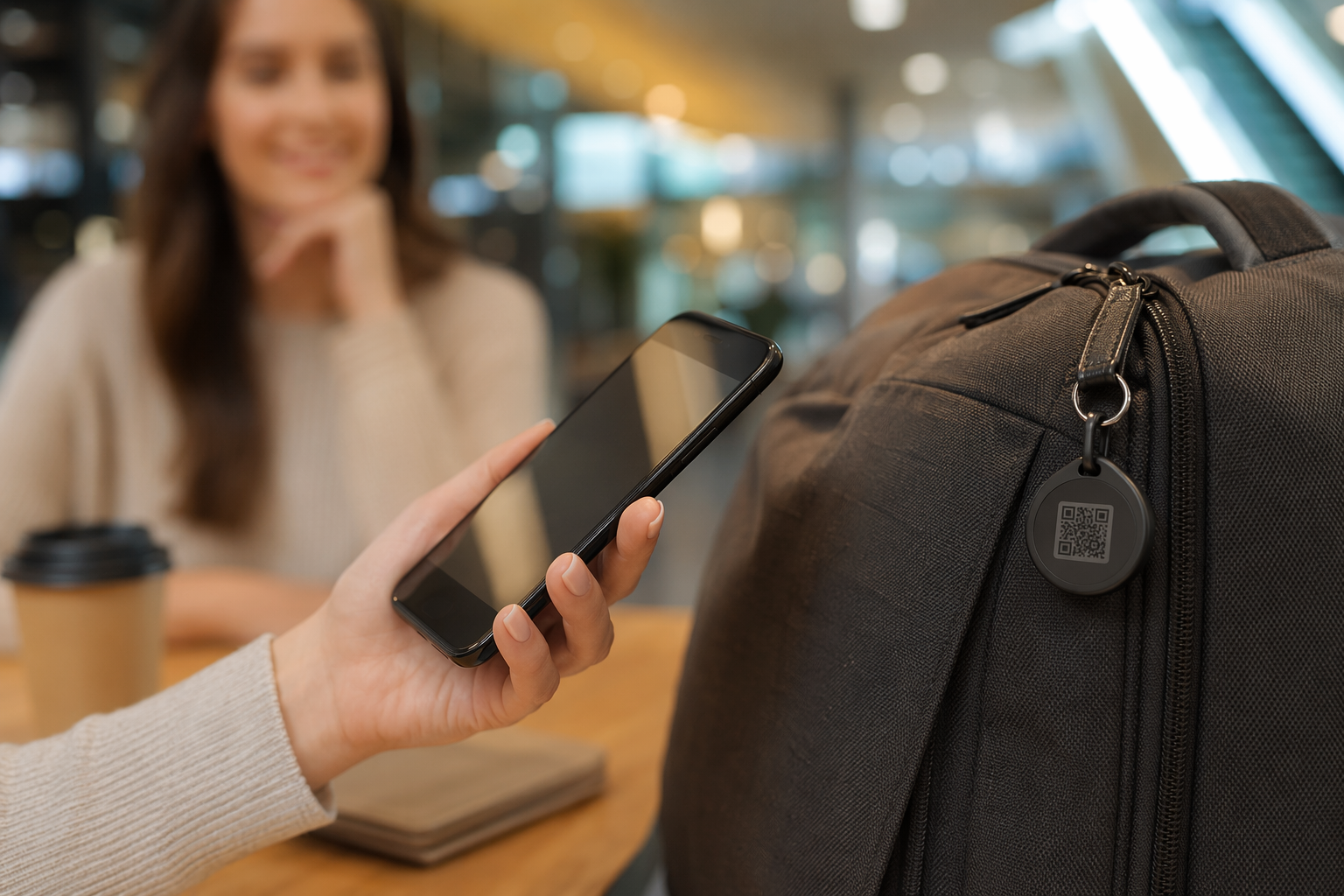
Aquí es donde una etiqueta de identificación QR funciona de manera diferente a un rastreador GPS. Una etiqueta QR no rastrea nada. En cambio, le da a quien encuentre tu bicicleta una forma simple e instantánea de contactarte — sin revelar tus datos personales. Escanean el código, se abre una página de contacto segura, dejan un mensaje y recibes una notificación. No requieren ninguna app de su parte.
Coloca una etiqueta QR de Tagback en algún lugar del cuadro — idealmente dentro del triángulo, en la tija del sillín o debajo de la potencia. Resiste el clima, no se queda sin batería y funciona tanto si quien la encuentra tiene un iPhone o un Android. Piensa en ella como una dirección de devolución para tu bicicleta.
Registra el Número de Serie de tu E-Bike
El registro de bicicletas es una de las herramientas más subutilizadas en el kit de recuperación. Cuando la policía recupera una bicicleta, lo primero que hacen es buscar el número de serie. Si no está en un registro, la bicicleta queda sin reclamar — incluso si es tuya.
- Bike Index (US, Canada, international). Free, widely used by US police departments. Register your serial number, upload photos, and mark the bike stolen immediately if it's taken. bikeindex.org
- BikeRegister (UK). The UK's national database, used by most police forces. Paid registration (around £15 for lifetime) includes a security marking kit. bikeregister.com
- 529 Garage (US/Canada). Popular in Canada and some US cities. Integrates with local police and allows community reporting.
- Manufacturer registration. Register with the manufacturer directly (Specialized, Trek, Giant, etc.). Some have their own stolen bike protocols and can flag a bike's serial number across their dealer network.
Regístrala antes de que ocurra cualquier robo. Guarda una foto de tu número de serie en el carrete de tu teléfono y en tu correo electrónico (para buscarla con prisa). Anótalo también en algún lugar sin conexión.
Seguro — Qué Cubre Realmente las E-Bikes
El seguro de contenido del hogar a menudo excluye bicicletas por encima de cierto valor, especialmente cuando se roban fuera del hogar. Las e-bikes, que rutinariamente cuestan £2,000–£6,000+, frecuentemente exceden estos límites. Revisa tu póliza cuidadosamente.
- Specialist cycling insurance (Laka, Bikmo, Velosure in the UK; Veloguard, Markel in the US) is designed specifically for high-value bikes. It typically covers theft away from home, accidental damage, and sometimes accessories.
- Lock requirements. Most policies require you to use a specific grade of lock (usually Sold Secure Gold or equivalent) and to lock the bike to a fixed object. Failing to do so voids the claim. Read the fine print.
- Excess and payout. Claims are usually settled at current market value, not replacement cost. A two-year-old e-bike may be valued significantly below what you paid. Consider agreed-value cover if your insurer offers it.
- Keep your receipts. You'll need proof of purchase for any claim. Store your receipt digitally (email it to yourself) the day you buy the bike.
Lista de Verificación de Prevención Antes de Estacionar
La recuperación es difícil. La prevención es mucho más alcanzable. Repasa esto antes de cada parada:
- Use two locks of different types. A D-lock through the frame and rear wheel, plus a chain or folding lock through the front wheel to the same anchor point. Two lock types means two different tools — most thieves won't carry both.
- Lock to something immovable. A signpost can be unbolted; a bike rack bolted to concrete is better. Check that the anchor point can't be lifted over.
- Use a Sold Secure Gold (or equivalent) rated lock. This matters for insurance and is a genuine deterrent — Sold Secure ratings are tested by professional attack simulation.
- Remove the battery if you're parking for more than an hour. An e-bike without its battery is a fraction of its value on the street. Many thieves will pass it over.
- Park in well-lit, high-traffic areas. CCTV coverage is a genuine deterrent, even if it's imperfect.
- Don't park in the same place every day. Thieves case locations. Varying your spot reduces the chance of being targeted.
- Take a photo every time you park. Note the time and location. This is useful evidence for police and insurers.
- Make sure your QR tag and any trackers are in place and working before you ride, not after something goes wrong.
Preguntas frecuentes
¿Cuáles son las probabilidades de recuperar una e-bike robada?+
Realistamente, las tasas de recuperación de bicicletas robadas en la mayoría de las ciudades están por debajo del 5% sin un rastreador. Con un rastreador GPS funcional y una respuesta policial rápida, esa cifra es mayor — pero la capacidad de la policía para actuar sobre datos de rastreadores varía ampliamente. Los mejores resultados ocurren cuando los propietarios combinan múltiples capas: un rastreador, una entrada en el registro, alertas comunitarias y una etiqueta de identificación. Ningún método individual es confiable por sí solo.
¿Realmente ayuda un AirTag a recuperar una e-bike robada?+
A veces, sí. Hay casos documentados de AirTags que llevaron a la recuperación de bicicletas, usualmente cuando la bicicleta termina en una ubicación estática (una unidad de almacenamiento, una casa) y el propietario comparte los datos de ubicación con la policía. Sin embargo, los AirTags tienen limitaciones conocidas: la función anti-acoso de Apple alerta a los ladrones que portan iPhone después de 8–24 horas, y la policía no siempre actuará solo con los datos. Un AirTag es una herramienta útil pero no una solución de recuperación garantizada.
¿Dónde debería ocultar un rastreador GPS en mi e-bike?+
Los lugares comunes para ocultar incluyen dentro del tubo del manillar (dispositivos como Sherlock están diseñados para esto), detrás de un portabidón, dentro del tubo del sillín, debajo de la vaina trasera, o dentro del compartimento de la batería si hay espacio. El objetivo es un lugar resistente al clima, no fácilmente visible, y no en un sitio que un ladrón revisaría rutinariamente. Evita los lugares obvios como debajo del sillín — los ladrones experimentados saben buscar ahí.
¿Qué es una etiqueta QR para bicicleta y en qué se diferencia de un rastreador GPS?+
Una etiqueta QR para bicicleta es una calcomanía resistente al clima con un código escaneable que enlaza a una página de contacto segura. A diferencia de un rastreador GPS, no rastrea la ubicación ni requiere batería. Su propósito es diferente: ayuda a quien la encuentre de buena fe a contactarte si se encuentra con tu bicicleta abandonada, accidentada o dejada en algún lugar sin un dueño obvio. Es un mecanismo de devolución, no un dispositivo de rastreo — y funciona incluso cuando los rastreadores GPS han sido removidos o se quedaron sin batería.
Start protecting what matters
Tagback is free, forever. No subscription. No app needed for finders.
Create your free tag