
How to Find a Lost Pet — 2026 Complete Guide
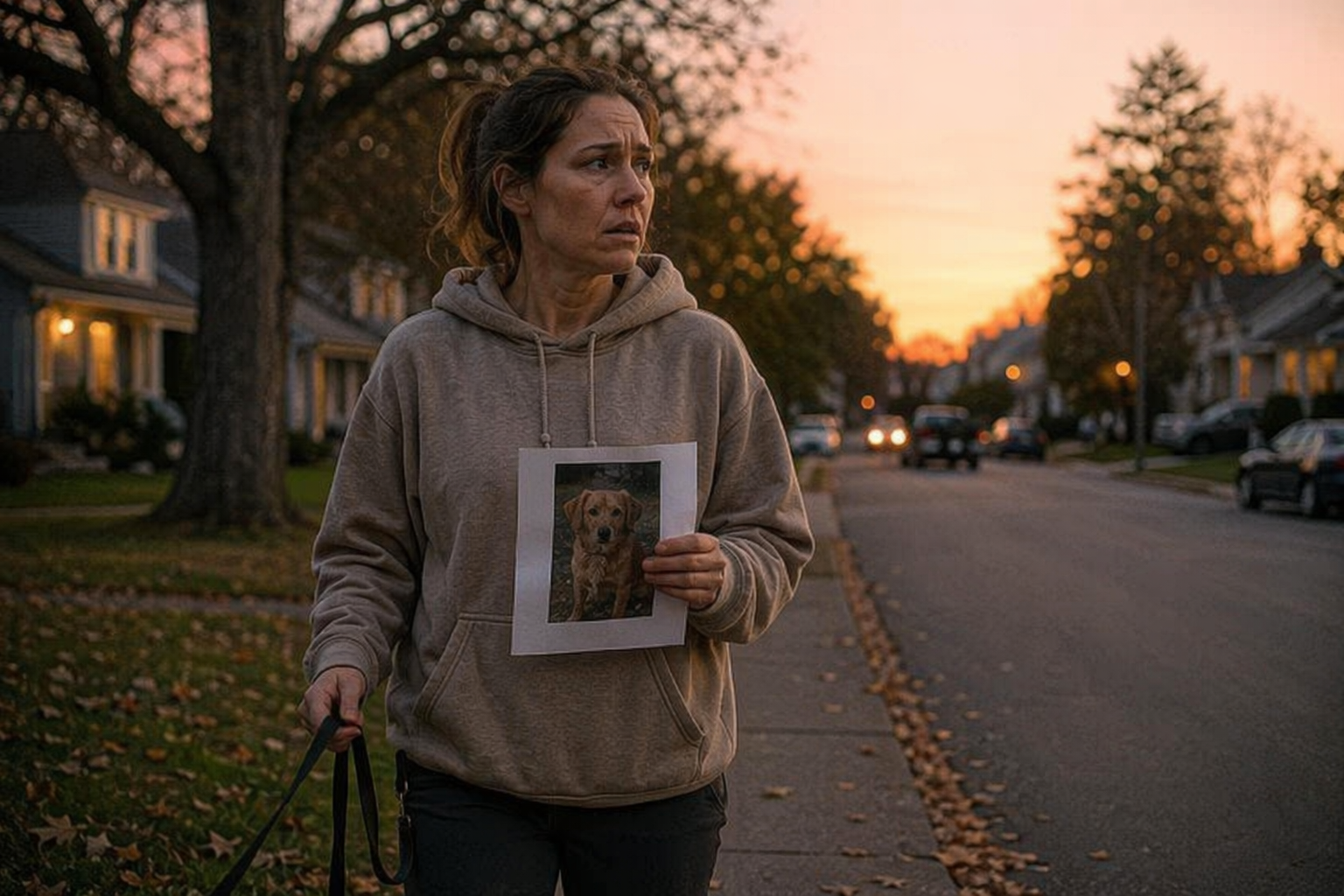
About 10 million pets go missing each year in the US alone. Roughly a third never make it home. Most of them could have — what’s missing isn’t love, it’s a method. This guide is the method, in the order you should run it.
We’ve broken it into four phases: the first hour, the first 24 hours, days 2–7, and beyond. Skip to the phase you’re in if your pet is missing right now.
Phase 1: The first hour (most pets are recovered here)
80% of pets that come home come home in the first hour. They didn’t go far. Your immediate job is to find them before they do.
1. Search calmly, not loudly
Walk slowly through the house and yard. Cats hide first, run later — check under beds, behind appliances, in closets you usually keep closed. Dogs follow scents — check the route they usually walk, then expand.
Don’t shout the pet’s name in panic. A scared animal hearing a panicked owner often hides deeper. Use the calm, "treat-time" voice. Better: shake the treat container. Use the can-opener if it’s a cat.
2. Open the door and step aside
Many lost pets are still in the house and slip out when their owner repeatedly opens the door in a panicked search. Step outside, prop the door open, then walk away to the front of the property. If they’re inside, they’ll come out quietly.
3. Check the obvious local spots
- Neighbour’s yard — pets often go to the smell of another animal
- Under porches, decks, sheds — cats wedge into tight spots
- The route to the dog park
- The pet’s favourite human (their daycare friend, your retired neighbour)
Phase 2: The first 24 hours
4. Activate your QR tag in "Lost" mode
If your pet has a Tagback QR collar tag, open the dashboard and toggle Lost mode. The next time anyone scans, they see a red banner saying "This pet is currently missing." You also start receiving GPS location pings every time the QR is scanned.
If you don’t have a tag yet, this is the moment most owners regret it. Make one in 60 seconds. Even now — print and clip on a backup collar, in case your pet is found wearing it.
5. Post in local online groups
The 4-channel rule:
- Nextdoor — neighbours actually read this
- Facebook — local "Lost Pets [Your City]" group, plus your personal feed
- PawBoost / Petfinder — sends alerts to local network
- Local subreddit — r/[Your City] often has a pinned lost-pet thread
Photo + name + neighbourhood + your Tagback link (so anyone who finds the pet can scan and reach you instantly).
6. Walk a 1km radius before sundown
Take a flashlight, the treat container, and a comfortable shoe for distance. Walk every street within 1km. Knock on doors at houses with garages and sheds. Most pets are within 1km of home; many are within 100m, hidden from view.
7. Notify the chip registry — but don’t stop there
Call the microchip registry. Mark the pet as missing in their database. This costs nothing and helps if the pet is brought to a vet or shelter.
But the chip is your last-resort tool, not your first. The QR tag is the first-minute tool. See: Why you need both microchip and QR collar tag.
8. Call shelters and vets within 30km
Don’t email — call. Spell the breed. Spell your phone number twice. Ask if you can email a photo for their staff bulletin board. Repeat the call every 48 hours, because shelter staff change shifts and new arrivals come in.
Phase 3: Days 2–7
9. Print and post 30 flyers
30 is the right number. Less than that, you miss the local circle. More than that, fatigue.
Flyer must have:
- Photo big enough to identify from across a street
- Pet’s name and breed in giant text
- Last seen location and time
- Reward (if you can offer one — even $50 helps motivation)
- Your Tagback link as a QR on the flyer (anyone with a phone can reach you instantly)
- Your phone number, large
Post on coffee shop bulletin boards, post-office, vet clinics, dog parks, all four corners of your block.
10. Set humane traps for cats
Cats hide for days. They often won’t come to your voice, even from a few metres away. A humane trap baited with sardines or wet food, placed near food bowls or familiar territory, has caught more lost cats than any other technique. Borrow from a local animal rescue — they usually loan free.
11. Use the right kind of light at night
At night, walk with a strong flashlight pointed close to the ground. Pet eyes reflect — green for cats, blue or yellow for dogs. You’ll see them before you hear them. Bring familiar food, kneel down, speak softly.
12. Update your online posts daily
Algorithms reward fresh activity. A 6-day-old post is invisible. Re-post your photo + Tagback link every day, with a "still missing as of [date]" prefix. Add a new detail each time (a witness sighting, a thank-you to whoever shared earlier).
Phase 4: Beyond a week
13. Drone services and thermal-imaging searches
Some areas have legitimate drone search services for lost pets. They scan with thermal imaging at night, when ambient ground temperature differs most from a warm body. Effective for dogs in rural areas; less useful for indoor cats hiding in basements.
14. Expand the radius weekly
Lost pets travel further than people expect. Cats often stay close for weeks but dogs can traverse 20km a day. Expand your shelter calls and online posts by 10km each week.
15. Don’t stop checking
Pets are reunited months and years after going missing — most often through a scan of a chip or a tag. Keep your Tagback profile active. Keep your contact info up to date. The pet that comes back in 8 weeks from a stranger 30km away usually got there because somebody scanned a tag.
Common mistakes
- Chasing. A scared pet runs from a chasing human. Sit still, shake treats, wait.
- Bringing strangers on the first day. Big search parties scare hiding pets deeper. Day 1: just you. Day 3+: bring help.
- Bathing the pet’s bed. Don’t. The familiar smell helps them find their way home.
- Assuming "they’ll come back when they’re hungry." Cats can hide for 5+ days without eating. They need active recovery, not passive waiting.
- Giving up after a week. Many recoveries happen in week 3, week 5, even later.
The single best thing you can do today (if your pet isn’t missing)
Make a QR pet tag. Print it on plastic. Clip it to the collar. The 60 seconds you spend today saves you from this entire guide ever being needed at full intensity. The day a stranger finds your pet, the QR turns it into a 5-minute reunion instead of a multi-week search.
For more depth on any of this, our hub page For Pets covers tag setup, and the Lost dog: first 24 hours post is a tighter version of Phase 1+2 specifically for dogs.
FAQ
How long do pets typically stay lost?+
Most pets recovered within a week were found within the first 48 hours. After 2 weeks the chance of recovery drops sharply. The first 24 hours matter most.
Should I leave food out?+
Yes — but at familiar smelling spots near home (your porch, garden), not random places. Don’t leave food in the woods or in unfamiliar territories; you’ll attract wildlife and confuse the trail. The pet’s own bedding, an unwashed t-shirt, and water near the front door work best.
Do paid pet-recovery services work?+
Some are excellent (drone services, pet detectives with thermal cameras). Most are shameless. Vet local references; check local Facebook groups for legitimate recommendations before paying anyone.
My pet had a microchip — why didn’t the vet call me?+
A microchip only helps when someone takes the pet to a scanning facility. If the pet is in a stranger’s house ("look what I found!") and never gets to a vet/shelter, the chip never gets read. A QR collar tag works the moment a phone is in hand. Use both.
Start protecting what matters
Tagback is free, forever. No subscription. No app needed for finders.
Create your free tag