
Microchip vs QR Collar Tag — Why You Need Both
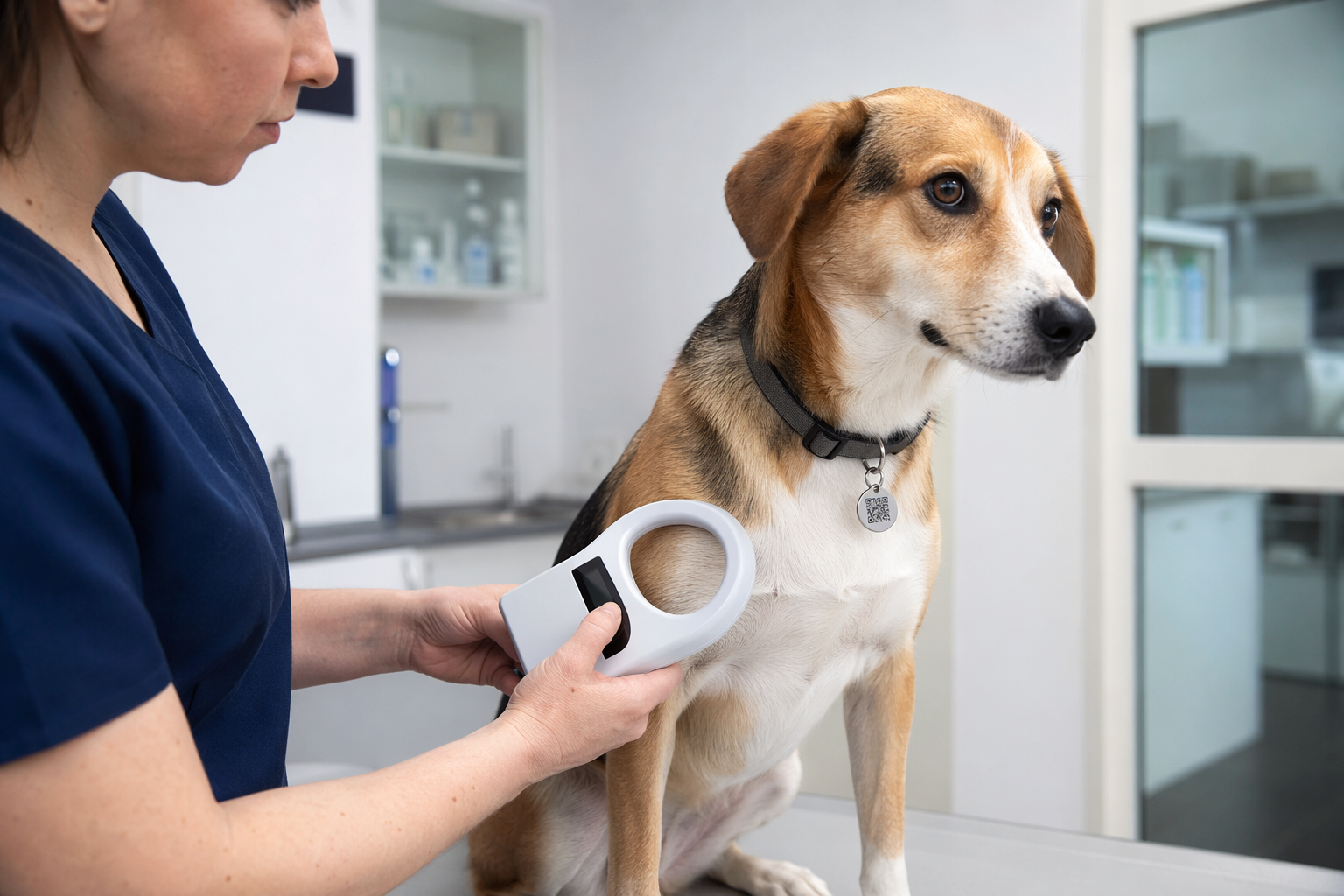
Pet owners often think microchip-vs-tag is an either/or. It isn’t. They solve different parts of the recovery problem and the gap between them is exactly where many pets get stuck.
The two halves of pet recovery
When a pet goes missing, two things have to happen:
- Someone has to find the pet
- The finder has to connect with you
Microchip and QR collar tag are tools for step 2 — but for very different scenarios:
- Microchip: works when the pet ends up at a vet or shelter that has a scanner.
- QR tag: works the moment any stranger with a phone has the pet in their hands.
Where each one fails
Microchip fails when:
- The finder doesn’t take the pet to a vet ("she looked healthy, I thought she was a stray and adopted her")
- The finder takes the pet to a vet without a working scanner (some smaller clinics)
- The chip has migrated to an unusual spot (rare but real)
- Your contact info on the registry is outdated (a major issue — half of registered chips have stale info)
QR collar tag fails when:
- The pet has lost the collar
- The QR is too damaged to scan
- The finder has no smartphone (rare in 2026, but possible)
Why you actually need both
The collar is the first-minute tool. The chip is the last-resort tool.
The most common reunion path:
- Pet escapes
- Stranger picks them up
- Stranger reads the QR collar tag, scans with phone, sees your contact card, messages you
- You and the stranger meet, pet comes home
- Total time: 30 minutes to 6 hours
If the collar is lost, the fallback path:
- Stranger picks up unknown pet
- Stranger keeps for a few days
- Eventually takes to a vet or shelter
- Vet scans the chip, calls the registry, registry calls you
- Total time: 1 day to 2 weeks (sometimes much longer)
The chip wins when the collar fails. But the chip-only path is slower, less certain, and depends on the finder taking action you can’t guarantee.
The cost-benefit math
| <tr><th> | Microchip | QR collar tag |
|---|---|---|
| One-time cost | ~$50 | Free |
| Recurring cost | Registry: $0–25/year | None |
| Setup time | 5 min vet visit | 60 seconds online |
| Updateable | Yes via registry | Yes instantly via dashboard |
| Visible to finders | No | Yes |
| Works for honest strangers | No (vet-only) | Yes |
| Works if collar is lost | Yes | No |
What to do today
- If your pet isn’t chipped — schedule it. Microchipping is your floor, not your ceiling.
- Update your registry contact info. Most chips fail at this step, not at the scan.
- Make a free QR collar tag. The first one is always free.
- Attach the QR to a sturdy, breakaway-style collar. Test it by scanning yourself.
For the comparison with AirTag and GPS collars, see QR vs AirTag vs GPS for pets. For the full lost-pet recovery sequence, the complete guide.
FAQ
My pet is microchipped. Do I really need a QR collar tag?+
Yes. Microchips work only when scanned by a vet or shelter. The QR works for any honest stranger with a phone. Most "found pet" stories start with a stranger picking the pet up — not a vet.
My pet wears a metal engraved tag. Is QR really better?+
They serve different purposes. Metal tag is instant, no phone needed. QR tag holds way more info, is updatable, and works in any language. Many pet owners use both.
Should I get my pet chipped?+
Yes. It’s a one-time cost (~$50), permanent, and required in many countries for travel. The QR tag complements it; it doesn’t replace it.
Start protecting what matters
Tagback is free, forever. No subscription. No app needed for finders.
Create your free tag