
Best ID Tag for Senior Dogs: Keeping Your Older Dog Safe When It Matters Most
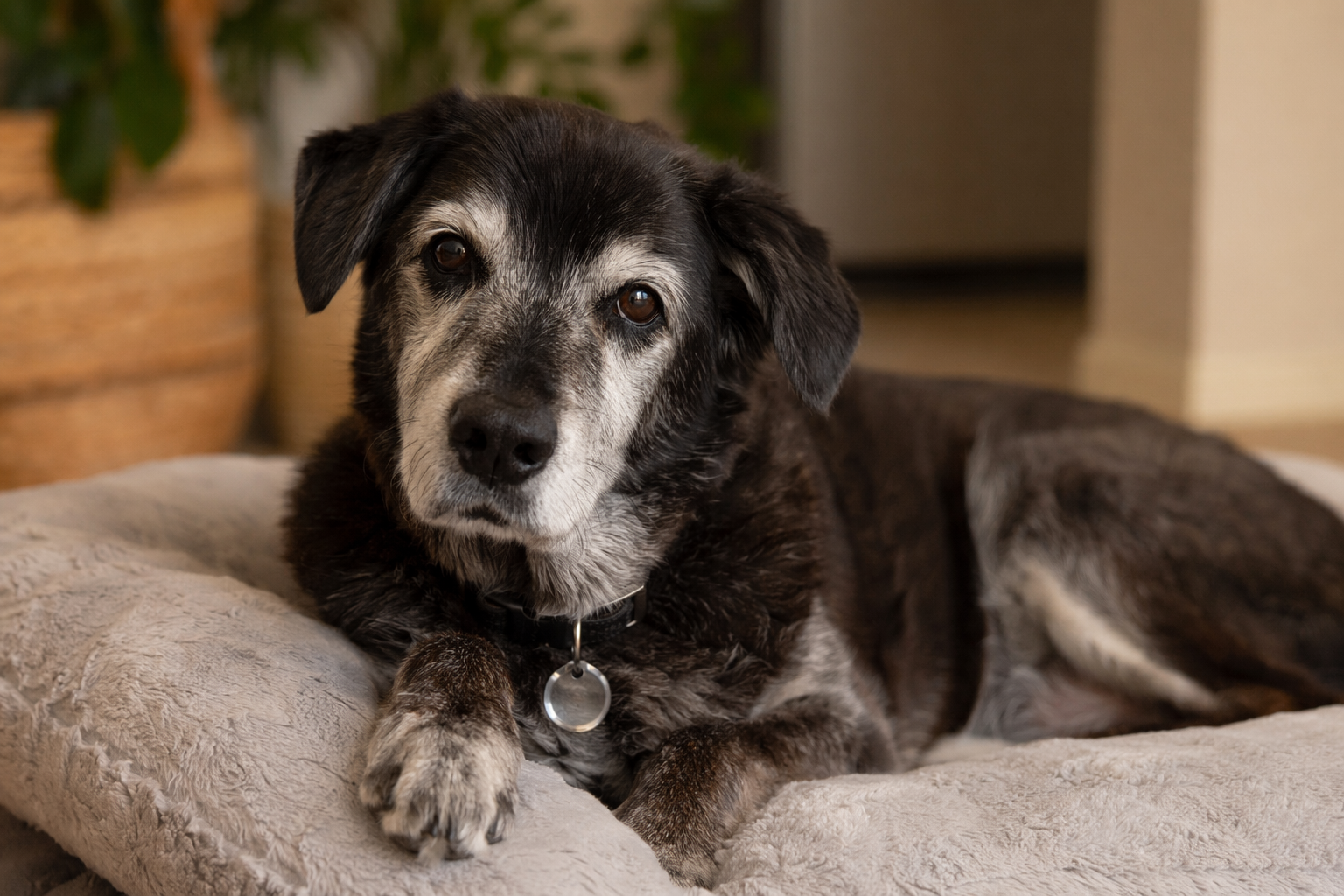
If you share your life with a senior dog, you already know how much they mean to you. You've grown together. You know their quirks, their favourite napping spots, their slow-morning stretches. And precisely because they mean so much, it's worth thinking about something a lot of owners overlook: identification. A senior dog who slips out of the yard is in far more danger than a young, sharp-nosed pup who can find their way home. Aging changes how dogs navigate the world, and the right ID tag — updated, readable, and easy for any stranger to use — can be the difference between a scary afternoon and a true tragedy.
How Aging Changes a Dog's Wandering Behavior
Wandering in older dogs is rarely mischief. Most of the time, it's confusion. Canine Cognitive Dysfunction Syndrome (CDS) — often called doggy dementia — affects an estimated 14–35% of dogs over the age of eight. Dogs with CDS may become disoriented even in familiar surroundings, lose their sense of direction, or wander without any apparent goal. They might push through a fence they've never touched in ten years, simply because they forgot it was there.
Sensory decline compounds the problem. A dog losing their vision may startle easily and bolt. A dog with hearing loss can't hear you calling, and won't respond to traffic or other hazards. An arthritic dog who follows a scent into a ditch may not be able to get back out. All of this means that a lost senior dog is harder to recover quickly — and every hour matters more for an older animal in poor health or on medication.
The Problem With Engraved Tags for Senior Dogs
Engraved metal tags have been the default for decades, and they do the job — until they don't. Here's where they tend to fall short for senior dogs specifically:
- Text wears off. A tag that's been jingling on a collar for five or six years may be nearly unreadable. Senior dogs are more likely to have older, worn tags.
- Phone numbers change. If you've moved or changed your number since you got your dog, there's a real chance the engraved information is already out of date.
- Limited space. There's no room to include a vet contact, medical conditions, or medication notes — all of which are critical for a dog with CDS or a chronic illness.
- Weight and noise. An arthritic dog with neck sensitivity may find a heavy, jangling tag uncomfortable. Discomfort leads to scratching, which leads to owners removing tags — removing the one safety net the dog has.
Best Collar Type for Senior Dogs
Before you think about the tag, get the collar right. For senior dogs, comfort is non-negotiable:
- Soft, wide collars distribute pressure more evenly and reduce irritation on thinning or sensitive skin.
- Lightweight materials like nylon or biothane reduce neck strain for dogs with arthritis or degenerative disc issues.
- Breakaway collars are worth considering for dogs who are left unsupervised, though keep in mind they may come off if your dog gets stuck somewhere.
- Check the fit regularly. Senior dogs can lose muscle mass quickly. A collar that fit perfectly six months ago may now be loose enough to slip over their head.
Whatever tag you choose, opt for the lightest version that does the job. A large, heavy metal tag on a frail old neck adds up over a long day.
Why QR Tags Are Ideal for Senior Dogs
A QR code tag solves most of the problems that engraved tags create — and it does so in a way that's particularly well-suited to older dogs and their owners.
Here's how it works: the tag carries a unique QR code. Anyone who finds your dog scans the code with their phone camera — no app needed — and is taken directly to your dog's profile page. That page can show your current phone number, a photo of your dog, any medical conditions, medications, and your vet's contact details. You can update that information any time, from your phone, without buying a new tag.
- No squinting at tiny text. The finder doesn't need good eyesight or strong light. They just point their camera.
- Always current. Changed your number? Updated your address? Fixed it in 30 seconds. The tag never needs replacing.
- Photo helps identification. A finder can confirm they have the right dog, especially helpful for common breeds.
- Medical notes visible instantly. If your dog needs medication every 12 hours, a finder can see that immediately and know to act fast.
- Lost Mode. With Tagback, you can activate Lost Mode when your dog goes missing, which flags the profile and increases urgency for anyone who scans.
For a dog with CDS or complex medical needs, this isn't a luxury — it's genuinely better protection than an engraved tag can offer.
What to Include in a Senior Dog's Tag Profile
When you set up your dog's digital profile, go beyond the basics. For a senior dog, the following information can make a real difference to their welfare if they're found by a stranger:
- Your current phone number — and a backup contact if possible.
- A clear, recent photo that shows any distinctive markings.
- Known medical conditions — arthritis, heart disease, CDS, diabetes, epilepsy.
- Medications and dosing schedule — especially for dogs on twice-daily medication or insulin.
- Vet clinic name and number — so a finder can call ahead if they're heading to an emergency vet.
- Any behavioural notes — 'may appear confused', 'deaf, approach slowly', 'friendly but scared when lost'.
- Dietary restrictions — particularly relevant if your dog is on a prescription diet.
Think of this profile as the thing you'd want a kind stranger to know in the first five minutes of finding your dog. Write it for them.
Microchip Check: Don't Assume It's Still Registered Correctly
Microchips are permanent — but the registration attached to them isn't always kept up to date. A chip that was registered to your old address or a phone number you cancelled two years ago is functionally useless. If your dog is taken to a shelter or vet and scanned, the chip will confirm they're chipped, but the contact details will lead nowhere.
Take ten minutes this week to look up your dog's chip number and log into the relevant registry to verify your current address, phone, and email are all correct. If you've moved since the chip was implanted and never updated the details, now is the time. Combine a chip with a QR tag and you have two independent recovery paths — which dramatically improves your odds.
GPS Trackers for Senior Dogs: When They're Worth It
A QR tag works when someone finds your dog. A GPS tracker works when you're trying to find them before anyone else does. For dogs with moderate to severe CDS, a GPS collar attachment is worth serious consideration — particularly if your dog has started wandering at night, which is a common symptom of cognitive decline.
GPS trackers do have limitations: they require a subscription, they add weight to the collar, and battery life varies. But for a dog who has already escaped once or shows signs of nighttime disorientation, the peace of mind is substantial. Used alongside a QR tag — not instead of one — a tracker gives you active search capability while the tag handles the 'found by a stranger' scenario.
- Consider a GPS tracker if your dog has been diagnosed with CDS.
- Look for lightweight models designed for smaller or older dogs.
- Set up the geofence alert so you're notified the moment your dog leaves a safe zone.
- Keep the tracker charged on a regular schedule — treat it like a phone.
The Daily ID Check Habit
The best tag in the world is useless if it's sitting on the counter. Building a quick daily check into your routine takes seconds and can prevent a disaster:
- Every morning, confirm the collar is on and fits correctly — not too tight, not loose enough to slip.
- Check that the tag is attached securely. Rings and clasps can loosen over time.
- Scan the QR code yourself occasionally to confirm the profile loads correctly and the information is current.
- After any bath or grooming session, reattach the tag before your dog leaves the grooming table.
- Update the profile whenever something changes — new medication, new vet, new phone number.
For senior dog owners especially, these habits matter. Your dog is relying on you in ways they may not have needed to when they were young and sharp. The collar and tag are a small but meaningful part of the care you already give them every day.
Your senior dog has given you years of loyalty and companionship. Giving them the best possible ID protection is one of the simplest, most practical ways to return that care — and to make sure that if the worst happens, someone out there has everything they need to bring your dog home.
FAQ
What is the best ID tag for a senior dog with cognitive decline?+
A QR code tag is the best choice for a senior dog with Canine Cognitive Dysfunction Syndrome (CDS). Unlike engraved tags, a QR tag links to a profile where you can include your dog's medical conditions, medications, and vet contact — information that's critical if a stranger finds your dog and doesn't know how to help. The profile can be updated any time without replacing the tag.
Can engraved tags work for old dogs, or do they wear out?+
Engraved tags do wear out, and senior dogs are more likely to have older, well-worn tags with faded or illegible text. Beyond legibility, engraved tags have no space for medical notes, can't be updated if your number changes, and can be heavy enough to cause discomfort on arthritic necks. For senior dogs, a lightweight QR tag with a detailed digital profile is a more reliable and practical option.
How does vision loss affect a dog's chance of getting lost?+
Dogs with vision loss are more easily disoriented in new or changing environments. They may startle and bolt, or wander in an unfamiliar direction when their usual visual landmarks disappear. This makes identification more important, not less — a dog who can't see well is less likely to find their own way home and more dependent on a stranger being able to contact you quickly.
Should I get a GPS tracker as well as an ID tag for my senior dog?+
If your dog has been diagnosed with CDS or has started wandering at night, a GPS tracker is a worthwhile addition alongside a QR ID tag — not instead of one. The GPS helps you actively locate your dog, while the tag ensures anyone who finds them can contact you and understand their medical needs. Together, they provide two independent recovery paths that significantly improve your chances of a fast reunion.
Start protecting what matters
Tagback is free, forever. No subscription. No app needed for finders.
Create your free tag