
Solo Travel Safety: The Practical Checklist for Traveling Alone
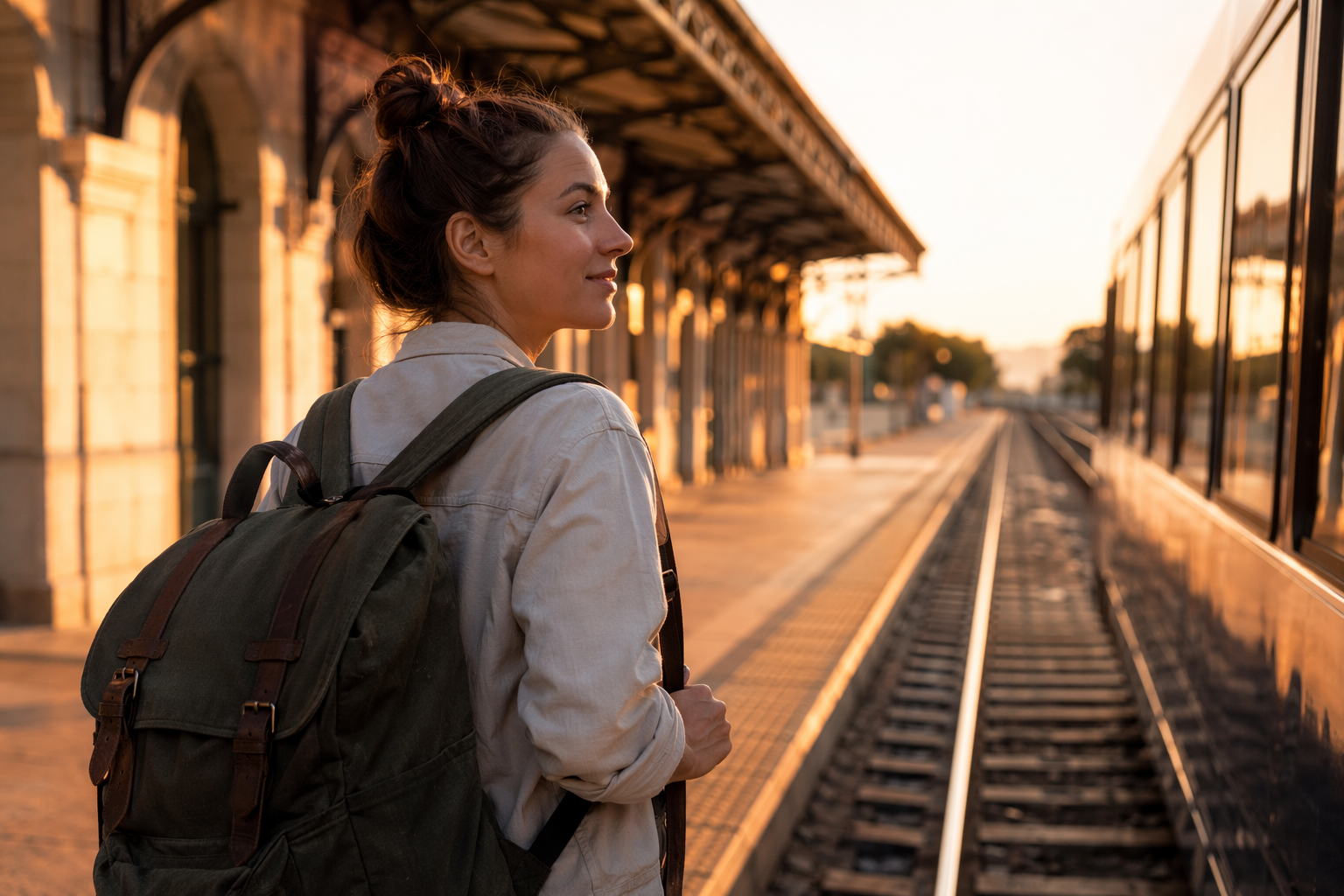
Solo travel is statistically safer than most people think. The vast majority of solo trips — including millions taken every year by women traveling alone — go off without a single serious incident. What separates a great solo trip from a stressful one usually isn't luck. It's preparation. Most incidents that do happen are preventable with a handful of habits that take minutes to set up before you leave. This guide gives you the complete, practical checklist: documents, communication, transport, accommodation, and what to do if something actually goes wrong.
Before You Leave Home
The most important solo travel safety work happens before you ever get to the airport. A little admin at home means that if something goes sideways, you — and the people who care about you — have options.
- Share your itinerary with someone you trust. Give a friend or family member your full itinerary: hotel names, addresses, flight numbers, and any activity bookings. It doesn't have to be a daily check-in system — just make sure someone at home knows where you're supposed to be.
- Register with your country's travel advisory program. US travelers: enroll in the STEP program (Smart Traveler Enrollment Program) at step.state.gov. UK travelers: register with the FCO's LOCATE service. Most countries have an equivalent. It means your embassy can reach you in a crisis and knows you're in-country.
- Research your destination's current situation. Check your government's official travel advisories (not just travel blogs) in the week before departure. Look at entry requirements, areas to avoid, local laws, and any health advisories. Thirty minutes of research can prevent the kind of surprise that ruins a trip.
- Save key contacts offline. Embassy phone number, your travel insurance emergency line, and your trusted contact at home — all saved somewhere you can access without internet.
ID and Documents
Losing your documents abroad is stressful. Losing them without any backup is a genuine ordeal. The solution is simple layering.
- Carry copies of your passport separately from the original — one physical copy in your bag, one left at home with your trusted contact.
- Store digital copies in the cloud (Google Drive, iCloud, Dropbox) — passport photo page, visa, travel insurance policy, and insurance emergency number.
- Get travel insurance that includes medical evacuation. Standard policies vary wildly. Confirm yours covers emergency repatriation and hospital stays — not just trip cancellations.
- Know your blood type. If you're ever in a medical emergency in a country with a language barrier, this one fact can matter enormously. Write it down, carry it with you.
- Keep a small amount of emergency cash (local currency or USD/EUR) separate from your main wallet — enough for a taxi and a night's accommodation if cards fail.
Phone and Communication
Your phone is your navigation, your translator, your emergency contact, and your safety line. Treat it accordingly.
- Get a local SIM card or activate an international plan before you land — not at the airport kiosk if you can help it (they're expensive). eSIM services like Airalo work in over 190 countries and can be set up from home.
- Download offline maps for your destination before you leave (Google Maps, Maps.me, or similar). No data signal should never mean you don't know where you are.
- Set your trusted contact as ICE (In Case of Emergency) in your phone contacts and on your lock screen. On iPhone, this is done via Medical ID in the Health app. On Android, use Emergency Information in Settings. First responders are trained to look for this.
- Consider a portable battery pack — a dead phone abroad is a different kind of problem than a dead phone at home.
QR Travel ID: Your Silent Emergency Profile
One of the most underused solo travel safety tools is a QR travel ID tag — a small tag you wear or carry that links to your emergency profile. If you're ever incapacitated — a road accident, a medical episode, anything that leaves you unable to speak — anyone who finds you can scan the code and immediately access:
- Your blood type and allergies
- Current medications and medical conditions
- Your emergency contact at home (name and phone number)
- Any critical information first responders need to know
This is particularly valuable for solo travelers because there's no travel companion to provide this information on your behalf. With Tagback, you can update your emergency profile before each trip — add the city you're in, your hotel, your travel insurance number — so it's always current. The QR code stays the same; the information behind it updates. Wear it on your bag, your luggage, or on a wristband. It takes two minutes to set up and works anywhere in the world without an app.
Accommodation Safety
Where you sleep matters as much as how you get there. A few habits apply whether you're in a five-star hotel or a hostel dorm.
- Research before booking, not just by stars. Read recent reviews specifically for safety, neighbourhood feel, and responsiveness of staff. Search the property name plus 'solo female traveler' or 'solo traveler' — you'll find candid assessments quickly.
- Share your check-in times with your trusted contact at home. A simple message — 'checking into [hotel] tonight around 8pm, I'll message when I'm in' — creates an easy check-in rhythm without feeling burdensome.
- Invest in a door security kit for budget accommodation. A rubber door wedge alarm (costs under $10) jammed under your door handle provides an extra layer of security in rooms where the lock quality is uncertain. Portable door locks are also available for hostel-style shared doors.
- Know the emergency exits on your floor when you first arrive — not after you need them.
Daily Safety Habits
Most daily safety is about situational awareness, not paranoia. You're not trying to look fearful — you're trying to look purposeful.
- Vary your routine. If you're staying somewhere for more than a few days, take different routes, eat at different times. Predictability is the only thing that makes you a target.
- Keep your phone in a front pocket or crossbody bag worn across your body — not hanging off one shoulder, not in a back pocket.
- Avoid expensive headphones when walking alone at night. Full noise-cancelling headphones block situational awareness. If you need music, one earbud in is the rule.
- Know where the nearest embassy or consulate is. You don't need to visit it — just know the address and keep it saved offline.
- For women solo travelers specifically: trust your gut. If a situation or a person feels off, you don't owe anyone an explanation for leaving.
Transport Safety
Transport is statistically where most avoidable incidents happen. The good news is that most transport risk is manageable with a few firm habits.
- Pre-book licensed taxis from the airport. Unofficial taxi touts at arrivals are a universal risk. Book through your hotel in advance, use the official airport taxi rank, or use a verified app — never accept a ride from someone who approaches you in arrivals.
- Use rideshare apps with digital trails. Uber, Bolt, Grab (Southeast Asia), and their regional equivalents create a record of every journey: driver name, licence plate, route. This is a meaningful safety upgrade over cash taxis.
- Screenshot the driver details before you get in — name, photo, licence plate — and send it to your trusted contact or drop it into a message thread with someone at home. Takes five seconds.
- Sit in the back seat for rideshares. You can exit either side, and you maintain personal space.
- On overnight trains or buses, keep your bag close. Loop the strap around your arm or leg. Budget lockers in overnight train compartments are usually worth the upgrade cost.
If Something Goes Wrong
Preparation means knowing what to do before panic has a chance to set in. Most problems that arise during solo travel are solvable — they just require knowing where to start.
- Stay calm and don't escalate. In the vast majority of situations — theft, scams, confrontations — the safest response is to disengage, not to fight or argue.
- Know the local emergency number before you arrive. It's not always 112 or 911. In Japan it's 110 (police) and 119 (ambulance). In Australia it's 000. Look it up and save it.
- Call your travel insurance emergency line first if you need medical help — they can direct you to covered facilities and handle the logistics of payment and repatriation.
- Go to your embassy or consulate if your passport is stolen or you need emergency travel documentation. They exist specifically to help citizens in exactly this situation.
- Contact your bank immediately if cards are lost or stolen — most major banks have 24-hour international lines, and many will arrange emergency card delivery to your location.
Solo travel is one of the most rewarding things a person can do. The freedom to move at your own pace, make your own choices, and discover what you're capable of on your own is genuinely life-changing. The preparation above doesn't take the adventure out of solo travel — it protects it. When you know you've got the basics covered, you can be fully present for everything that makes the trip worth taking.
FAQ
Is solo travel safe?+
Yes — solo travel is generally very safe, and millions of people travel alone every year without incident. The perceived risk is usually much higher than the actual risk. Most problems that do occur are minor and preventable with basic preparation: sharing your itinerary with someone at home, using verified transport, keeping copies of your documents, and wearing or carrying a QR travel ID with your emergency information. Solo travelers who prepare before they leave overwhelmingly have trouble-free trips.
What should I carry for solo travel safety?+
The core solo travel safety kit includes: physical and digital copies of your passport and travel insurance, a local SIM or active international plan, offline maps downloaded to your phone, emergency cash in a separate location from your main wallet, and a QR travel ID tag containing your blood type, allergies, medical conditions, and emergency contact. Optional but useful: a door wedge alarm for budget accommodation, a portable battery pack, and a crossbody bag for daily carry.
How do I share my location with someone when traveling solo?+
The most reliable method is to share your itinerary in advance — hotel names, flight numbers, and a rough daily plan — with a trusted contact at home. For real-time location sharing, Apple Find My and Google Maps both allow continuous location sharing with specific contacts, which works as long as you have data. For a low-tech backup, set up a simple daily check-in with your contact: a message at a specific time each day that says you're fine. If the message doesn't arrive, they know to follow up.
What is the STEP program?+
STEP (Smart Traveler Enrollment Program) is a free service run by the US Department of State that allows US citizens traveling abroad to register their trip with the nearest US embassy or consulate. Once registered, the embassy can contact you in a crisis — a natural disaster, civil unrest, or family emergency — and your emergency contacts at home can also be reached through the program. Enrollment takes about five minutes at step.state.gov and is one of the most recommended pre-travel steps for US citizens going abroad.
Start protecting what matters
Tagback is free, forever. No subscription. No app needed for finders.
Create your free tag