
How to Register Your Bike Serial Number: The 5-Minute Step That Matters Most
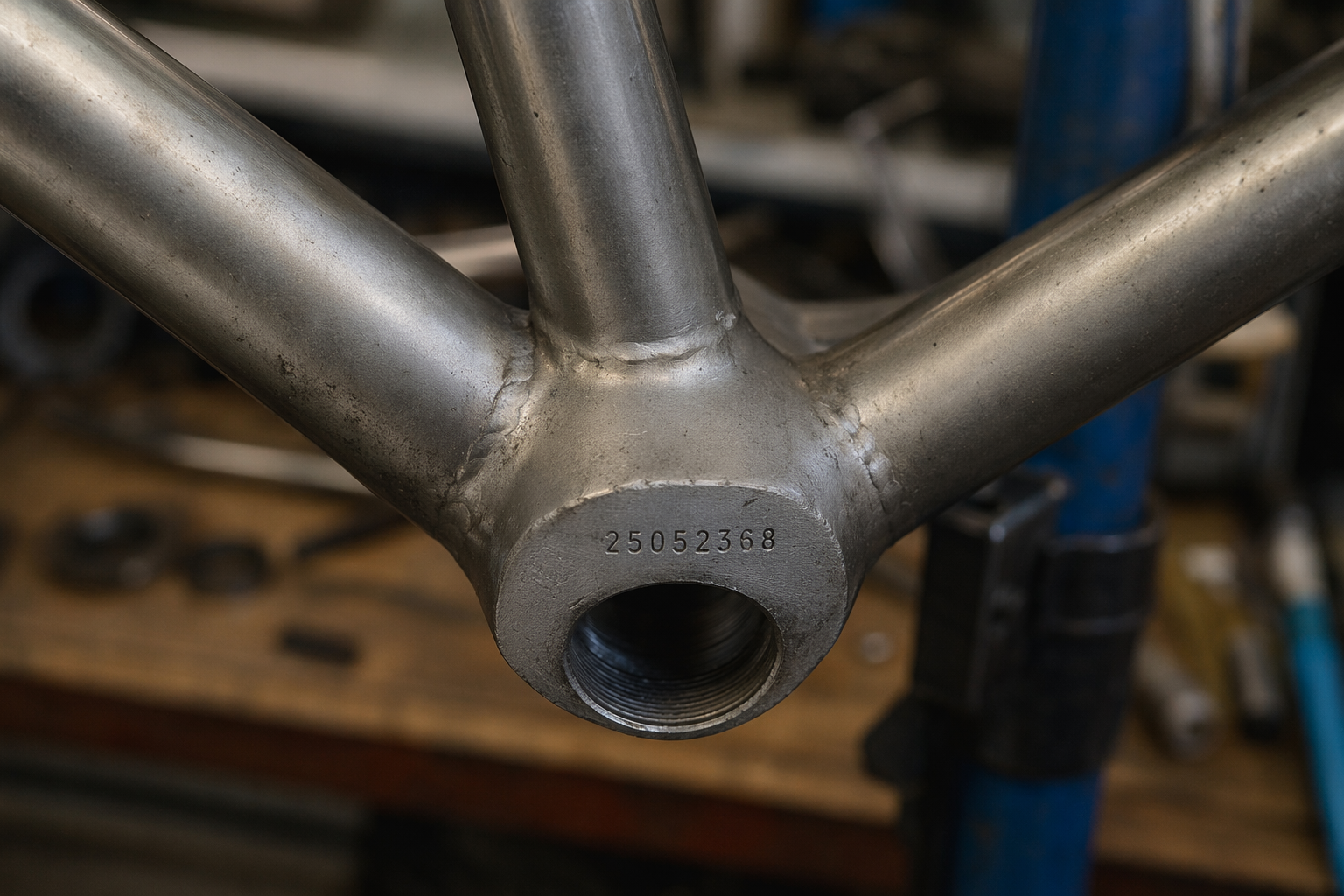
Your bike has a serial number. Most cyclists have never looked for it. Registering that number takes five minutes and is the single most important step you can take before your bike is stolen — because without it, a recovered bike cannot legally be returned to you. Police find bikes every week that match outstanding theft reports. The serial number is the only link between the bike in the evidence room and the owner waiting at home. If yours isn't in a registry, that bike sits unclaimed until it's auctioned off or destroyed. This guide covers where to find the number, where to register it (free options included), what else to photograph, and what registration alone still misses.
Where to Find Your Bike Serial Number
The serial number is stamped directly into the metal of the frame. It doesn't wear off in the rain and it can't be deleted — though it can be obscured by grime or deliberately ground down by thieves. Here's where to look:
- Under the bottom bracket. This is the most common location by far. The bottom bracket is the tube where the pedal cranks meet the frame — it sits at the very base of the frame triangle. Flip the bike upside down or lay it on its side and shine a flashlight directly at the underside of that tube. Wipe away any grease or grime with a cloth. The number is almost always here.
- Rear dropout. The rear dropout is the metal slot on each side of the frame where the rear wheel attaches. Check both sides — some manufacturers stamp the serial number here instead of, or in addition to, the bottom bracket.
- Headset area. The headset sits at the top of the fork, where the fork meets the frame's head tube. Some manufacturers stamp the serial number on the head tube itself or just below the headset cup.
- Seat tube. Less common, but worth checking — particularly on older bikes. Run your fingers along the seat tube (the vertical tube the seatpost slides into) and look for stamped digits.
- What it looks like. Serial numbers are typically 6 to 12 characters long and may include both letters and numbers. Common formats include SC-195438, WTU230451, or T24JP39842. The format varies by manufacturer — there is no universal standard.
Take a photo of it right now — before anything happens to the bike. Store the photo in your cloud camera roll and email it to yourself so you can search for it in a hurry. Write the number down somewhere offline too.
Where to Register Your Bike (Free and Paid Options)
There is no single global registry, which means the best approach is to register in more than one place. Here are the most widely used options, starting with the best free ones:
- BikeIndex.org (US and international, free). The largest stolen bike registry in the United States, with hundreds of police departments and bike shops integrated into the system. When a bike comes in for a repair or is brought in by an officer, shop staff can run the serial number directly through BikeIndex. Registration is completely free. bikeindex.org
- Project 529 (US and Canada, free). Strong community features — local cycling groups, alerts when bikes matching your description appear in your area, and direct integration with police departments in several cities including Seattle, Portland, and Vancouver. The 529 sticker program is also a visual deterrent. project529.com
- BikeRegister.com (UK, ~£15 lifetime). The UK's national police-approved registry, used by most UK police forces when processing recovered bikes. Registration includes a security marking kit to physically mark the frame. Worth the small cost for UK cyclists. bikeregister.com
- Your local municipality. Some cities run their own registration programmes. New York City, Portland, and several university cities offer free city registration — check your local council or city transport website. University campuses often require bike registration for bikes kept on site.
- Your bike's manufacturer. Trek, Specialized, and several other major brands maintain their own owner registries. Register your bike through the manufacturer's website or app at the time of purchase. Some can flag your serial number across their dealer network if the bike is stolen.
- International options. BikeTrac (UK) covers GPS-tracked bikes with a paid subscription. Bike Shepherd (Australia and New Zealand) operates as a free community registry with local shop integration.
Register on at least BikeIndex and your local scheme. The two minutes it takes to duplicate the entry across registries is worth it — different police departments use different systems.
What to Photograph Before Registering
A registry entry with no photos is much weaker than one with a complete visual record. Registries support image uploads — use them. A photo of your specific bike, with its actual scratches and marks, is far more useful in a positive ID than a manufacturer's product shot.
- Serial number close-up. Clear, in focus, well-lit. This is the most important photo — it's the one that proves the registration was done before the theft, not after.
- Full bike, both sides. Take each photo in good natural light. Left side and right side. Include the whole bike from wheel to wheel.
- Unique features. Any custom paint, stickers, modifications, or distinctive components. A specific saddle brand, unusual bar tape colour, a cracked seat stay, a cable routed differently from stock — document all of it. These details help police and finders make a positive ID when the serial number isn't immediately visible.
- Accessories. Lights, racks, mudguards, computer mounts, bottle cages — anything that typically stays attached to the bike. Thieves sometimes swap components; a distinctive rack or light can still identify the frame.
- Receipt or proof of purchase. A photo of the receipt or a screenshot of the order confirmation email. This is required for insurance claims and strengthens ownership in any legal dispute. A bank statement showing the purchase date and retailer name is a valid alternative.
What Registration Actually Does (and Doesn't Do)
Understanding the real mechanics of bike registration prevents the common mistake of assuming a registry entry will automatically recover a stolen bike. Here is exactly what you are getting:
- DOES: allows police to match a recovered bike to its owner. When a bike is recovered — after a raid, a tip-off, or just an officer noticing an abandoned bike — the serial number is run through registries. If your registration is there, the bike can be returned to you. Without the registration, it cannot — regardless of how certain you are it's yours.
- DOES: allows pawn shops and bike shops to check before buying or servicing. Many pawnbrokers and independent bike shops check BikeIndex before accepting a bike. A registry hit flags the bike as stolen immediately. This is particularly effective because thieves often bring bikes to local shops for quick cash or repair.
- DOES NOT: actively track your bike. A registry entry is a record, not a tracker. It doesn't send you a location. It doesn't alert you when your bike moves. It is passive — it only activates when someone actively checks.
- DOES NOT: automatically notify you if the bike is found. If your bike is recovered, you will only hear about it if police or shop staff check the registry, find your entry, and contact you. You should also proactively check BikeIndex after filing a police report, particularly if you live in an area with high registry usage. Set a reminder to check weekly in the weeks after a theft.
The QR Layer — What Registration Alone Misses
Bike registries are designed for institutional use — they assume that a police officer, a shop mechanic, or a pawnbroker is the one running the check. That assumption leaves a large gap.
Most bikes don't end up with police. They end up at car boot sales, flea markets, and Facebook Marketplace listings. They're bought by people who have no idea the bike was stolen and no reason to check a registry. They're found propped against a fence by a neighbour who wants to return them but doesn't know how. In all of these scenarios, a registry entry does nothing — because the person holding the bike won't think to look.
A Tagback QR sticker placed on the frame — inside the chainstay, under the seat, on the inside of the head tube — solves this. Anyone with a phone can scan it. No app required. The scan opens a secure contact page linked to you, and the finder can send a message without ever seeing your phone number or email address. Your contact details stay private; you get notified instantly.
The scenario plays out more often than you'd expect: someone buys a bike at a car boot sale for £60, rides it for a week, notices a small sticker inside the frame, scans it out of curiosity, and the message page that opens makes it immediately clear the bike was reported stolen. That buyer can contact the owner directly — no police involvement, no registry check, no formal process. Just a scan and a message.
You can also include your serial number in your Tagback profile, so anyone who finds the bike and wants to verify its legitimacy can cross-check the number against BikeIndex before buying.
The Complete Bike Theft Prevention Setup
No single step is enough on its own. The cyclists who recover stolen bikes are the ones who had multiple layers in place before the theft happened. Here is the full setup in priority order:
- Register your serial number on BikeIndex and your local scheme. Do it today — it takes under five minutes per registry. Registration after a theft is too late to help with the first recovery window.
- Photograph the bike and serial number — save to cloud. One clear photo of the number under the bottom bracket. Full bike photos from both sides. Receipt or order confirmation. Email them to yourself so they're searchable.
- Add a Tagback QR sticker in an inconspicuous but findable location. Good spots: inside the main triangle near the bottom bracket, inside the chainstay, under the saddle clamp on the seat post. The goal is somewhere a thief won't notice but a curious finder will. The sticker is free, weatherproof, and never runs out of battery.
- Use a quality U-lock through the frame and rear wheel to a fixed object. Not just the wheel. Not just the frame. The rear triangle and rear wheel together, locked to something bolted to the ground. Add a secondary cable or chain through the front wheel if you're parking for more than a few minutes.
- Never leave the bike unlocked — even for 30 seconds. The majority of bike thefts are opportunistic. A bike left unlocked outside a shop for two minutes is a bike that can be ridden away before you've paid for your coffee.
FAQ
What if I can't find my bike's serial number?+
Try all the common locations with a good flashlight — under the bottom bracket first, then the rear dropouts, then the headset area and seat tube. Wipe away grease and grime with a cloth; the number is often there but hidden under dirt. If you genuinely cannot locate one, document the bike with detailed photos of every distinctive feature and note all unique components. Some manufacturers can look up your bike's serial number by purchase date — contact them with proof of purchase. A bank statement showing the purchase from the retailer is often enough.
Does registering my bike help with insurance?+
Yes — a registered serial number and photographs are typically required to process a theft claim. Check your renters or homeowners insurance policy first; many policies cover bikes as personal property away from home up to a per-item sub-limit, with no extra premium required. If your bike's value exceeds that limit, or if the policy excludes theft away from home, dedicated bike insurance from providers like Velosurance (US) or Laka (UK) fills the gap. Either way, having the serial number and photos on file before the theft makes the claim process significantly faster.
Can I register a second-hand bike?+
Yes — and you should, for two reasons. First, check BikeIndex before you buy. BikeIndex has a free search tool at bikeindex.org that lets you enter a serial number and see if it's been reported stolen. Running this check before handing over money protects you from unknowingly buying a stolen bike. Second, once you've confirmed the bike is clean and completed the purchase, register it in your name immediately. Previous owner entries can be transferred or a new entry created — the registry has guidance for this.
Is bike registration mandatory?+
In most places, no — there is no legal requirement for private cyclists to register a bike. However, some cities and universities require bikes kept on their premises to be registered with their local scheme. Check your local council's cycling policy or your university's transport guidelines. Even where it isn't required, registration is one of the few genuinely free steps that can make a material difference to recovery odds if the bike is stolen.
Start protecting what matters
Tagback is free, forever. No subscription. No app needed for finders.
Create your free tag