
What to Do If Your Bike Is Stolen: The First 24 Hours
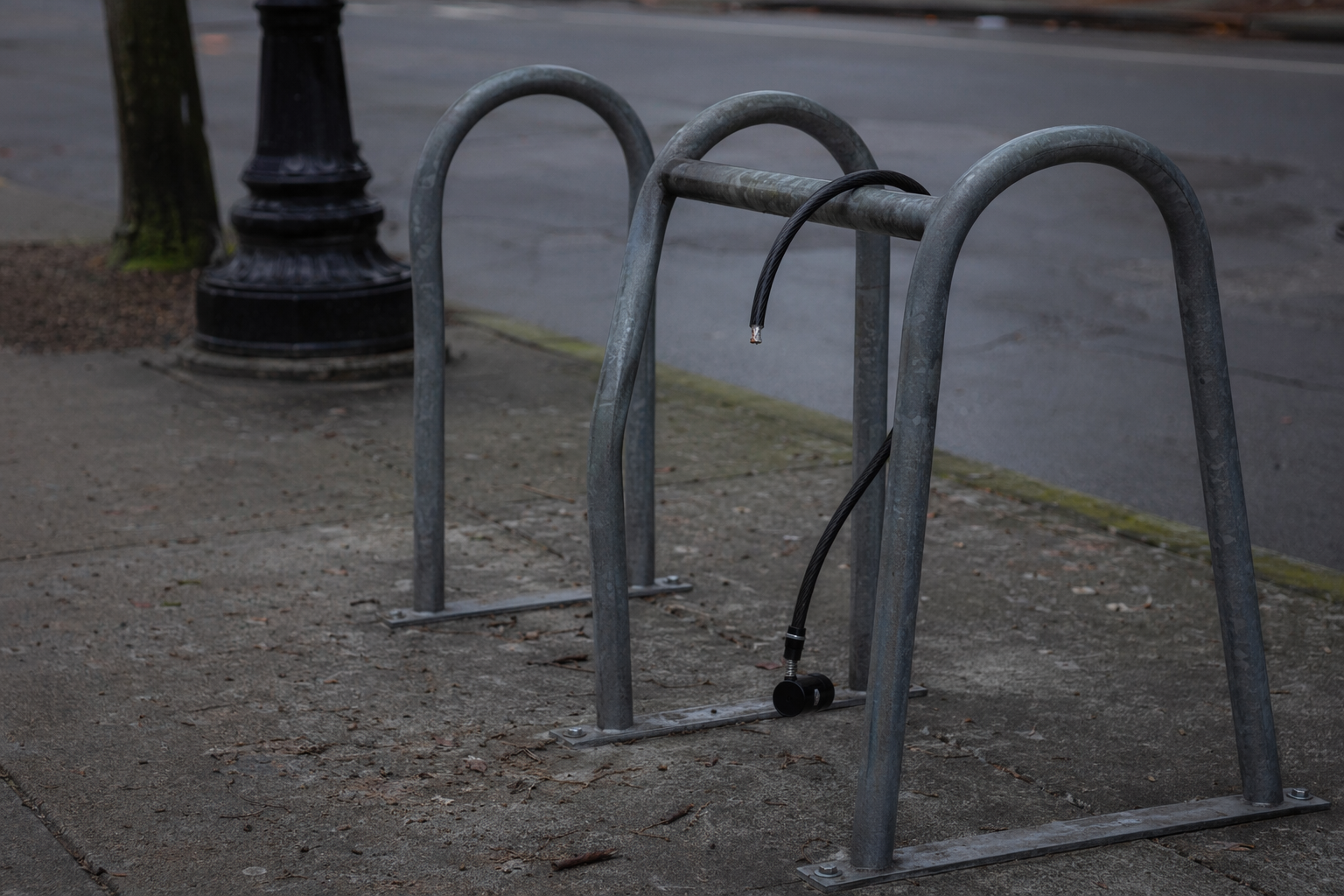
Around 2.37 million bikes are stolen in the United States every year. Most are never recovered — not because they can't be found, but because their owners don't take the right steps in the first 24 hours. Police reports go unfiled. Serial numbers go unlogged. Marketplace listings go unchecked. The window closes fast. This guide is the exact checklist you need to move through the moment you realise your bike is gone.
Act in the First Hour — the Critical Window
Stolen bikes move quickly — to a friend's garage, to a marketplace listing, to a pawn shop. The first hour is when your actions have the highest impact. In priority order:
- File a police report immediately. Do it online if your local department allows it — many do. You need a report number to make an insurance claim, and some bike registries require one to mark a bike as stolen. Without a report, a recovered bike legally cannot be returned to you.
- Post to BikeIndex.org right now. BikeIndex is the largest free stolen bike registry in the US and is integrated with hundreds of bike shops nationwide. When shop staff see a suspicious bike come in for a repair, they check BikeIndex. Register and mark your bike stolen in under five minutes at bikeindex.org.
- Post photos on local Facebook groups and Nextdoor. Bike theft networks are local. A post in your neighbourhood Facebook group or on Nextdoor often reaches more relevant eyes faster than a police bulletin. Include a clear photo, colour, brand, and any distinctive marks.
- Check Craigslist and Facebook Marketplace right now. Thieves list stolen bikes within hours. Search your make, model, and colour immediately, and set up a saved search or alert. Screenshot anything suspicious — save the URL and send it to police.
What Information You Need — Prepare Before Calling Police
When you call or file online, you'll be asked for specific details. Gather these before you start the process — having them ready speeds everything up and strengthens your case.
- Serial number. This is the single most important piece of information. It's stamped under the bottom bracket — the tube where the crank and pedals attach to the frame. It's almost always there; it's usually just dirty. Look also on your original purchase receipt, the manufacturer's registration confirmation, or any photo you took when you bought the bike.
- Make, model, colour, and frame size. Be precise — "blue Trek" is not enough. Include the full model name, year if you know it, and the size (e.g., 54 cm, Medium, 29").
- Any distinctive markings, stickers, or modifications. Custom bar tape, a cracked saddle, a cable routing zip tie in an odd spot, a scratch on the top tube — these are the details that help police and finders make a positive ID when the serial number isn't visible.
- Photos of the actual bike. Not the manufacturer's product photo — a photo of your specific bike, ideally showing the scratches and marks that make it yours. Check your camera roll; most cyclists have accidentally captured their bike in a background shot.
Where Stolen Bikes Actually Go — and Where to Look
Understanding where stolen bikes end up tells you where to focus your search. Most bikes don't travel far.
- Facebook Marketplace and Craigslist. The most common resale channels. Check daily and set keyword alerts for your make and model. Look for listings with no serial number visible, vague descriptions, or suspiciously low prices. If you find a match, do not confront the seller yourself — share the listing with police.
- Pawn shops. Pawnbrokers are required by law to log serial numbers for items they accept. Walk in with your police report number and serial number. Many will cross-check their records immediately. In some cities you can submit serial numbers to a central pawn shop registry.
- Bike shops. Staff at independent bike shops regularly see stolen bikes brought in for repairs — often by people who bought them unknowingly. Call or visit shops within a few miles and leave a description, your serial number, and your contact details.
- Flea markets and swap meets the weekend after theft. Bike thieves often hold inventory for a week then sell at a weekend market. Visit local flea markets in the days after the theft and check for your bike in person.
BikeIndex, Project 529, and Bike Register — How Registries Work
Bike registries are genuinely useful tools — but only if you understand their limits. Coverage varies widely by city and depends on active participation from both owners and police.
| <tr><th> | BikeIndex | Project 529 | Bike Register (UK) |
|---|---|---|---|
| Cost | Free | Free / paid tiers | ~£15 lifetime |
| Coverage | US, Canada, international | US, Canada (city partnerships) | UK national |
| Police integration | Many US departments | Some city PDs | Most UK forces |
| Shop integration | Yes — bike shops check it | Yes — sticker program | Partial |
The critical thing to understand: registries only help if your bike is already registered and someone actively checks. Police rarely cross-check registries proactively during a patrol — you need to do it yourself. If police recover a bike and run the serial number, a registry hit can reunite you with it. But that outcome requires your bike to be in the system before it was stolen. Register now, not after.
The QR Sticker Layer — What Changes If You Had One
Police reports and registries are formal channels that require institutional action. There's a separate, civilian recovery layer that operates completely outside them — and it's faster.
A Tagback QR sticker on the frame lets anyone who finds or spots your bike contact you directly — no app required, no police involvement needed. The finder scans the code, a secure message page opens, they send a note, and you get notified. Your contact details stay private.
Here's the scenario that plays out more often than you'd expect: someone buys a bike at a flea market or off Marketplace, rides it for a week, and then notices a small sticker under the seat. They scan it out of curiosity. Instant connection. The bike was stolen, sold to an unknowing buyer, and a QR code created a path back to you that no registry could have provided.
Where to place it: The goal is inconspicuous but findable. Good spots include the inside of the rear dropout, the underside of the top tube, the seat post below the saddle clamp, or inside the front triangle near the bottom bracket. Avoid the most visible spots where a thief would peel it immediately — the idea is that a finder, not a thief, discovers it.
A Tagback sticker works alongside registration, not instead of it. It's free, weatherproof, and never runs out of battery.
Insurance Claim — What You Need and When to File
Many bike owners don't realise their existing insurance already covers theft. Before assuming you have no coverage, check these options:
- Renters or homeowners insurance. Most policies cover personal property away from home, including bikes. Coverage is typically 10% of your total contents limit — if your contents are insured for $30,000, your bike may be covered up to $3,000. Check your policy's per-item sub-limits and whether theft away from home is included.
- Dedicated bike insurance. Velosurance, Markel, and Spoke are US providers that offer bike-specific coverage including theft, damage, and racing liability. Worth it for bikes over $1,000 — particularly if your renters policy has a high excess or a low per-item cap.
- What you need to file: police report number, serial number, make and model, and a purchase receipt if possible. A bank statement showing the purchase is usually sufficient if you don't have the original receipt.
- File promptly. Most insurers require notification within 14–30 days of the theft. Delays can affect your claim. Contact your insurer even while you're still gathering information — start the process early.
Prevent the Next Theft — the Three-Lock Rule
Recovery is hard. Prevention is far more achievable. The biggest mistake cyclists make is treating locks as an afterthought. Here's the standard that actually deters professional thieves:
- U-lock through the frame and rear wheel, secured to a fixed object. This is the primary lock. Buy a quality U-lock (Kryptonite, Abus, OnGuard) — cheap locks are cut in seconds. Thread it through the rear triangle and rear wheel, not just the frame alone.
- Cable or chain through the front wheel, attached to the same anchor. The front wheel is easy to remove and valuable. A secondary cable or chain through the front wheel closes that gap.
- Replace quick-release skewers with bolt-on security skewers. QR skewers let a thief remove both wheels in 10 seconds without tools. Security skewers require a proprietary key. They cost under $20 and remove a major vulnerability.
- Lock in busy, well-lit areas with visible CCTV. Thieves avoid scrutiny. A busy bike rack outside a supermarket is safer than a quiet side street even with a better lock.
- Vary your parking spots. Professional thieves case locations. If you lock in the same spot every day, you become a predictable target.
- Add a Tagback QR sticker. Even if your bike is stolen despite good locks, the sticker makes it identifiable long after the theft — by shop staff, by unknowing buyers, by anyone who comes across it.
Recovery rates roughly double when owners file a police report quickly and have a serial number on record. Add BikeIndex registration, community alerts, and a QR identification sticker, and you've built a multilayered recovery system that goes well beyond what a police report alone can provide. None of these steps take more than a few minutes to set up. Do them now, before you need them.
FAQ
What's the chance of recovering a stolen bike?+
Low without action — roughly 2–5% without registration or a police report. With a BikeIndex registration, serial number on file, and a report filed within the first hour, recovery rates jump to 15–25%. A Tagback QR sticker adds a separate civilian recovery channel entirely outside the police system: honest finders, unknowing buyers, and shop staff can contact you directly without any institutional involvement.
My bike didn't have a serial number — can I still recover it?+
Check under the bottom bracket first — the tube where the pedal cranks attach. It's almost always there; it's usually just dirty or covered in grime. Wipe it with a cloth and a light solvent. If the serial number is genuinely absent (rare on any bike made after 1990), document every unique feature in as much detail as possible: custom components, paint chips, specific stickers, unusual cable routing. These details can still support a police report and help with a positive ID.
How quickly do stolen bikes sell?+
Most are sold or stripped within 24–48 hours of theft. Opportunistic thieves list bikes on Facebook Marketplace or Craigslist within hours. Professional theft rings may hold inventory briefly before selling at weekend markets. This is why the first hour matters so much: checking marketplaces and posting to BikeIndex before the bike sells gives you the best chance of intercepting it.
Is it worth buying dedicated bike insurance?+
For bikes worth over $500, yes — especially if you ride outside regularly. But check your renters or homeowners policy first. Many policies already cover bikes as personal property away from home at no extra premium, subject to a per-item sub-limit. If your bike is worth more than that limit, or your policy excludes theft away from home, a dedicated policy from Velosurance, Markel, or Spoke fills the gap efficiently.
Start protecting what matters
Tagback is free, forever. No subscription. No app needed for finders.
Create your free tag