
Qué Hacer Si Te Roban la Bici: Las Primeras 24 Horas
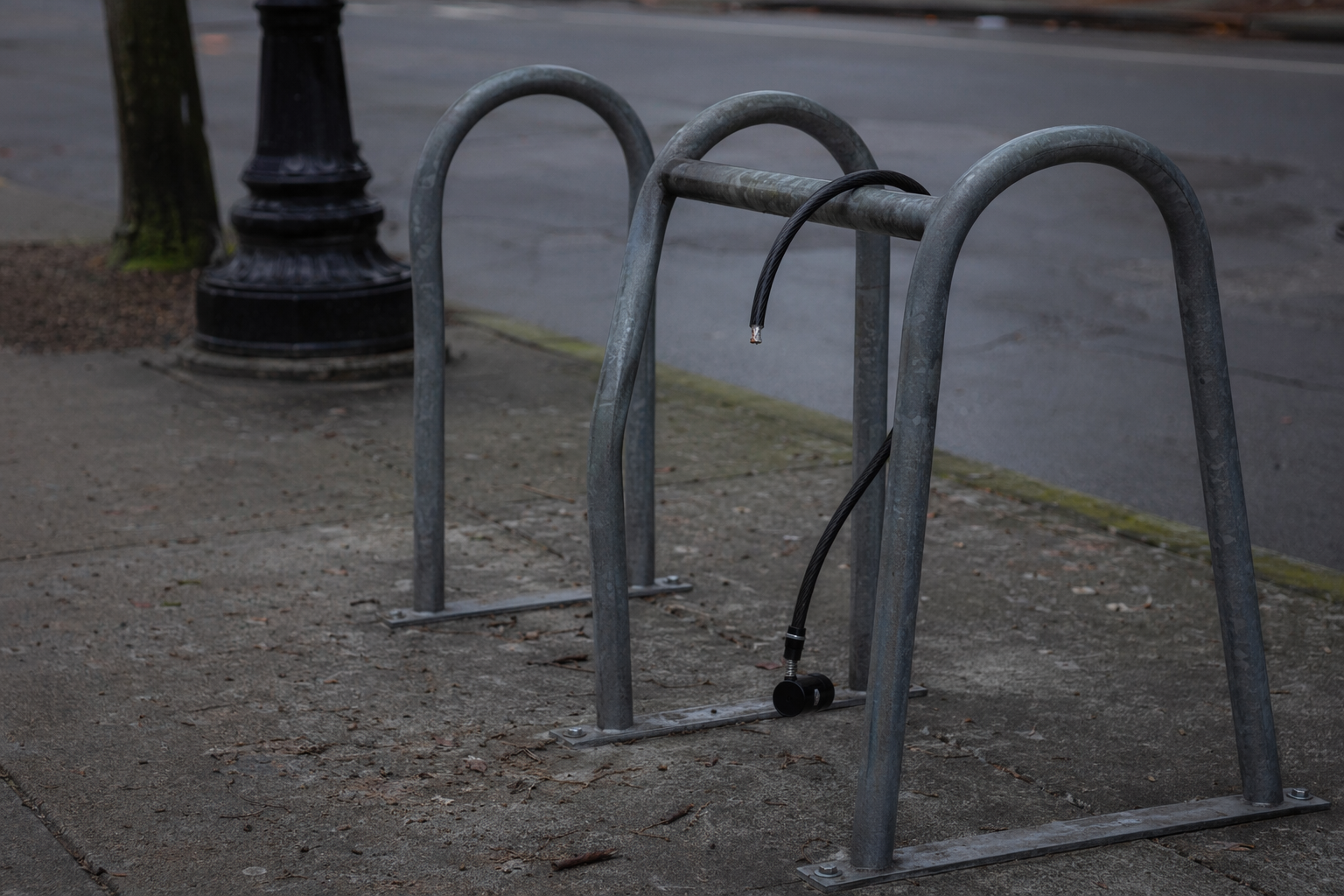
Alrededor de 2.37 millones de bicicletas son robadas en Estados Unidos cada año. La mayoría nunca se recuperan, no porque no se puedan encontrar, sino porque sus dueños no toman las medidas correctas en las primeras 24 horas. Las denuncias policiales no se presentan. Los números de serie no se registran. Los anuncios en marketplaces no se revisan. La ventana se cierra rápido. Esta guía es la checklist exacta que necesitas seguir en el momento en que te das cuenta de que tu bici desapareció.
Actúa en la Primera Hora: la Ventana Crítica
Las bicis robadas se mueven rápido: al garaje de un amigo, a un anuncio en marketplace, a una casa de empeño. La primera hora es cuando tus acciones tienen el mayor impacto. En orden de prioridad:
- File a police report immediately. Do it online if your local department allows it — many do. You need a report number to make an insurance claim, and some bike registries require one to mark a bike as stolen. Without a report, a recovered bike legally cannot be returned to you.
- Post to BikeIndex.org right now. BikeIndex is the largest free stolen bike registry in the US and is integrated with hundreds of bike shops nationwide. When shop staff see a suspicious bike come in for a repair, they check BikeIndex. Register and mark your bike stolen in under five minutes at bikeindex.org.
- Post photos on local Facebook groups and Nextdoor. Bike theft networks are local. A post in your neighbourhood Facebook group or on Nextdoor often reaches more relevant eyes faster than a police bulletin. Include a clear photo, colour, brand, and any distinctive marks.
- Check Craigslist and Facebook Marketplace right now. Thieves list stolen bikes within hours. Search your make, model, and colour immediately, and set up a saved search or alert. Screenshot anything suspicious — save the URL and send it to police.
Qué Información Necesitas: Prepárate Antes de Llamar a la Policía
Cuando llames o presentes una denuncia online, te pedirán detalles específicos. Reúne esta información antes de empezar el proceso: tenerla lista acelera todo y fortalece tu caso.
- Serial number. This is the single most important piece of information. It's stamped under the bottom bracket — the tube where the crank and pedals attach to the frame. It's almost always there; it's usually just dirty. Look also on your original purchase receipt, the manufacturer's registration confirmation, or any photo you took when you bought the bike.
- Make, model, colour, and frame size. Be precise — "blue Trek" is not enough. Include the full model name, year if you know it, and the size (e.g., 54 cm, Medium, 29").
- Any distinctive markings, stickers, or modifications. Custom bar tape, a cracked saddle, a cable routing zip tie in an odd spot, a scratch on the top tube — these are the details that help police and finders make a positive ID when the serial number isn't visible.
- Photos of the actual bike. Not the manufacturer's product photo — a photo of your specific bike, ideally showing the scratches and marks that make it yours. Check your camera roll; most cyclists have accidentally captured their bike in a background shot.
Dónde Terminan Realmente las Bicis Robadas y Dónde Buscar
Entender dónde terminan las bicis robadas te indica dónde enfocar tu búsqueda. La mayoría de las bicis no viajan lejos.
- Facebook Marketplace and Craigslist. The most common resale channels. Check daily and set keyword alerts for your make and model. Look for listings with no serial number visible, vague descriptions, or suspiciously low prices. If you find a match, do not confront the seller yourself — share the listing with police.
- Pawn shops. Pawnbrokers are required by law to log serial numbers for items they accept. Walk in with your police report number and serial number. Many will cross-check their records immediately. In some cities you can submit serial numbers to a central pawn shop registry.
- Bike shops. Staff at independent bike shops regularly see stolen bikes brought in for repairs — often by people who bought them unknowingly. Call or visit shops within a few miles and leave a description, your serial number, and your contact details.
- Flea markets and swap meets the weekend after theft. Bike thieves often hold inventory for a week then sell at a weekend market. Visit local flea markets in the days after the theft and check for your bike in person.
BikeIndex, Project 529 y Bike Register: Cómo Funcionan los Registros
Los registros de bicicletas son herramientas genuinamente útiles, pero solo si entiendes sus limitaciones. La cobertura varía ampliamente según la ciudad y depende de la participación activa tanto de los dueños como de la policía.
| <tr><th> | BikeIndex | Project 529 | Bike Register (Reino Unido) |
|---|---|---|---|
| Costo | Gratis | Gratis / planes pagos | ~£15 de por vida |
| Cobertura | EE.UU., Canadá, internacional | EE.UU., Canadá (alianzas con ciudades) | Nacional del Reino Unido |
| Integración policial | Muchos departamentos de EE.UU. | Algunos departamentos de policía | La mayoría de fuerzas del Reino Unido |
| Integración con tiendas | Sí: las tiendas de bicis lo consultan | Sí: programa de stickers | Parcial |
Lo crítico que debes entender: los registros solo ayudan si tu bici ya está registrada y alguien los consulta activamente. La policía rara vez verifica los registros de forma proactiva durante un patrullaje: necesitas hacerlo tú mismo. Si la policía recupera una bici y verifica el número de serie, una coincidencia en el registro puede reunirte con ella. Pero ese resultado requiere que tu bici esté en el sistema antes de que fuera robada. Regístrala ahora, no después.
La Capa del Sticker QR: Qué Cambia Si Tenías Uno
Las denuncias policiales y los registros son canales formales que requieren acción institucional. Existe una capa de recuperación civil separada que opera completamente fuera de ellos, y es más rápida.
Un sticker QR de Tagback en el cuadro permite que cualquiera que encuentre o vea tu bici te contacte directamente: no se necesita app, no se necesita involucrar a la policía. La persona que la encuentra escanea el código, se abre una página segura de mensajes, envía una nota y tú recibes la notificación. Tus datos de contacto permanecen privados.
Este es el escenario que ocurre más seguido de lo que esperarías: alguien compra una bici en un mercado de pulgas o en Marketplace, la usa por una semana y luego nota un pequeño sticker debajo del asiento. Lo escanea por curiosidad. Conexión instantánea. La bici fue robada, vendida a un comprador que no lo sabía, y un código QR creó un camino de regreso hacia ti que ningún registro podría haber proporcionado.
Dónde colocarlo: El objetivo es que sea discreto pero encontrable. Buenos lugares incluyen la parte interna de la punta trasera, la parte inferior del tubo superior, la tija del sillín debajo de la abrazadera, o dentro del triángulo frontal cerca del eje pedalier. Evita los lugares más visibles donde un ladrón lo desprendería inmediatamente: la idea es que quien lo descubra sea quien encuentra la bici, no el ladrón.
Un sticker Tagback funciona junto con el registro, no en lugar de él. Es gratis, resistente al clima y nunca se queda sin batería.
Reclamo de Seguro: Qué Necesitas y Cuándo Presentarlo
Muchos dueños de bicis no se dan cuenta de que su seguro existente ya cubre el robo. Antes de asumir que no tienes cobertura, verifica estas opciones:
- Renters or homeowners insurance. Most policies cover personal property away from home, including bikes. Coverage is typically 10% of your total contents limit — if your contents are insured for $30,000, your bike may be covered up to $3,000. Check your policy's per-item sub-limits and whether theft away from home is included.
- Dedicated bike insurance. Velosurance, Markel, and Spoke are US providers that offer bike-specific coverage including theft, damage, and racing liability. Worth it for bikes over $1,000 — particularly if your renters policy has a high excess or a low per-item cap.
- What you need to file: police report number, serial number, make and model, and a purchase receipt if possible. A bank statement showing the purchase is usually sufficient if you don't have the original receipt.
- File promptly. Most insurers require notification within 14–30 days of the theft. Delays can affect your claim. Contact your insurer even while you're still gathering information — start the process early.
Prevén el Próximo Robo: La Regla de los Tres Candados
La recuperación es difícil. La prevención es mucho más alcanzable. El mayor error que cometen los ciclistas es tratar los candados como algo secundario. Este es el estándar que realmente disuade a los ladrones profesionales:
- U-lock through the frame and rear wheel, secured to a fixed object. This is the primary lock. Buy a quality U-lock (Kryptonite, Abus, OnGuard) — cheap locks are cut in seconds. Thread it through the rear triangle and rear wheel, not just the frame alone.
- Cable or chain through the front wheel, attached to the same anchor. The front wheel is easy to remove and valuable. A secondary cable or chain through the front wheel closes that gap.
- Replace quick-release skewers with bolt-on security skewers. QR skewers let a thief remove both wheels in 10 seconds without tools. Security skewers require a proprietary key. They cost under $20 and remove a major vulnerability.
- Lock in busy, well-lit areas with visible CCTV. Thieves avoid scrutiny. A busy bike rack outside a supermarket is safer than a quiet side street even with a better lock.
- Vary your parking spots. Professional thieves case locations. If you lock in the same spot every day, you become a predictable target.
- Add a Tagback QR sticker. Even if your bike is stolen despite good locks, the sticker makes it identifiable long after the theft — by shop staff, by unknowing buyers, by anyone who comes across it.
Las tasas de recuperación aproximadamente se duplican cuando los dueños presentan una denuncia policial rápidamente y tienen un número de serie registrado. Agrega el registro en BikeIndex, alertas comunitarias y un sticker de identificación QR, y habrás construido un sistema de recuperación multicapa que va mucho más allá de lo que una denuncia policial por sí sola puede proporcionar. Ninguno de estos pasos toma más de unos minutos configurar. Hazlos ahora, antes de que los necesites.
Preguntas frecuentes
¿Cuál es la probabilidad de recuperar una bici robada?+
Baja sin acción: aproximadamente 2–5% sin registro o denuncia policial. Con un registro en BikeIndex, número de serie archivado y una denuncia presentada dentro de la primera hora, las tasas de recuperación saltan al 15–25%. Un sticker QR de Tagback añade un canal de recuperación civil separado completamente fuera del sistema policial: personas honestas que la encuentran, compradores que no saben que es robada y personal de tiendas pueden contactarte directamente sin ninguna intervención institucional.
Mi bici no tenía número de serie, ¿aún puedo recuperarla?+
Verifica primero debajo del eje pedalier: el tubo donde se conectan las bielas de los pedales. Casi siempre está ahí; generalmente solo está sucio o cubierto de mugre. Límpialo con un paño y un solvente suave. Si el número de serie realmente está ausente (raro en cualquier bici fabricada después de 1990), documenta cada característica única con el mayor detalle posible: componentes personalizados, rayones de pintura, stickers específicos, enrutamiento inusual de cables. Estos detalles aún pueden respaldar una denuncia policial y ayudar con una identificación positiva.
¿Qué tan rápido se venden las bicis robadas?+
La mayoría se venden o desmantelan dentro de las 24–48 horas posteriores al robo. Los ladrones oportunistas publican las bicis en Facebook Marketplace o Craigslist en cuestión de horas. Las redes de robo profesionales pueden retener el inventario brevemente antes de vender en mercados de fin de semana. Por eso la primera hora importa tanto: revisar marketplaces y publicar en BikeIndex antes de que se venda la bici te da la mejor oportunidad de interceptarla.
¿Vale la pena contratar un seguro dedicado para bicicletas?+
Para bicicletas de más de $500, sí — especialmente si sales a pedalear con regularidad. Pero primero revisa tu póliza de inquilino o propietario. Muchas pólizas ya cubren las bicicletas como propiedad personal fuera del hogar sin prima adicional, sujeto a un sublímite por artículo. Si tu bicicleta vale más que ese límite, o tu póliza excluye robos fuera del hogar, una póliza dedicada de Velosurance, Markel o Spoke cubre ese vacío de manera eficiente.
Start protecting what matters
Tagback is free, forever. No subscription. No app needed for finders.
Create your free tag