
Cómo Registrar el Número de Serie de Tu Bicicleta: El Paso de 5 Minutos Que Más Importa
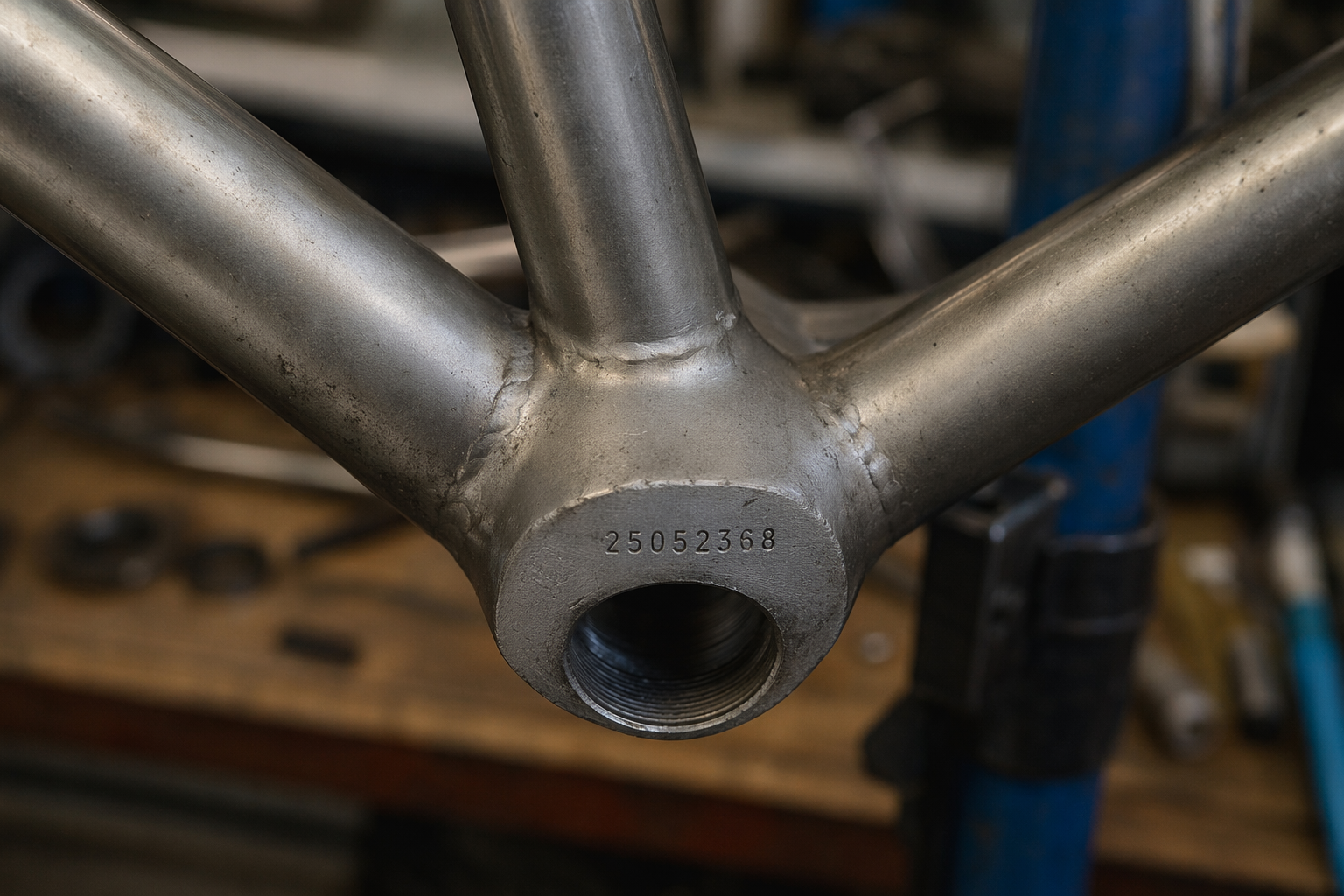
Tu bicicleta tiene un número de serie. La mayoría de los ciclistas nunca lo han buscado. Registrar ese número toma cinco minutos y es el paso más importante que puedes dar antes de que roben tu bicicleta — porque sin él, una bicicleta recuperada no puede ser devuelta legalmente a ti. La policía encuentra bicicletas cada semana que coinciden con denuncias de robo pendientes. El número de serie es el único vínculo entre la bicicleta en el depósito de evidencia y el propietario esperando en casa. Si el tuyo no está en un registro, esa bicicleta permanece sin reclamar hasta que se subasta o se destruye. Esta guía cubre dónde encontrar el número, dónde registrarlo (opciones gratuitas incluidas), qué más fotografiar y qué aspectos quedan pendientes solo con el registro.
Dónde Encontrar el Número de Serie de Tu Bicicleta
El número de serie está estampado directamente en el metal del cuadro. No se borra con la lluvia y no puede eliminarse — aunque puede quedar oculto por suciedad o deliberadamente limado por ladrones. Aquí te decimos dónde buscar:
- Under the bottom bracket. This is the most common location by far. The bottom bracket is the tube where the pedal cranks meet the frame — it sits at the very base of the frame triangle. Flip the bike upside down or lay it on its side and shine a flashlight directly at the underside of that tube. Wipe away any grease or grime with a cloth. The number is almost always here.
- Rear dropout. The rear dropout is the metal slot on each side of the frame where the rear wheel attaches. Check both sides — some manufacturers stamp the serial number here instead of, or in addition to, the bottom bracket.
- Headset area. The headset sits at the top of the fork, where the fork meets the frame's head tube. Some manufacturers stamp the serial number on the head tube itself or just below the headset cup.
- Seat tube. Less common, but worth checking — particularly on older bikes. Run your fingers along the seat tube (the vertical tube the seatpost slides into) and look for stamped digits.
- What it looks like. Serial numbers are typically 6 to 12 characters long and may include both letters and numbers. Common formats include SC-195438, WTU230451, or T24JP39842. The format varies by manufacturer — there is no universal standard.
Toma una foto ahora mismo — antes de que le suceda algo a la bicicleta. Guarda la foto en tu galería de la nube y envíatela por correo electrónico para poder buscarla rápidamente. Anota el número también en algún lugar sin conexión.
Dónde Registrar Tu Bicicleta (Opciones Gratuitas y de Pago)
No existe un único registro global, lo que significa que el mejor enfoque es registrarte en más de un lugar. Estas son las opciones más utilizadas, comenzando con las mejores gratuitas:
- BikeIndex.org (US and international, free). The largest stolen bike registry in the United States, with hundreds of police departments and bike shops integrated into the system. When a bike comes in for a repair or is brought in by an officer, shop staff can run the serial number directly through BikeIndex. Registration is completely free. bikeindex.org
- Project 529 (US and Canada, free). Strong community features — local cycling groups, alerts when bikes matching your description appear in your area, and direct integration with police departments in several cities including Seattle, Portland, and Vancouver. The 529 sticker program is also a visual deterrent. project529.com
- BikeRegister.com (UK, ~£15 lifetime). The UK's national police-approved registry, used by most UK police forces when processing recovered bikes. Registration includes a security marking kit to physically mark the frame. Worth the small cost for UK cyclists. bikeregister.com
- Your local municipality. Some cities run their own registration programmes. New York City, Portland, and several university cities offer free city registration — check your local council or city transport website. University campuses often require bike registration for bikes kept on site.
- Your bike's manufacturer. Trek, Specialized, and several other major brands maintain their own owner registries. Register your bike through the manufacturer's website or app at the time of purchase. Some can flag your serial number across their dealer network if the bike is stolen.
- International options. BikeTrac (UK) covers GPS-tracked bikes with a paid subscription. Bike Shepherd (Australia and New Zealand) operates as a free community registry with local shop integration.
Regístrate al menos en Bike Index y en tu sistema local. Los dos minutos que toma duplicar la entrada en varios registros valen la pena — diferentes departamentos de policía usan sistemas diferentes.
Qué Fotografiar Antes de Registrar
Una entrada de registro sin fotos es mucho más débil que una con un registro visual completo. Los registros permiten subir imágenes — úsalas. Una foto de tu bicicleta específica, con sus rayones y marcas reales, es mucho más útil para una identificación positiva que una foto de producto del fabricante.
- Serial number close-up. Clear, in focus, well-lit. This is the most important photo — it's the one that proves the registration was done before the theft, not after.
- Full bike, both sides. Take each photo in good natural light. Left side and right side. Include the whole bike from wheel to wheel.
- Unique features. Any custom paint, stickers, modifications, or distinctive components. A specific saddle brand, unusual bar tape colour, a cracked seat stay, a cable routed differently from stock — document all of it. These details help police and finders make a positive ID when the serial number isn't immediately visible.
- Accessories. Lights, racks, mudguards, computer mounts, bottle cages — anything that typically stays attached to the bike. Thieves sometimes swap components; a distinctive rack or light can still identify the frame.
- Receipt or proof of purchase. A photo of the receipt or a screenshot of the order confirmation email. This is required for insurance claims and strengthens ownership in any legal dispute. A bank statement showing the purchase date and retailer name is a valid alternative.
Qué Hace Realmente el Registro (Y Qué No Hace)
Comprender la mecánica real del registro de bicicletas previene el error común de asumir que una entrada en el registro recuperará automáticamente una bicicleta robada. Esto es exactamente lo que obtienes:
- DOES: allows police to match a recovered bike to its owner. When a bike is recovered — after a raid, a tip-off, or just an officer noticing an abandoned bike — the serial number is run through registries. If your registration is there, the bike can be returned to you. Without the registration, it cannot — regardless of how certain you are it's yours.
- DOES: allows pawn shops and bike shops to check before buying or servicing. Many pawnbrokers and independent bike shops check BikeIndex before accepting a bike. A registry hit flags the bike as stolen immediately. This is particularly effective because thieves often bring bikes to local shops for quick cash or repair.
- DOES NOT: actively track your bike. A registry entry is a record, not a tracker. It doesn't send you a location. It doesn't alert you when your bike moves. It is passive — it only activates when someone actively checks.
- DOES NOT: automatically notify you if the bike is found. If your bike is recovered, you will only hear about it if police or shop staff check the registry, find your entry, and contact you. You should also proactively check BikeIndex after filing a police report, particularly if you live in an area with high registry usage. Set a reminder to check weekly in the weeks after a theft.
La Capa QR — Lo Que el Registro Solo No Cubre
Los registros de bicicletas están diseñados para uso institucional — asumen que un oficial de policía, un mecánico de taller o un prestamista es quien realiza la verificación. Esa suposición deja un gran vacío.
La mayoría de las bicicletas no terminan con la policía. Terminan en mercadillos, rastros y publicaciones de Facebook Marketplace. Son compradas por personas que no tienen idea de que la bicicleta fue robada y ninguna razón para consultar un registro. Son encontradas apoyadas contra una valla por un vecino que quiere devolverlas pero no sabe cómo. En todos estos escenarios, una entrada de registro no sirve de nada — porque la persona que tiene la bicicleta no pensará en buscar.
Una etiqueta QR de Tagback colocada en el cuadro — dentro de la vaina trasera, bajo el asiento, en el interior del tubo de dirección — resuelve esto. Cualquiera con un teléfono puede escanearla. No se requiere aplicación. El escaneo abre una página de contacto segura vinculada a ti, y quien la encuentra puede enviar un mensaje sin ver tu número de teléfono o dirección de correo electrónico. Tus datos de contacto permanecen privados; recibes notificación al instante.
El escenario ocurre más a menudo de lo que esperarías: alguien compra una bicicleta en un mercadillo por 60 €, la usa durante una semana, nota una pequeña etiqueta dentro del cuadro, la escanea por curiosidad, y la página de mensaje que se abre deja inmediatamente claro que la bicicleta fue reportada como robada. Ese comprador puede contactar al propietario directamente — sin intervención policial, sin verificación de registro, sin proceso formal. Solo un escaneo y un mensaje.
También puedes incluir tu número de serie en tu perfil de Tagback, para que cualquiera que encuentre la bicicleta y quiera verificar su legitimidad pueda cruzar el número con Bike Index antes de comprarla.
La Configuración Completa de Prevención de Robo de Bicicletas
Ningún paso único es suficiente por sí solo. Los ciclistas que recuperan bicicletas robadas son aquellos que tenían múltiples capas implementadas antes de que ocurriera el robo. Esta es la configuración completa en orden de prioridad:
- Register your serial number on BikeIndex and your local scheme. Do it today — it takes under five minutes per registry. Registration after a theft is too late to help with the first recovery window.
- Photograph the bike and serial number — save to cloud. One clear photo of the number under the bottom bracket. Full bike photos from both sides. Receipt or order confirmation. Email them to yourself so they're searchable.
- Add a Tagback QR sticker in an inconspicuous but findable location. Good spots: inside the main triangle near the bottom bracket, inside the chainstay, under the saddle clamp on the seat post. The goal is somewhere a thief won't notice but a curious finder will. The sticker is free, weatherproof, and never runs out of battery.
- Use a quality U-lock through the frame and rear wheel to a fixed object. Not just the wheel. Not just the frame. The rear triangle and rear wheel together, locked to something bolted to the ground. Add a secondary cable or chain through the front wheel if you're parking for more than a few minutes.
- Never leave the bike unlocked — even for 30 seconds. The majority of bike thefts are opportunistic. A bike left unlocked outside a shop for two minutes is a bike that can be ridden away before you've paid for your coffee.
Preguntas frecuentes
¿Qué hago si no puedo encontrar el número de serie de mi bicicleta?+
Prueba todas las ubicaciones comunes con una buena linterna — bajo el eje de pedalier primero, luego las puntas traseras, después el área de la dirección y el tubo del asiento. Limpia la grasa y suciedad con un paño; el número a menudo está ahí pero oculto bajo la mugre. Si genuinamente no puedes localizar uno, documenta la bicicleta con fotos detalladas de cada característica distintiva y anota todos los componentes únicos. Algunos fabricantes pueden buscar el número de serie de tu bicicleta por fecha de compra — contáctalos con prueba de compra. Un extracto bancario que muestre la compra en el comercio suele ser suficiente.
¿Registrar mi bicicleta ayuda con el seguro?+
Sí — un número de serie registrado y fotografías suelen ser requeridos para procesar un reclamo por robo. Revisa primero tu póliza de seguro de hogar o inquilinos; muchas pólizas cubren bicicletas como propiedad personal fuera del hogar hasta un sublímite por artículo, sin prima extra requerida. Si el valor de tu bicicleta excede ese límite, o si la póliza excluye robos fuera del hogar, los seguros dedicados para bicicletas de proveedores como Velosurance (EE.UU.) o Laka (Reino Unido) llenan ese vacío. De cualquier forma, tener el número de serie y fotos archivados antes del robo hace que el proceso de reclamo sea significativamente más rápido.
¿Puedo registrar una bicicleta de segunda mano?+
Sí, y deberías hacerlo por dos razones. Primero, consulta BikeIndex antes de comprar. BikeIndex tiene una herramienta de búsqueda gratuita en bikeindex.org que te permite ingresar un número de serie y ver si ha sido reportada como robada. Hacer esta verificación antes de entregar el dinero te protege de comprar sin saberlo una bicicleta robada. Segundo, una vez que hayas confirmado que la bicicleta está limpia y hayas completado la compra, regístrala a tu nombre inmediatamente. Las entradas del propietario anterior pueden transferirse o crear una nueva entrada; el registro tiene orientación para esto.
¿Es obligatorio registrar la bicicleta?+
En la mayoría de los lugares, no; no existe un requisito legal para que los ciclistas particulares registren una bicicleta. Sin embargo, algunas ciudades y universidades exigen que las bicicletas guardadas en sus instalaciones estén registradas en su esquema local. Consulta la política de ciclismo de tu ayuntamiento o las directrices de transporte de tu universidad. Incluso donde no es obligatorio, el registro es uno de los pocos pasos genuinamente gratuitos que pueden marcar una diferencia real en las probabilidades de recuperación si la bicicleta es robada.
Start protecting what matters
Tagback is free, forever. No subscription. No app needed for finders.
Create your free tag