
Emergency Contact Card for Your Wallet: What to Write, What to Carry
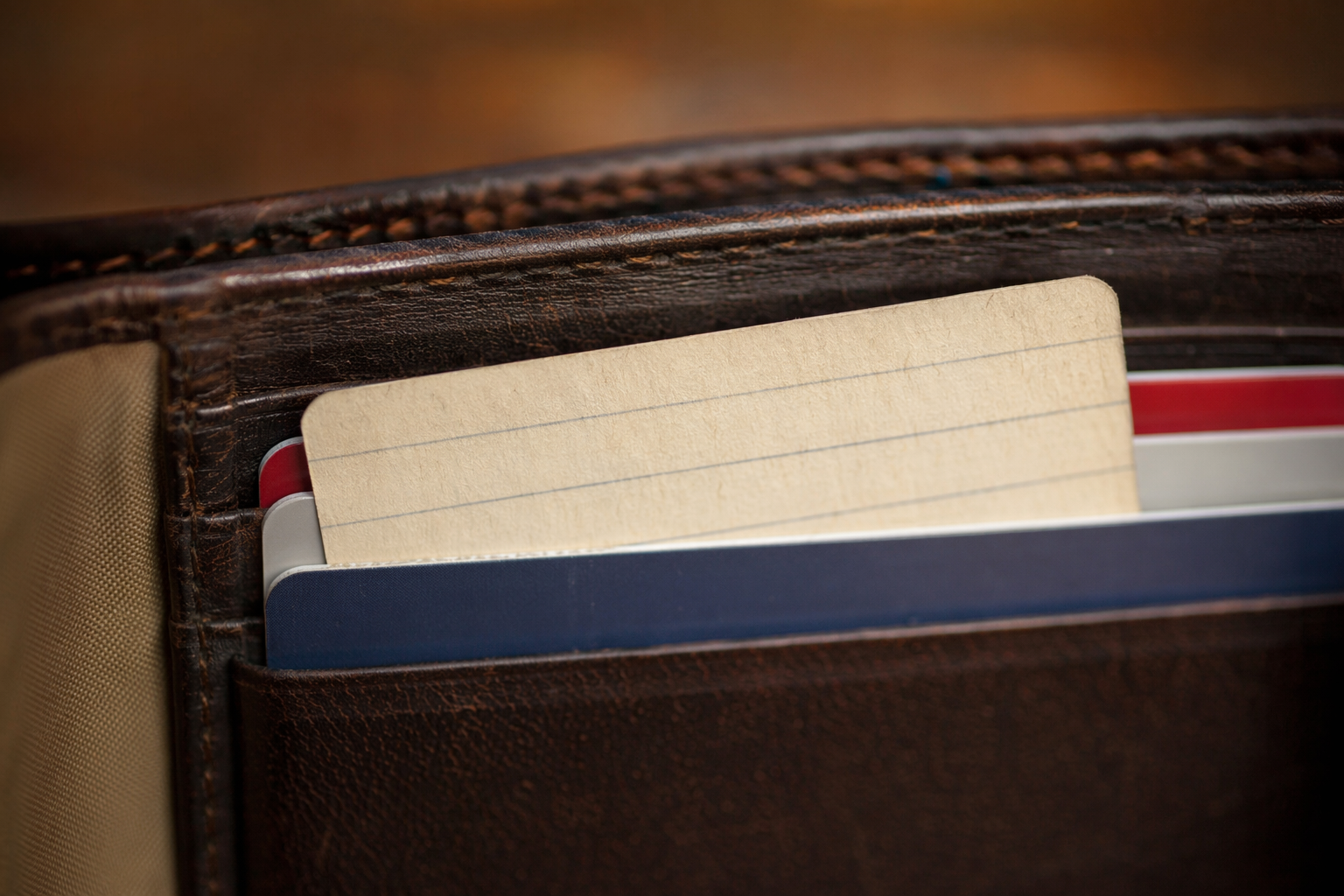
When someone is unconscious or disoriented, the first 60 seconds matter. First responders are trained to check for identification and medical information immediately — before a patient can speak, before anyone can explain, before family arrives. A wallet card is the most reliable place to put that information. It requires no battery, no signal, no app. A bystander or paramedic can read it in seconds.
The problem is that most people's wallet cards — if they have one at all — are either out of date, too sparse to be useful, or written in handwriting that has faded to illegibility. This guide covers exactly what to put on a physical ICE card, where its limits are, and what to pair it with so you're genuinely covered.
What a first responder needs in the first 60 seconds
Emergency responders are not looking for a life story. They need a short, specific set of facts that lets them make safe decisions quickly. Here is what belongs on an emergency contact card:
- Full name and date of birth — used to pull medical records from hospital systems. Without this, responders are working blind.
- Primary emergency contact — name, relationship, and phone number. One contact, clearly labeled.
- Critical medical conditions — diabetes, epilepsy, heart conditions, severe allergies. Conditions that change the treatment approach or the risk of standard interventions.
- Current medications — especially anticoagulants (warfarin, apixaban), insulin, seizure medications, and immunosuppressants. These affect what a responder can safely give you.
- Blood type — most responders will confirm before a transfusion, but knowing your blood type in advance speeds up triage in trauma situations.
- Known medication allergies — particularly penicillin, sulfa drugs, and codeine, which appear in standard emergency protocols and can cause severe reactions.
- Primary physician name and contact number — for follow-up and continuity of care, especially for patients with complex histories.
What to write on a physical wallet ICE card
Legibility under stress is the only standard that matters. A card that takes more than a few seconds to read will not be read. Keep the following rules:
- 8–10 lines maximum. More than that and critical information gets buried.
- Use printed text, not handwriting. Handwriting fades within months in a wallet. Sweat, wear, and light make it illegible long before you notice.
- Print on card stock and laminate it. Plain paper disintegrates in a wallet within a few months. A laminated card survives years.
- Use a font size of at least 8pt — smaller is not readable under poor lighting or with stressed eyes.
- Label every field clearly. Don't assume the reader knows what the numbers mean.
Here is a practical template you can print and cut to wallet size:
- ICE CARD
- Name: [Full name]
- DOB: [DD/MM/YYYY]
- Emergency contact: [Name] ([Relationship]) — [Phone]
- Medical conditions: [e.g. Type 1 diabetes, epilepsy]
- Medications: [e.g. Levemir 20u nightly, Keppra 500mg]
- Allergies: [e.g. Penicillin — severe reaction]
- Blood type: [e.g. A+]
- Doctor: [Name] — [Phone]
The limitations of a wallet card
A physical wallet card is a 30-year-old solution. It works, and it should still be part of your setup. But it has hard limits that are worth understanding:
- 8–10 lines is not enough for a complex medical history. A patient on six medications, with two chronic conditions and a relevant surgical history, cannot fit their record on a business card.
- It cannot hold supporting documents — medication photos (critical for dose verification), insurance information, advance directives, or specialist contact details.
- It cannot be updated without reprinting. A new medication, a changed emergency contact, or a new diagnosis means the card is wrong until you reprint it. Outdated information is not neutral — it can actively mislead a responder.
- If your wallet is stolen, your emergency information goes with it. In a scenario where you're in an accident and your wallet is missing, a card-only approach leaves you with nothing.
ICE on your phone lock screen
Modern smartphones have built-in emergency information features that complement a wallet card without replacing it:
- iPhone: Open the Health app → Medical ID → fill in your emergency information → enable "Show When Locked." A first responder can access this from the lock screen without unlocking your phone.
- Android: Go to Settings → Safety & Emergency → Emergency Information → fill in your details. This information shows on the lock screen when someone presses "Emergency" on the unlock screen.
The phone lock screen and the wallet card cover different failure modes. A person may have their wallet but not their phone, or their phone but not their wallet. Using both is the right approach — they take about 10 minutes to set up and maintain each other.
QR-based ICE tags — what they add
A QR emergency tag on a keychain, phone back, ID card, or wristband extends everything the wallet card does — without the physical constraints. Scan the code and it opens a full emergency profile instantly, with no app required.
- Unlimited space — full medication list, dosages, insurance details, advance directive notes, multiple emergency contacts, specialist names.
- Always current — update your profile from your phone any time. The QR code never changes; the information behind it does. No reprinting, no reprinting delay.
- Waterproof and durable — a laminated QR tag outlasts a paper wallet card by years, and a keychain tag survives scenarios where a wallet is lost or stolen.
- Particularly valuable for seniors living alone, people with complex conditions, solo travelers, athletes, and anyone on medications that change regularly.
- Works anywhere — any smartphone camera can scan a QR code. No app, no account, no signal required for the finder.
Tagback is completely free — there's no subscription and no limit on how many tags you can create or update. A QR emergency tag takes about five minutes to set up.
Who especially needs an ICE card and QR tag
Everyone benefits from having current emergency information on their person. These groups have the most to gain:
- People with chronic conditions — diabetes, epilepsy, heart disease, asthma. A responder who doesn't know about your condition may administer something contraindicated.
- Seniors living alone — if there's no one in the home to provide context in an emergency, the card or tag is the only voice speaking on their behalf.
- Solo travelers and athletes — if you run, cycle, hike, or travel alone, you may be found by a stranger. Your emergency information should be on your person, not just on your phone.
- Anyone on anticoagulants or immunosuppressants — these medications have critical implications for emergency treatment and must be flagged immediately.
- Parents — carrying a wallet card or QR tag with your child's blood type, allergies, and medical notes is particularly valuable during travel or any situation where the child may be separated from you.
Keeping your ICE information up to date
An outdated emergency card is not harmless — a wrong medication list or a disconnected phone number can cause real problems. Build a simple maintenance habit:
- Review every six months. Set a calendar reminder. Check for new medications, changed contact numbers, new diagnoses, or changes to existing conditions.
- Update immediately after any hospitalisation or major diagnosis. Don't wait for the six-month cycle — a new condition or a new medication is a reason to update right away.
- Tell your emergency contact they're listed. Confirm their number is correct and that they know they're the person to call. An emergency contact who doesn't know they're listed may not answer an unknown number promptly.
The wallet card is a 30-year-old solution that still works. A QR-based emergency profile is the same concept with unlimited space and instant updateability. Set up both — they take less than an hour combined — and you have a genuinely robust system that works regardless of which device has battery, which item gets lost, and who finds you.
FAQ
What does ICE stand for?+
ICE stands for "In Case of Emergency." The convention was popularised in the early 2000s as a way to help first responders quickly identify emergency contacts stored in mobile phones under "ICE [name]." It has since expanded to include wallet cards, medical IDs, and QR tags — any method of making emergency contact and medical information accessible to a stranger in a crisis.
Will paramedics actually look for a wallet card?+
Yes. Checking for medical ID — bracelets, wallet cards, tags — is standard protocol in many emergency services. Response varies by country and system, but a clearly visible card or QR tag in a wallet is routinely checked as part of initial patient assessment. The more clearly labeled it is ("ICE CARD" at the top), the faster it gets found and read.
Should I carry ICE information for my children too?+
Absolutely. A parent's wallet card or keychain QR tag with a child's name, blood type, allergies, and relevant medical notes is particularly valuable during travel or any situation where the child may be separated from their parents. Children are often unable to provide this information themselves under stress, and a tag on a parent's keychain is always within reach.
Is a QR emergency card secure?+
You control exactly what is visible. Tagback lets you choose what the scanner sees — you can show emergency contacts and critical medical conditions publicly while keeping your home address private. No login is required for the finder to view the emergency information you've designated as visible. You can update or remove any information at any time from your dashboard.
Start protecting what matters
Tagback is free, forever. No subscription. No app needed for finders.
Create your free tag